Injectables Vs. Surgery: How To Know Which is Right For You

OVME’s perspective on this question is grounded in its medical structure. The medical directors overseeing every OVME non-surgical treatment across 27+ boutique studio locations are board-certified plastic surgeons, the same expertise that recognizes when surgical correction is the more appropriate path.
This guide covers what injectables actually do, what surgery addresses that injectables can’t, and how to think about which path fits your specific stage and goals.
What Injectables Can And Can't Do
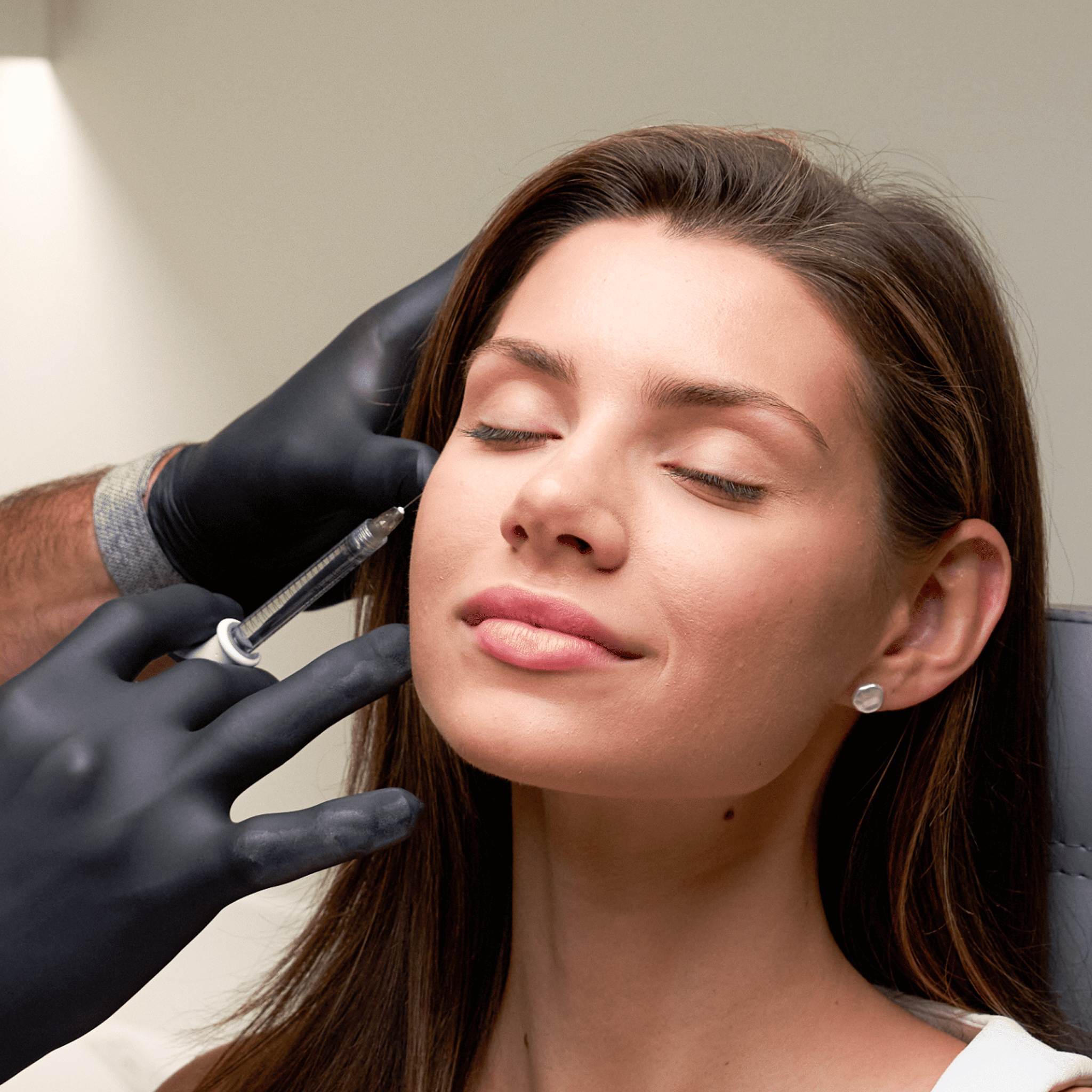
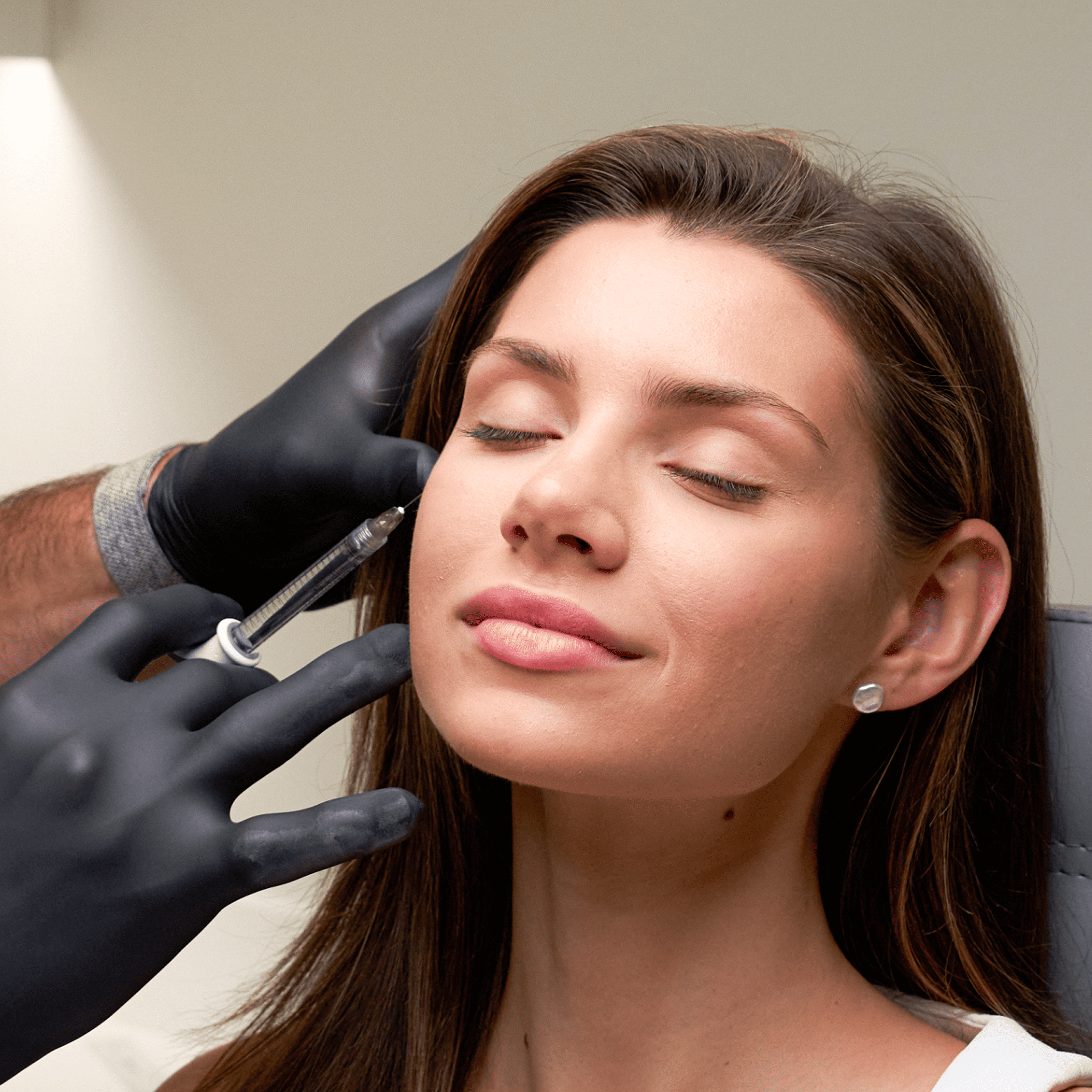
Non-surgical aesthetic treatments cover a broader range than most patients realize. The category includes:
-
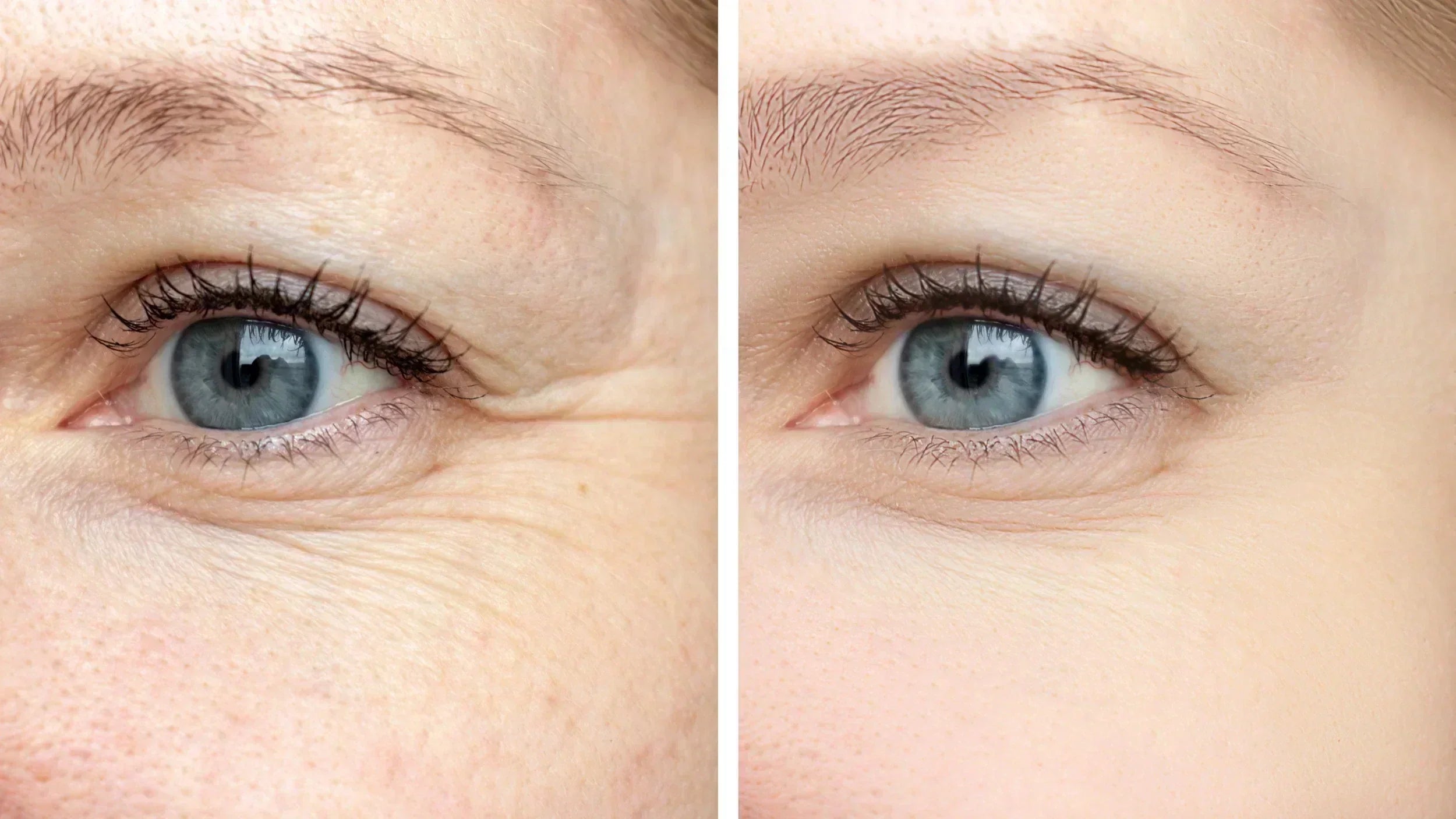
Neuromodulators: Botox® and Dysport® temporarily relax muscles responsible for expression lines. Results typically appear in 3 to 7 days and last 3 to 4 months.
-
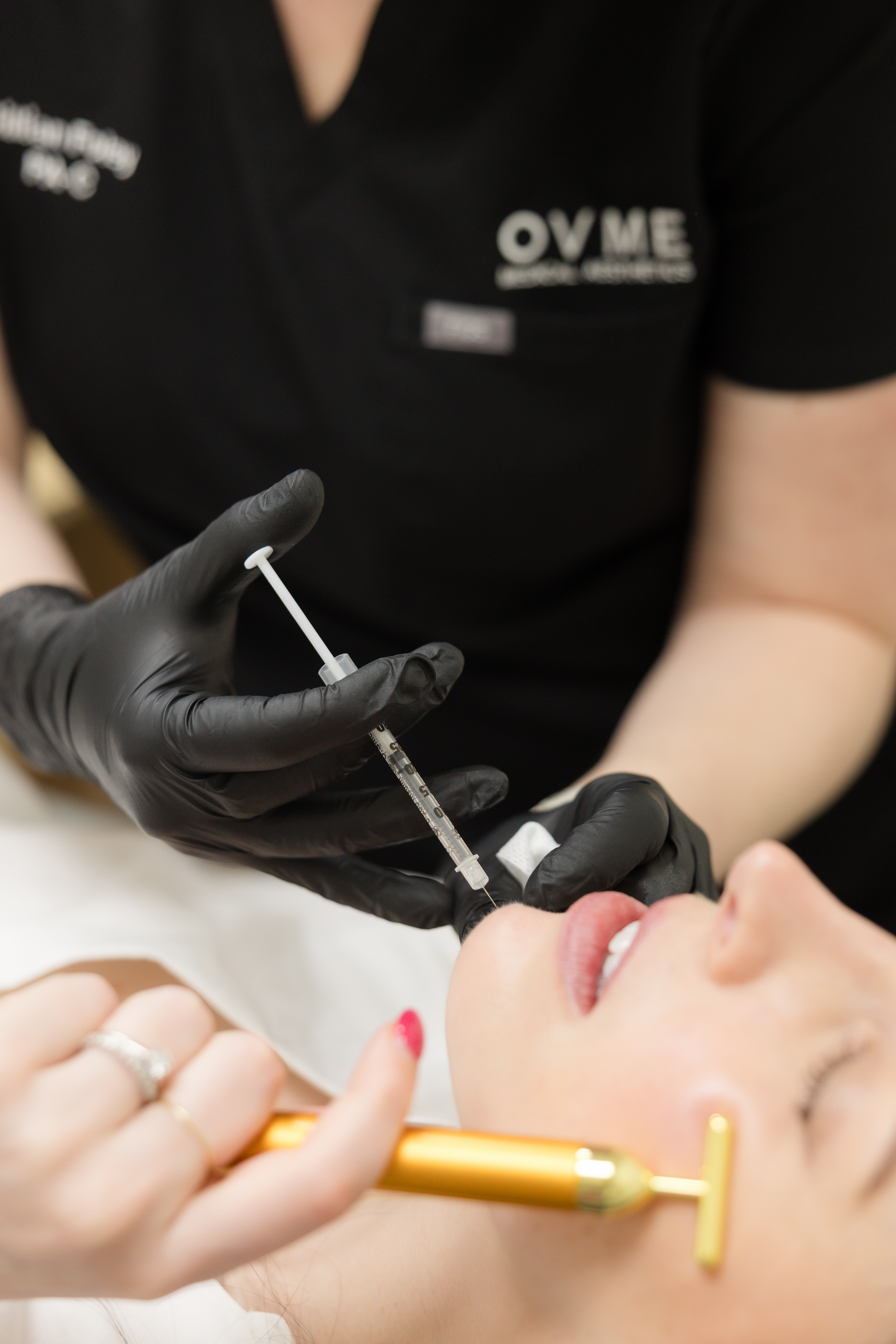
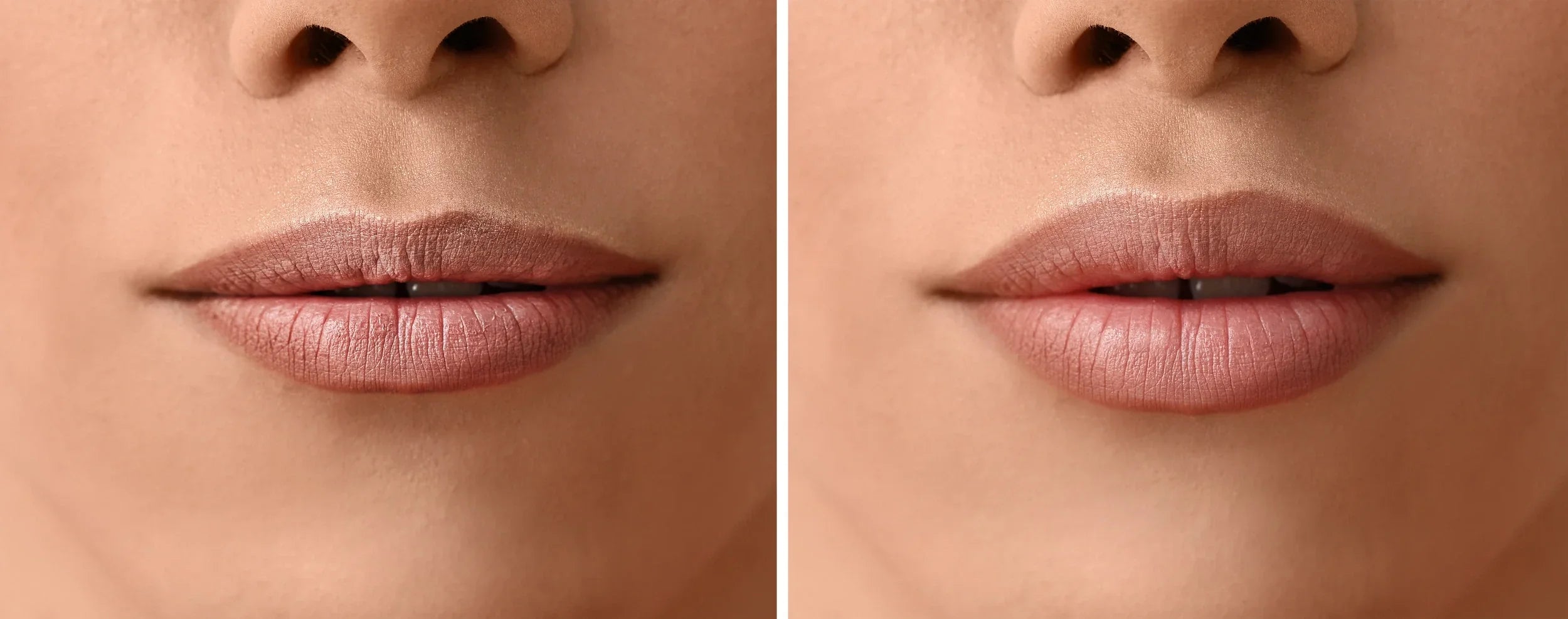
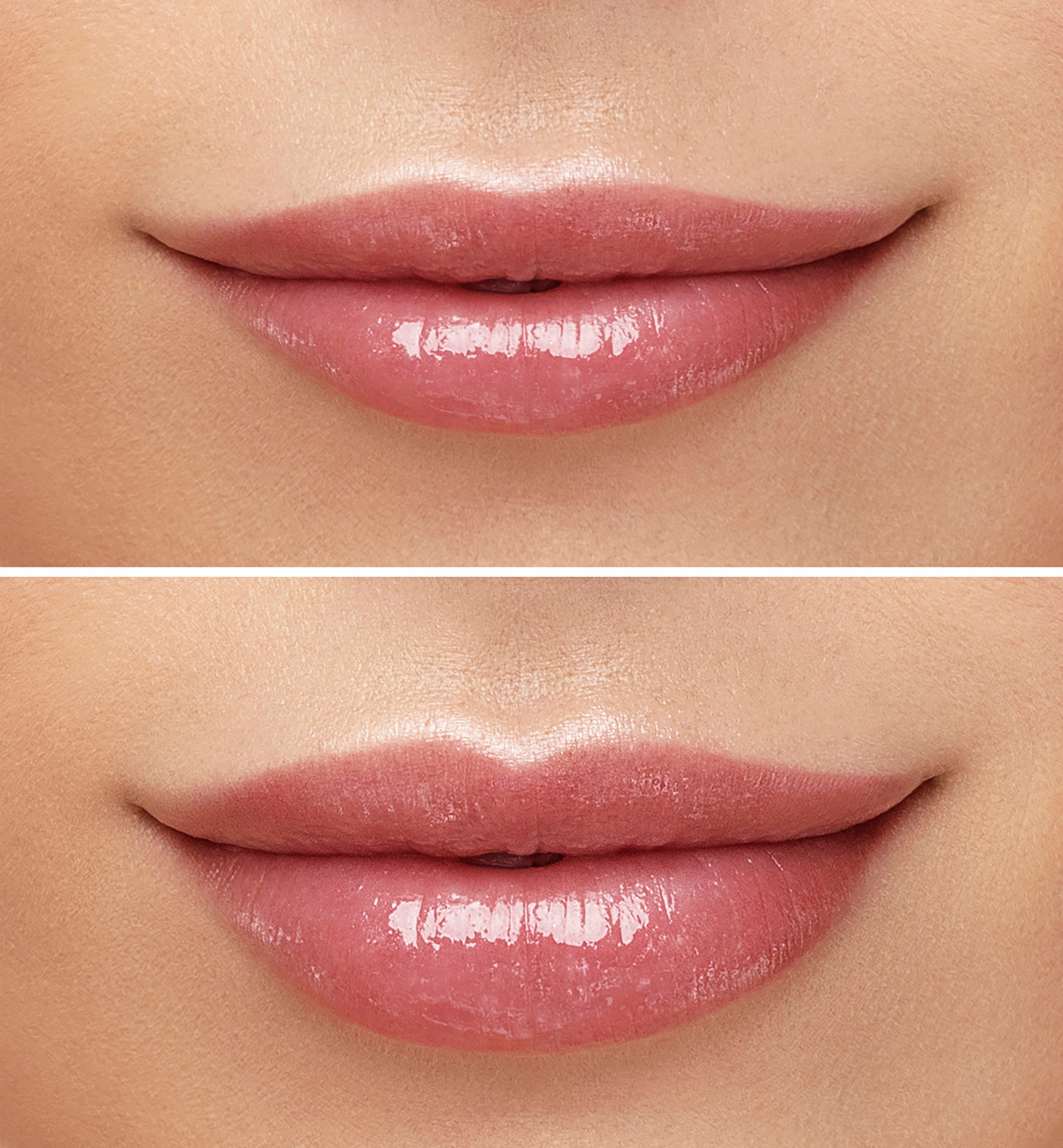
Dermal fillers: Hyaluronic acid dermal fillers restore volume to cheeks, lips, under-eyes, jawline, and other areas. Results are immediate; duration ranges from 6 to 18 months, depending on placement.
-
Biostimulators: Sculptra® is a biostimulator, not a filler. It stimulates your body’s own collagen production over 3 to 6 months, with results that can last up to 2 years.
-
Skin boosters: Skinvive® improves hydration and smoothness from within the dermis. Results last about 6 months.
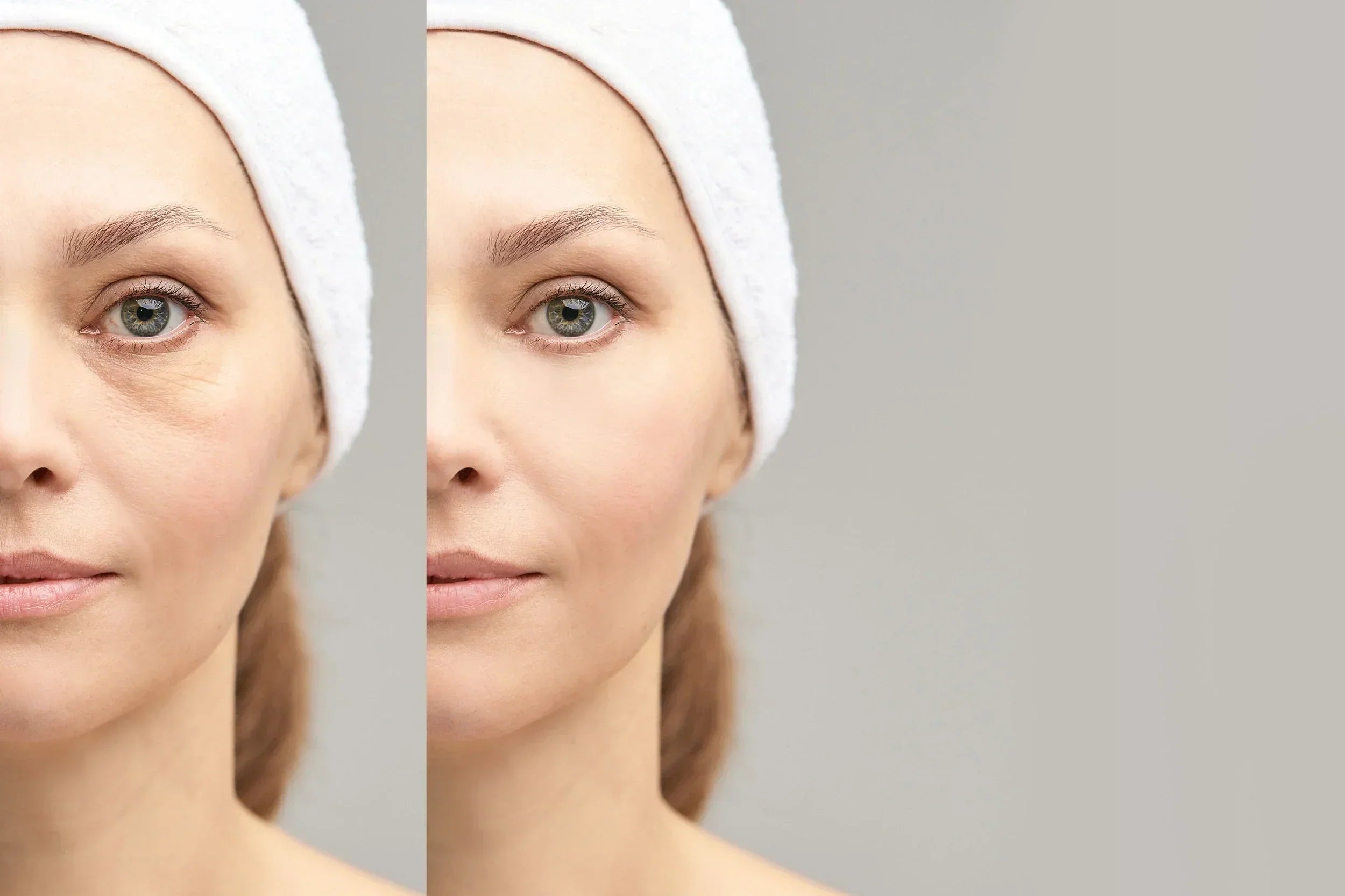
Together, these treatments can address volume loss, expression lines, skin quality, and surface texture. For most patients with mild-to-moderate aesthetic concerns, that’s enough to produce visible, natural-looking improvement.
But injectables have limits. Honest ones:
-
They don’t physically lift skin that has lost meaningful structural support at rest
-
They don’t correct deep jowling once it’s settled in
-
They don’t address pronounced neck banding or platysmal laxity
When the concern is structural rather than volumetric or muscular, injectables can soften the appearance, but they cannot reverse the underlying tissue descent that progresses over time.
For a deeper look at the full non-surgical menu, see OVME’s pillar guide on facial rejuvenation treatments.
What Surgical Options Address
A surgical facelift, neck lift, or related procedure repositions and tightens tissue that has lost structural support, which is fundamentally different from what injectables do. Surgery removes redundant skin, lifts deeper layers, and corrects laxity at a level non-surgical work cannot reach.
According to the American Academy of Facial Plastic and Reconstructive Surgery, approximately 90% of AAFPRS member surgeons perform facelifts annually, making it one of the most common surgical procedures in aesthetic medicine.
Surgical results have a different durability profile. A well-performed facelift typically produces results that last 10 to 15 years, while non-surgical treatments operate on a maintenance rhythm of every 1 to 3 years, a function of the different mechanism of action, not a hierarchy of effectiveness.
The trade-offs are real:
-
Surgery requires recovery time, typically 1 to 2 weeks of visible recovery, longer for full healing
-
It involves general or local anesthesia and small incisions
-
The cost is concentrated upfront rather than spread across years of maintenance
Surgery isn’t the universal answer to aging. It’s a different tool for different concerns.
When Injectables Are The Right Fit
For most patients in their 20s, 30s, and 40s and beyond, injectables are the right starting point. The signals:
-
Mild-to-moderate concerns. Early expression lines, modest volume loss, skin quality issues, mild laxity.
-
Younger patients are building a baseline. Preventative neuromodulators in the late 20s and early 30s can support skin health and reduce the depth of static lines later.
-
Patients who want to look refreshed, not different. The client who wants to “look like myself, but more rested” is the core injectables audience.
-
Reversibility matters. HA dermal fillers can be dissolved with an enzyme called hyaluronidase if the results aren’t right. Neuromodulators wear off in 3 to 4 months. That’s a low-commitment way to evaluate aesthetic treatments.
-
Recovery time is limited. Most injectables involve minimal downtime, a few hours of mild redness for neuromodulators, and a few days of possible bruising for fillers.
-
Surgical procedures aren’t appropriate yet. When the concerns are above the structural threshold, injectables address them more efficiently than surgery would.
A combination plan across categories, small amounts of filler, neuromodulator, occasional energy-based treatment, usually produces more natural-looking results than concentrated work in any single area. For more on how plans come together, see OVME’s skin treatments and facial aesthetics impact guide.
When Surgery May Be The Better Path
The conversation shifts when the concern is structural. Signals that surgery may be worth considering:
-
Significant skin laxity at rest. When the skin no longer “snaps back” and the shape of the face is changing in a way fillers can’t restore.
-
Deep jowls or pronounced neck banding. Structural changes in the lower face and neck that non-surgical tightening treatments can’t fully address.
How OVME Approaches The Conversation
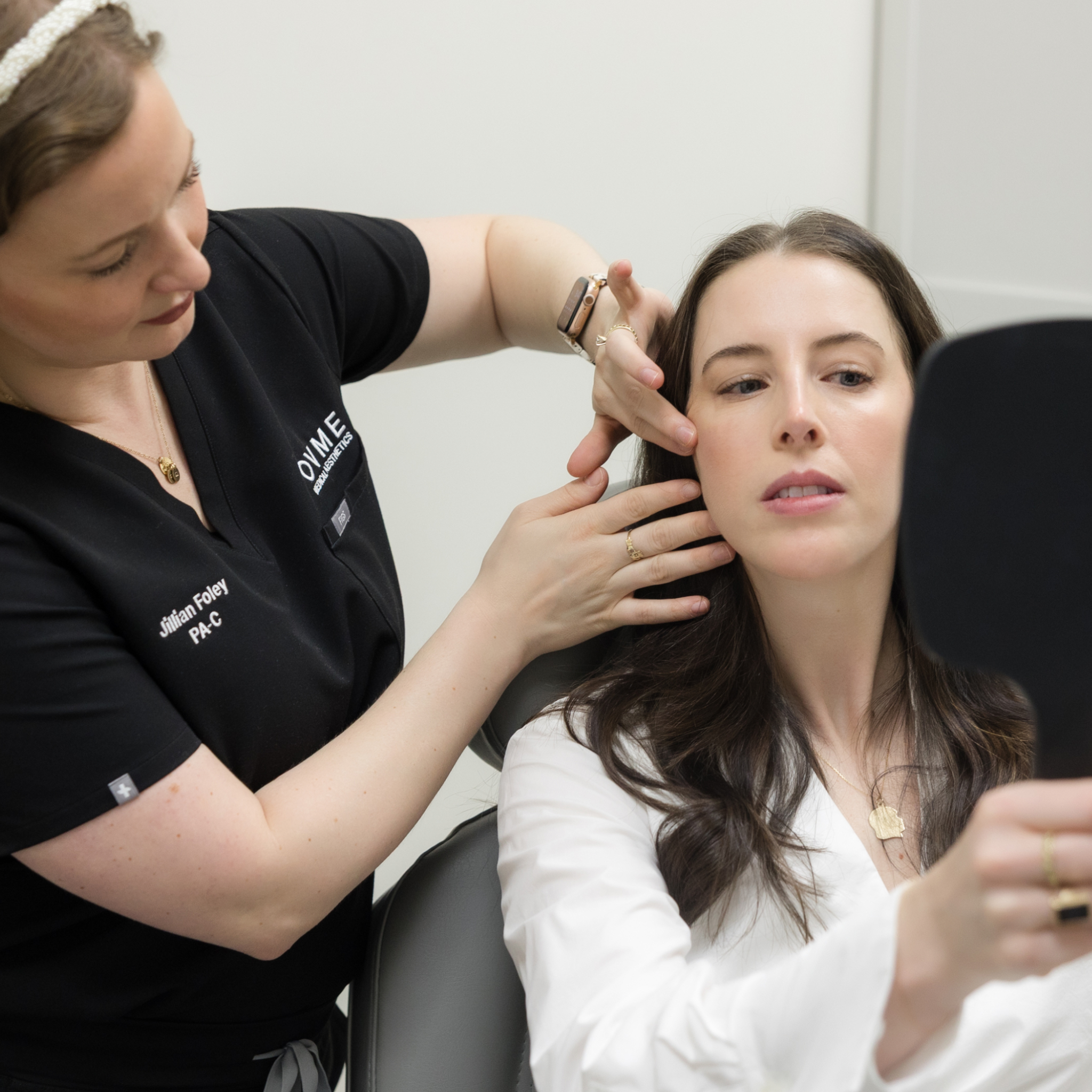
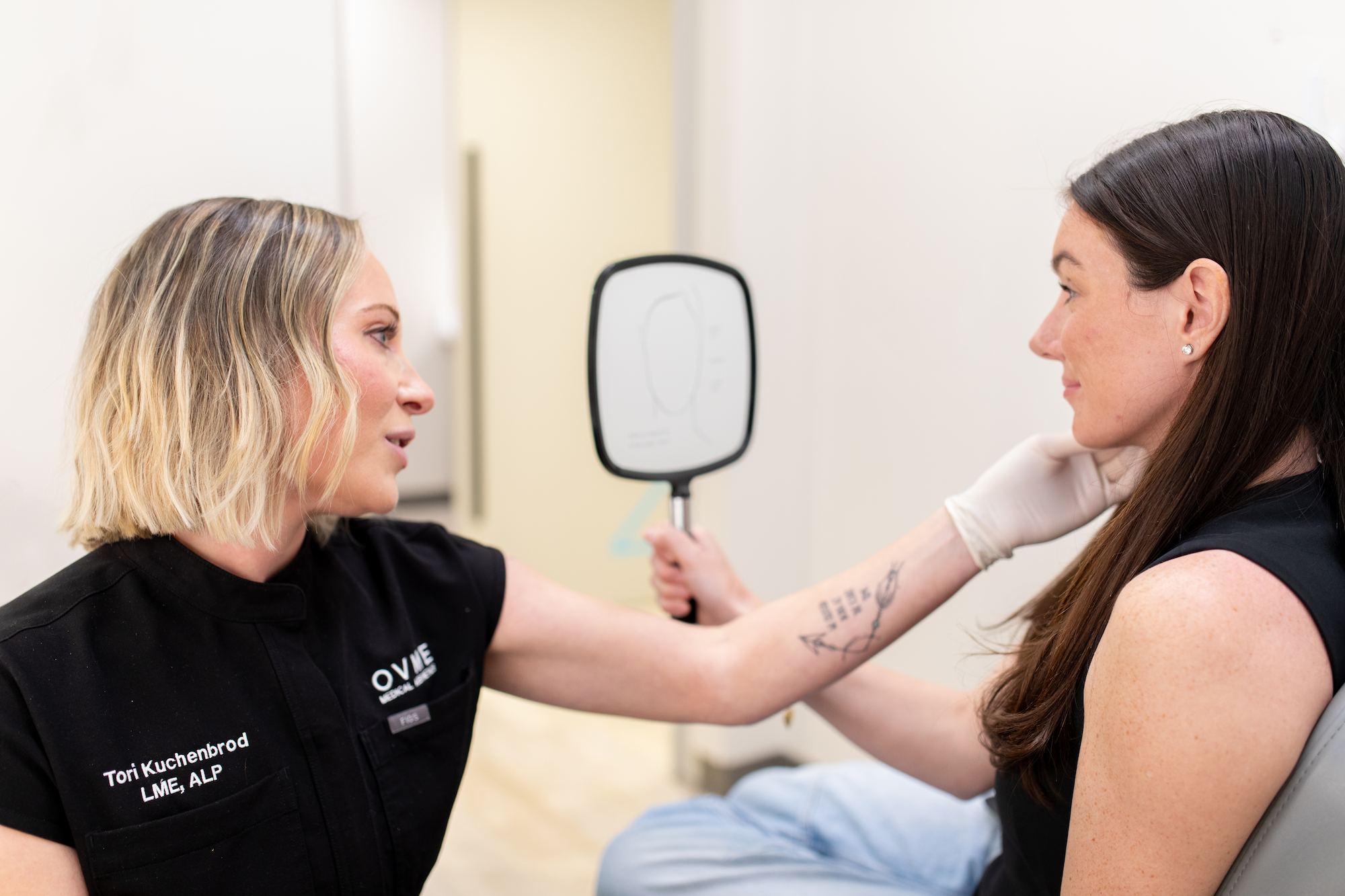
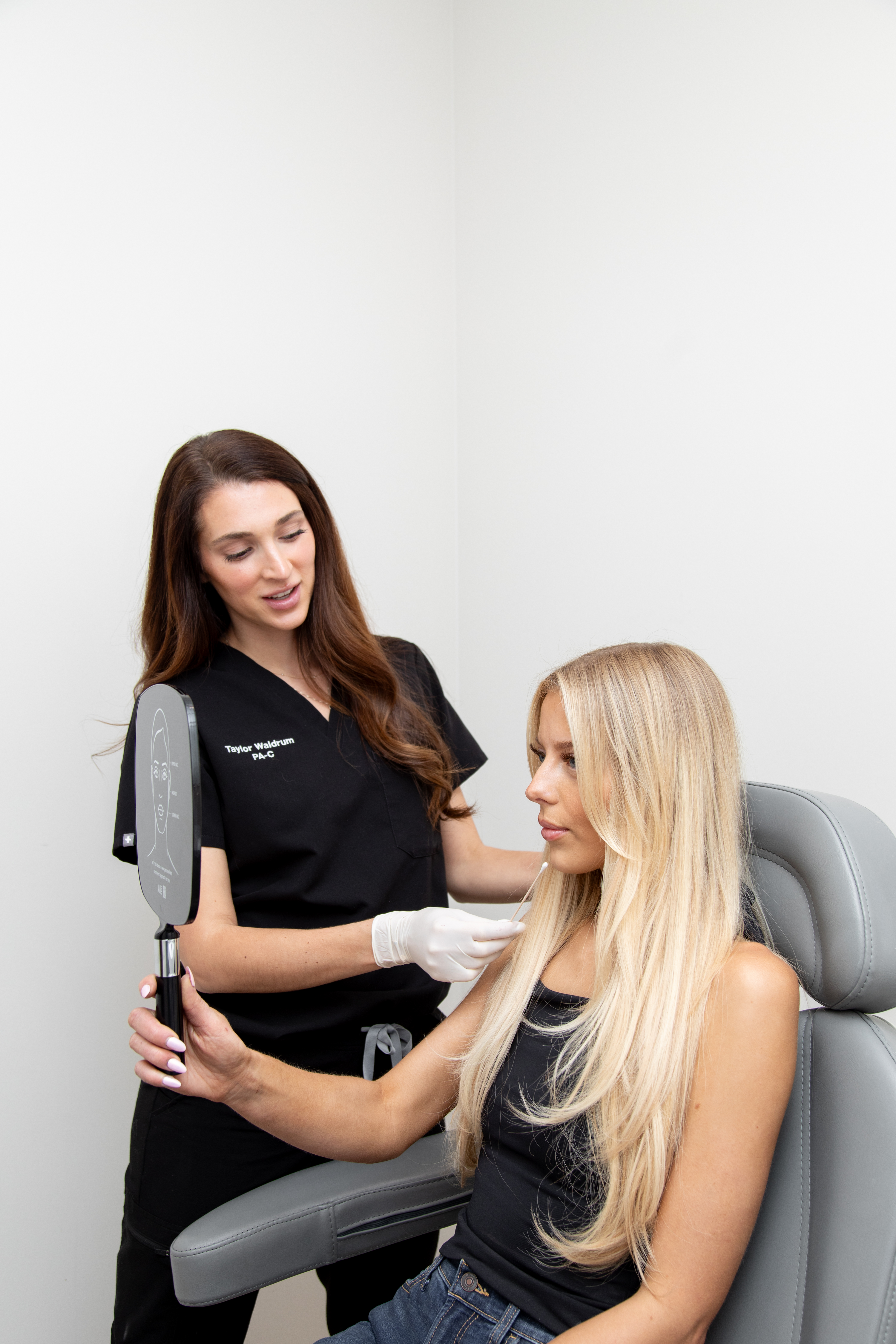
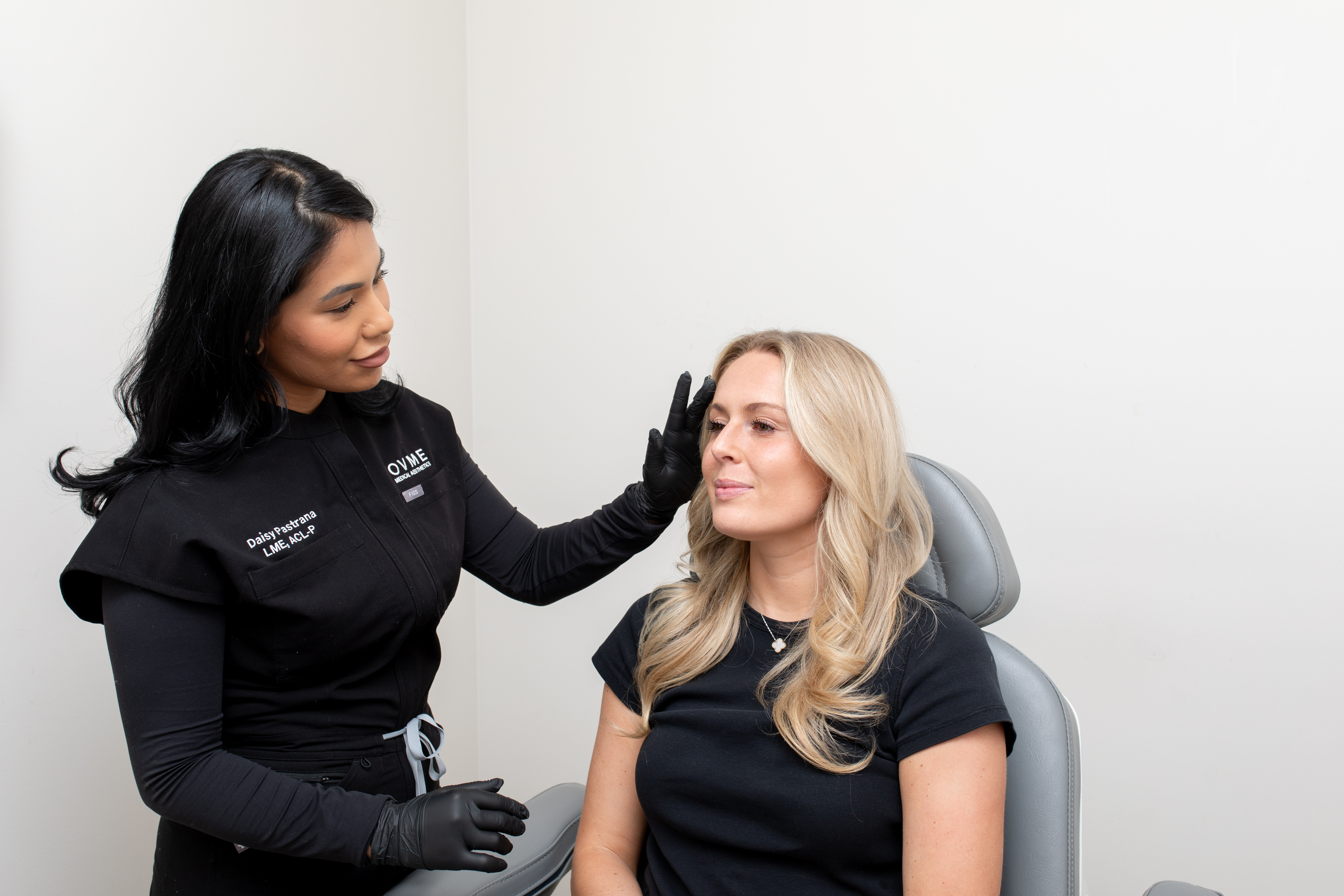
A complimentary OVME consultation is the no-commitment way to figure out what fits your stage and goals. A licensed provider: registered nurse, nurse practitioner, or physician assistant, supervised by medical directors who are board-certified plastic surgeons, assesses your concerns in person, listens to what you’re hoping for, and recommends what makes sense.
Sometimes that recommendation is a multi-treatment non-surgical plan. Sometimes it’s “you’d be a better candidate for a surgical consultation with a plastic surgeon, here’s what to look for.” Either answer is the right one if it’s the honest one.
For broader context on the OVME treatment menu, see the skin tightening guide and the best injectables for facial rejuvenation guide.
Find your nearest OVME location or book through the OVME mobile app.
Frequently Asked Questions
How do injectables compare to traditional cosmetic surgery?
Injectables and cosmetic surgery address different stages and types of aesthetic concerns. Injectables (neuromodulators, dermal fillers, biostimulators, skin boosters) work in-studio with minimal downtime and produce results that last from months to years, depending on the product. Surgical procedures like a facelift correct structural laxity that injectables can’t reach and typically last 10 to 15 years. The right choice depends on your specific concerns, not a universal hierarchy.
Are injectables safer than cosmetic surgery?
Both injectables and FDA-approved cosmetic surgical procedures are considered safe when performed by qualified, licensed providers. Injectables involve less procedural risk because they’re minimally invasive, require no general anesthesia, no incisions, shorter recovery, but they’re not risk-free. Surgical procedures carry the standard risks of any surgery but produce more durable, structural results. Discuss your specific medical history and goals with a licensed provider.
Can injectables achieve similar results to a facelift?
Injectables and a facelift achieve different types of results. A non-surgical approach using injectables, biostimulators, and energy-based treatments can produce meaningful improvement in volume, expression lines, and skin quality. A surgical facelift addresses structural skin laxity (significant jowling, neck banding, deep folds) at a level that non-surgical treatments cannot reach. For patients with mild-to-moderate concerns, injectables often deliver enough. For significant structural changes, surgery may be the more durable answer.
Where can I find non-surgical aesthetic treatments in the US?
OVME operates 27+ boutique studio locations across the United States, offering the full non-surgical menu, neuromodulators, dermal fillers, biostimulators, skin boosters, and energy-based treatments. Every studio is led by registered nurses, nurse practitioners, and physician assistants, all supervised by medical directors who are board-certified plastic surgeons. Find your nearest studio or book through the OVME mobile app.
Can you combine injectables with surgery for better results?
Yes, many patients use both, often in sequence. Injectables and energy-based treatments are commonly used after a surgical facelift to maintain results, refine specific areas, and support skin quality long-term. Some patients also use injectables in the years leading up to a potential surgical procedure to delay the timeline or address concerns that surgery doesn’t reach. A complimentary OVME consultation can map out how non-surgical treatments fit alongside surgical decisions you’re considering.
Individual results may vary. Consult with a licensed provider to determine if these treatments are right for you.
Keep on reading