Dermal Fillers Explained: Types, Benefits, and What to Expect
Most people considering fillers for the first time aren’t looking for a dramatic change. They want to look like themselves — just more rested, more refreshed, a little more them. The real benefits of dermal fillers, when approached thoughtfully, are about exactly that: restoring what time naturally changes, without anyone knowing you had something done.
The numbers reflect how mainstream this has become. According to the American Society of Plastic Surgeons, more than 5.3 million hyaluronic acid filler procedures were performed in the United States in 2024 — making them the second most-performed minimally invasive cosmetic procedure in the country. Most of those patients weren’t seeking transformation. They were seeking confidence.
Here’s what you actually need to know before booking.
What Are Dermal Fillers?
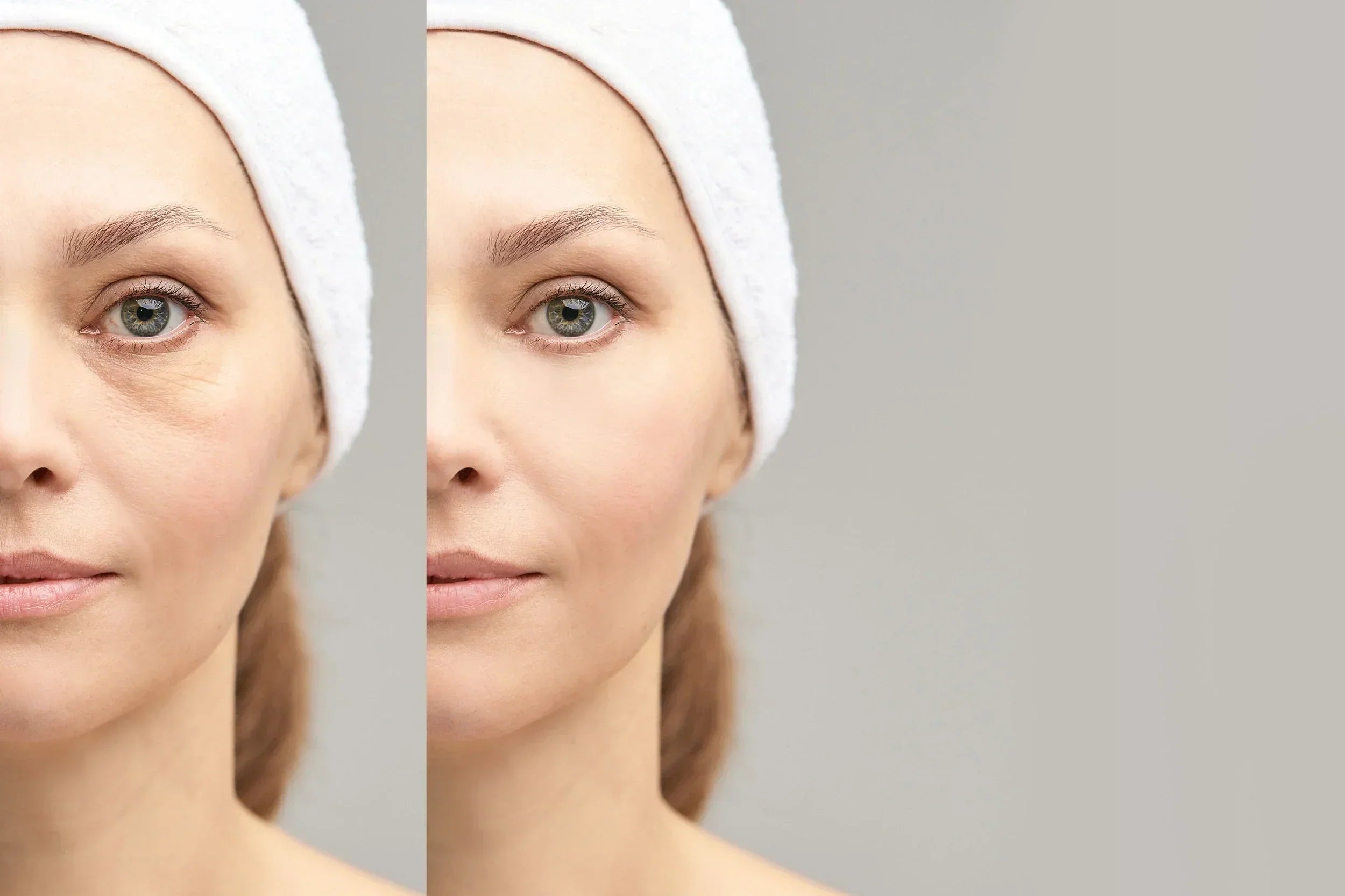
Dermal fillers are injectable gels — most commonly made from hyaluronic acid, a substance your body already produces naturally — that restore volume, smooth lines, and enhance facial contours without surgery. They work by restoring lost volume that’s shifted or diminished with time, or adding structure where more definition is wanted.
Fillers are not the same as Botox® and Dysport® at OVME. Those treatments relax the muscles that cause dynamic lines like crow’s feet and forehead lines. Fillers and neurotoxins are two different tools, often used together — though each works independently and serves a distinct purpose.
Determining which one — or which combination — is right for you is exactly the kind of question a licensed provider is trained to answer. At OVME, those conversations happen every day across 27+ boutique studio locations staffed by registered nurses, nurse practitioners, and physician assistants — all supervised by medical directors that are board certified plastic surgeons.
The Benefits of Dermal Fillers
The case for fillers is genuinely straightforward. The benefits that matter most to patients evaluating whether they’re worth it tend to come down to five things.
Immediate, Visible Results
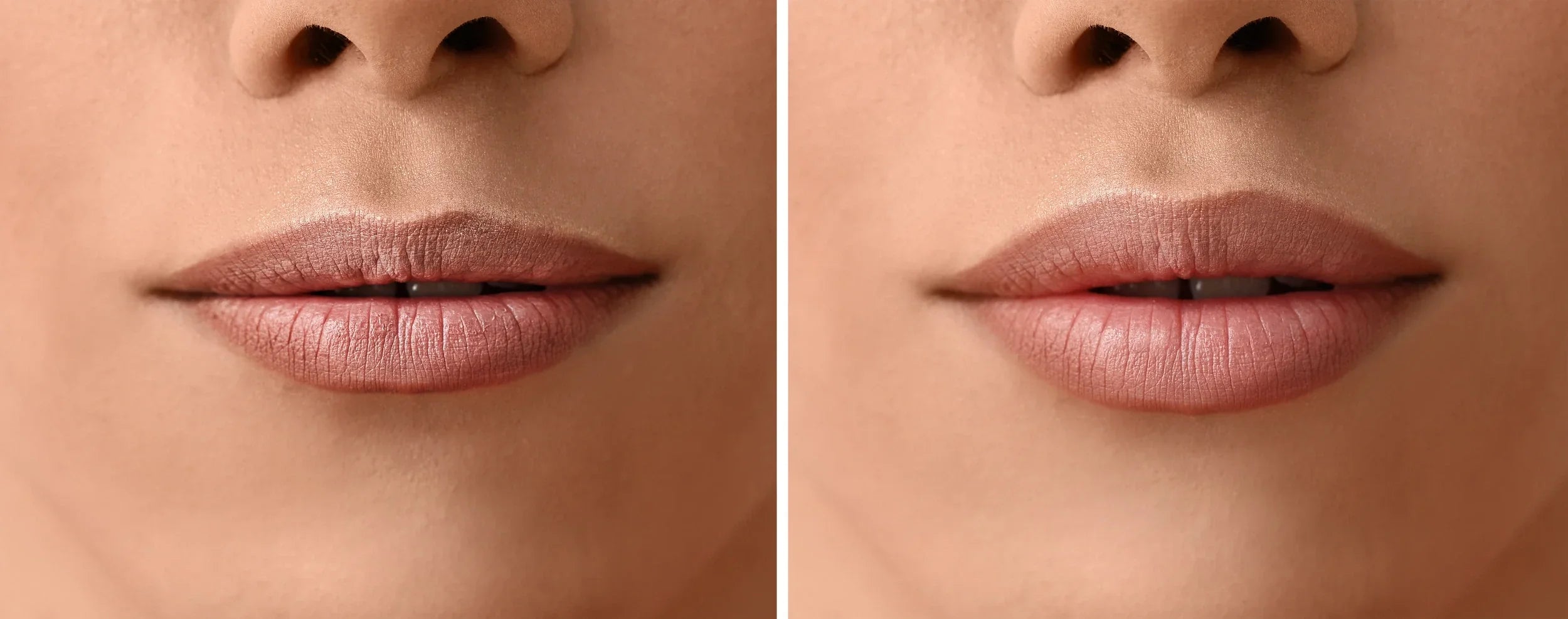
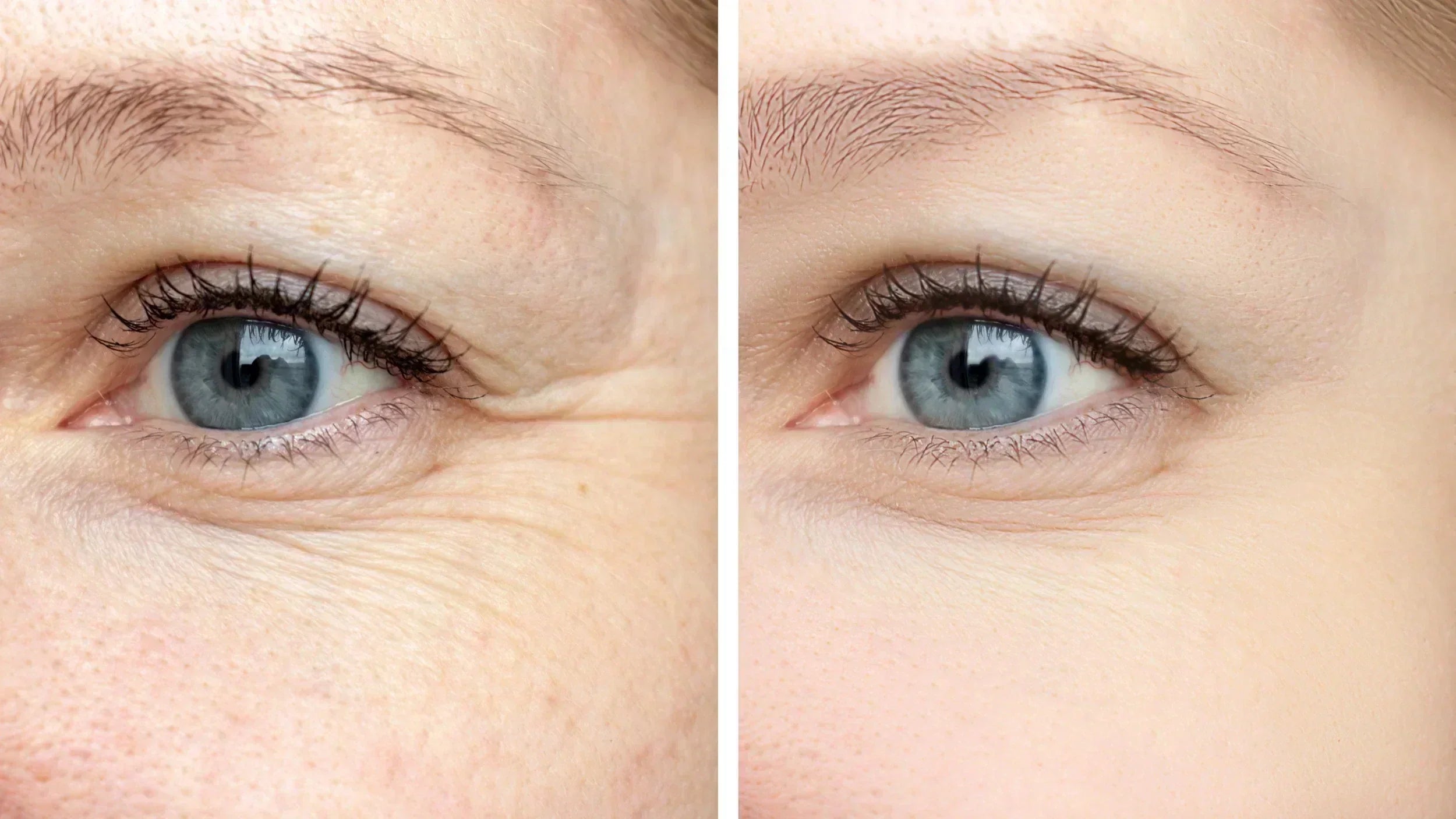
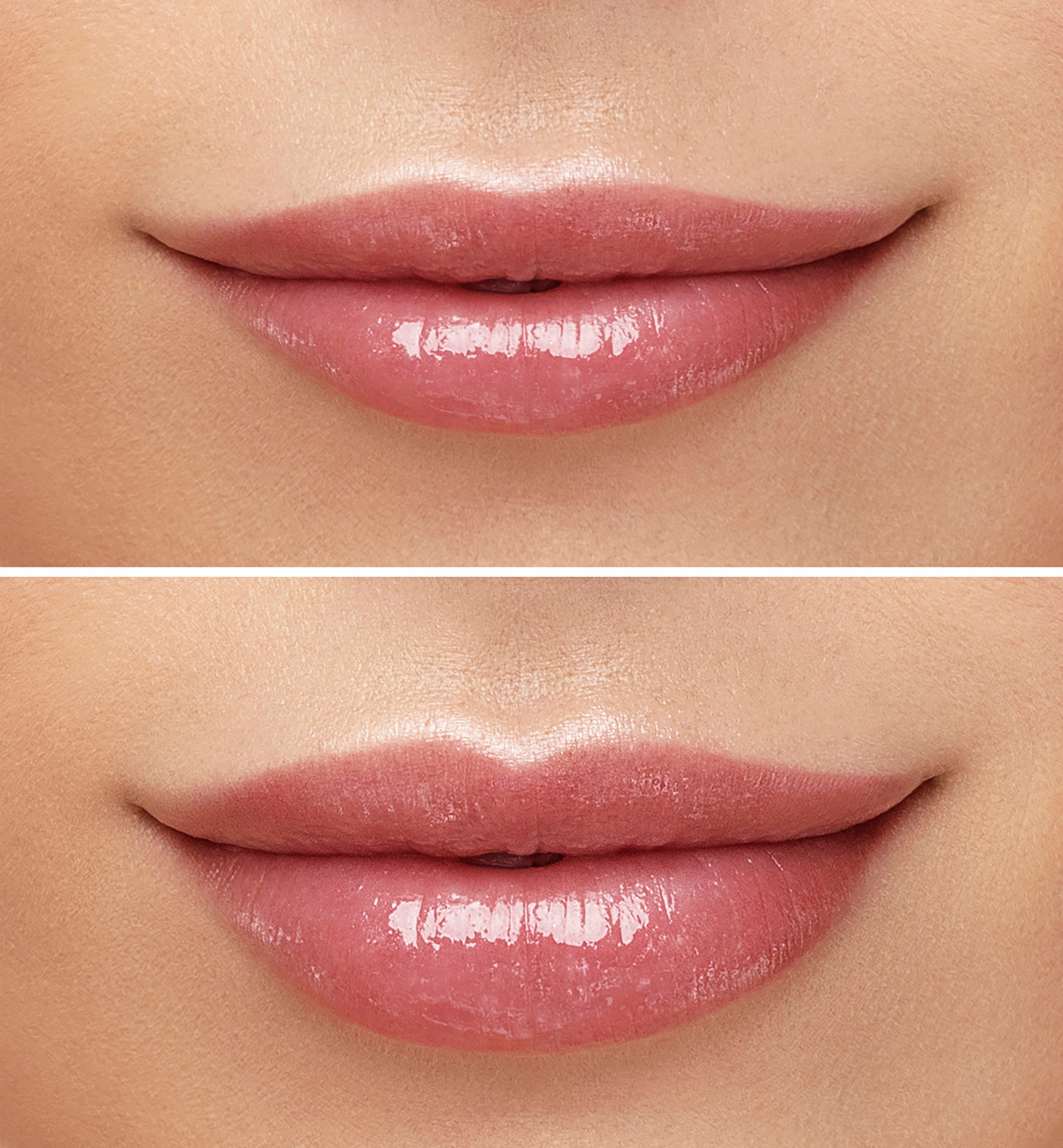
With hyaluronic acid fillers — the most widely used and safest type — you can see the difference the same day as your appointment. Unlike skincare routines or treatments that work gradually over months, HA fillers deliver visible change when you walk out the door.
No Surgery, Minimal Downtime
A filler appointment typically takes forty-five to sixty minutes. Most patients return to work and normal activity the same day. Swelling and bruising, when they occur, usually resolve within one to two weeks.
Fully Customizable to Your Goals
Lip definition, cheek volume, a more structured jawline, support around the eyes — filler can be precisely placed and thoughtfully adjusted based on your specific anatomy and what you’re looking for. There’s no one-size approach, which is why the consultation is the most important part of the process.
Reversibility
This is the benefit that deserves more attention than it typically gets. Hyaluronic acid fillers can be dissolved with an enzyme called hyaluronidase if you’re not satisfied with the results or your goals change. For first-timers especially, knowing there’s a safety net changes the risk calculation entirely.
Natural-Looking Outcomes
The goal isn’t to look different. It’s to look better — more rested, more defined, more like the version of yourself you see on a good day. The most common complaint patients have about filler outcomes they’ve seen on others comes from overcorrection, not from the product itself. Individual results may vary, and outcome quality is meaningfully tied to provider skill.
Types of Dermal Fillers — and What Each One Does Best
Hyaluronic acid (HA) fillers
Juvederm® and Restylane® are the most widely used HA filler families. They’re gels that integrate with tissue to add volume and smooth lines, with results that are both immediate and reversible. Different formulations are calibrated for different areas:
-
Lips: Soft, flexible HA formula for natural definition and hydration
-
Cheeks: Denser, longer-lasting HA for lift and structural volume
-
Under-eyes / tear troughs: Thin, precise HA for delicate tissue
-
Jawline and chin: Structural HA for definition and projection
-
Fine lines around the mouth: Soft HA for surface-level smoothing
Collagen biostimulators
Sculptra® at OVME takes a different approach. Rather than adding volume directly, Sculptra® (poly-L-lactic acid) stimulates your body’s own collagen production over three to six months, gradually restoring facial structure. Results last up to two years with a series of sessions. It’s not reversible with an enzyme — but for patients experiencing broader volume changes, including those managing facial changes during a weight management journey, Sculptra® offers a more durable, naturally progressive result.
HA skin boosters
Skinvive® is the first and only FDA-approved hyaluronic acid skin booster — a distinct category from volumizing fillers. Rather than adding contour, it improves skin quality from within: hydration, smoothness, and a natural glow delivered through micro-droplets of HA throughout the skin. It’s a treatment for texture and radiance, not structure.
Regenerative injectables
For patients interested in options that work with the body’s own biology, OVME also offers PRFM Gel (platelet-rich fibrin matrix) and Under Eye PRP — regenerative treatments that use concentrated growth factors to support tissue repair and renewal.
How Long Do Dermal Fillers Last?
Here’s a practical reference:
|
Treatment area |
Typical duration |
|
Lips |
6–12 months |
|
Cheeks |
12–24 months |
|
Jawline / chin |
12–18 months |
|
Under-eyes / tear troughs |
12–18 months |
|
Sculptra® |
Up to 2 years (series of sessions required) |
|
Skinvive® |
Up to 6 months per session |
Over 90% of patients in clinical data report satisfaction with their results. For anyone weighing whether fillers are worth it: the reversibility of HA fillers means you’re not locked in — you can see results, decide how you feel, and adjust. For a full picture of what to expect on cost, OVME’s treatment pricing page is a straightforward place to start. Individual results may vary.
Potential Side Effects and Risks
Dermal fillers are FDA-approved and considered safe when administered by a licensed medical professional — but like any injectable treatment, they carry risks worth understanding before you book.
Common, temporary side effects include swelling, bruising, redness, and tenderness at the injection sites. These are expected for most patients and typically resolve within one to two weeks.
Less common effects include asymmetry, lumpiness, or migration of product — most of which can be corrected or improve on their own with time. For HA fillers specifically, any dissatisfaction can be addressed with hyaluronidase.
Disclose any known allergies, medications, or medical history to your provider before treatment. Consult with a licensed provider to determine if this treatment is right for you.
What to Expect at Your First Filler Appointment
The anticipation before a first appointment is usually the hardest part. Here’s what the experience actually looks like.
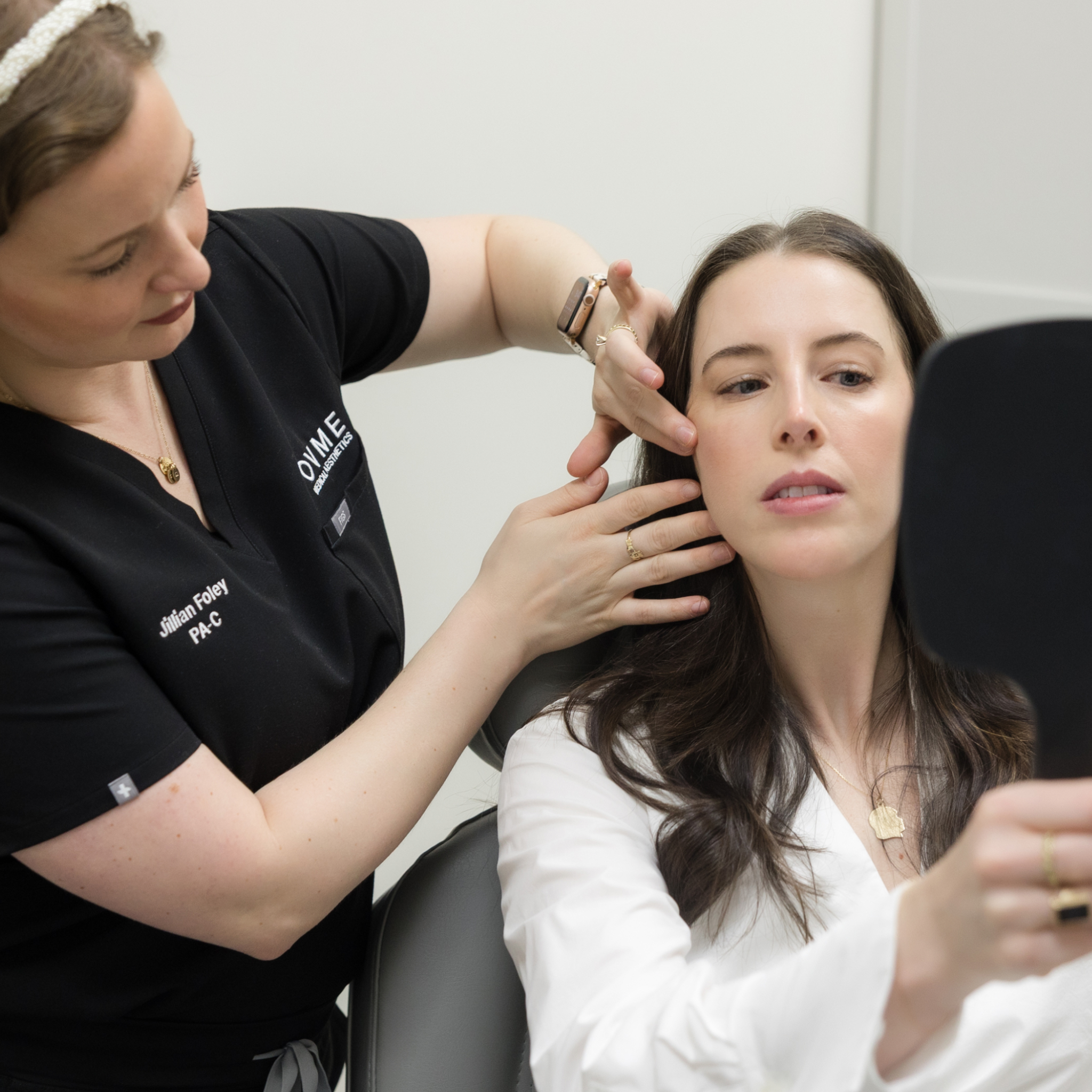
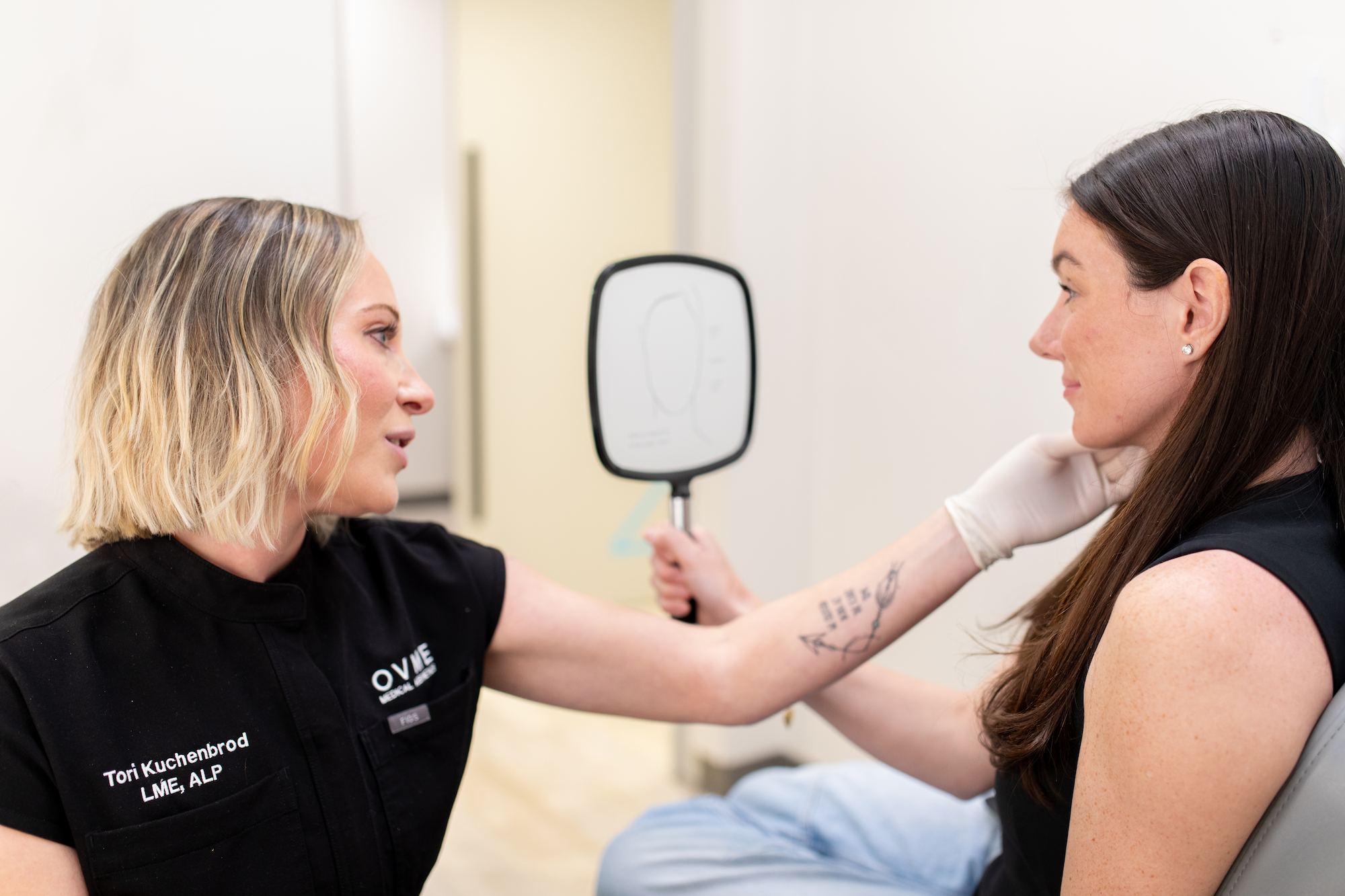
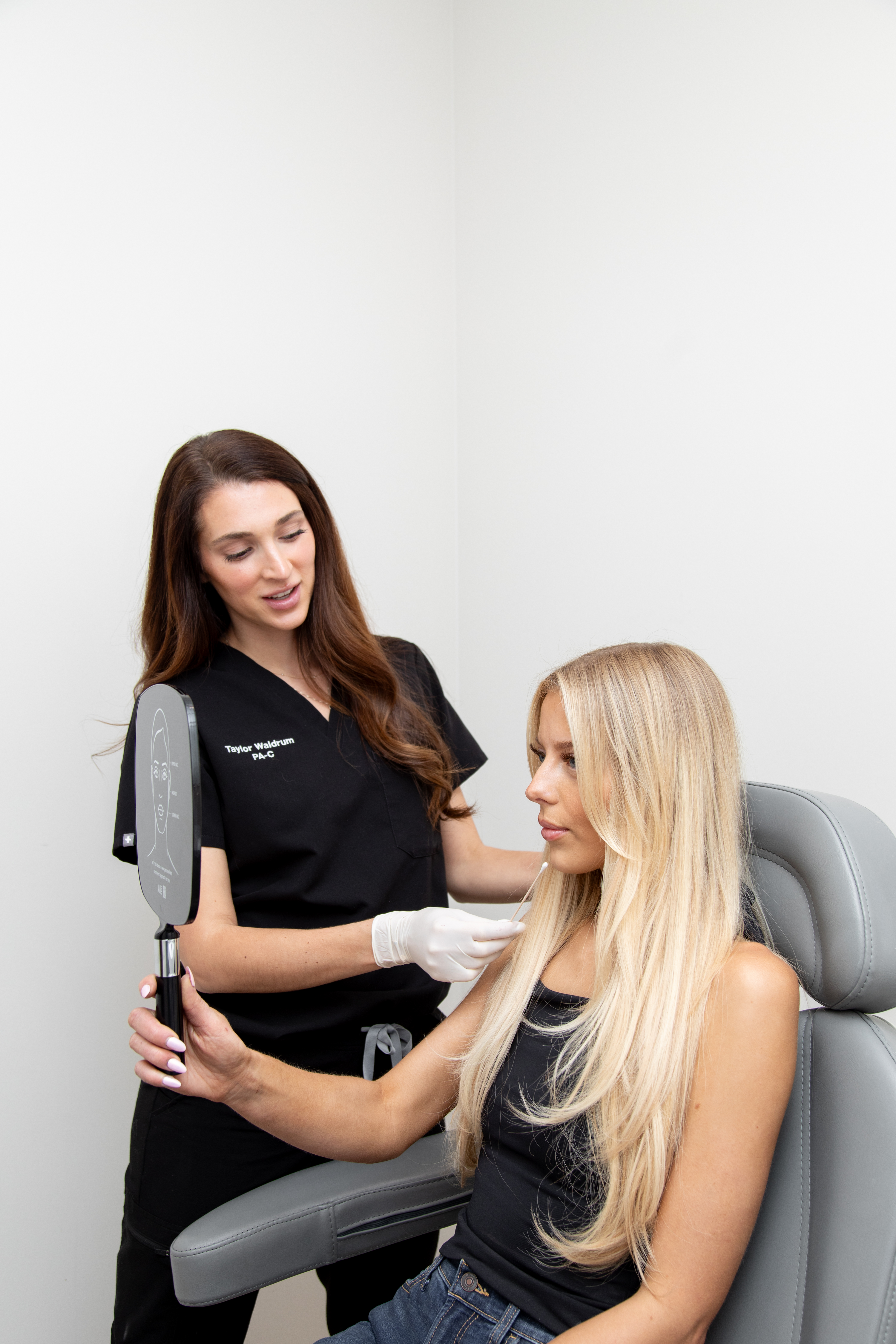
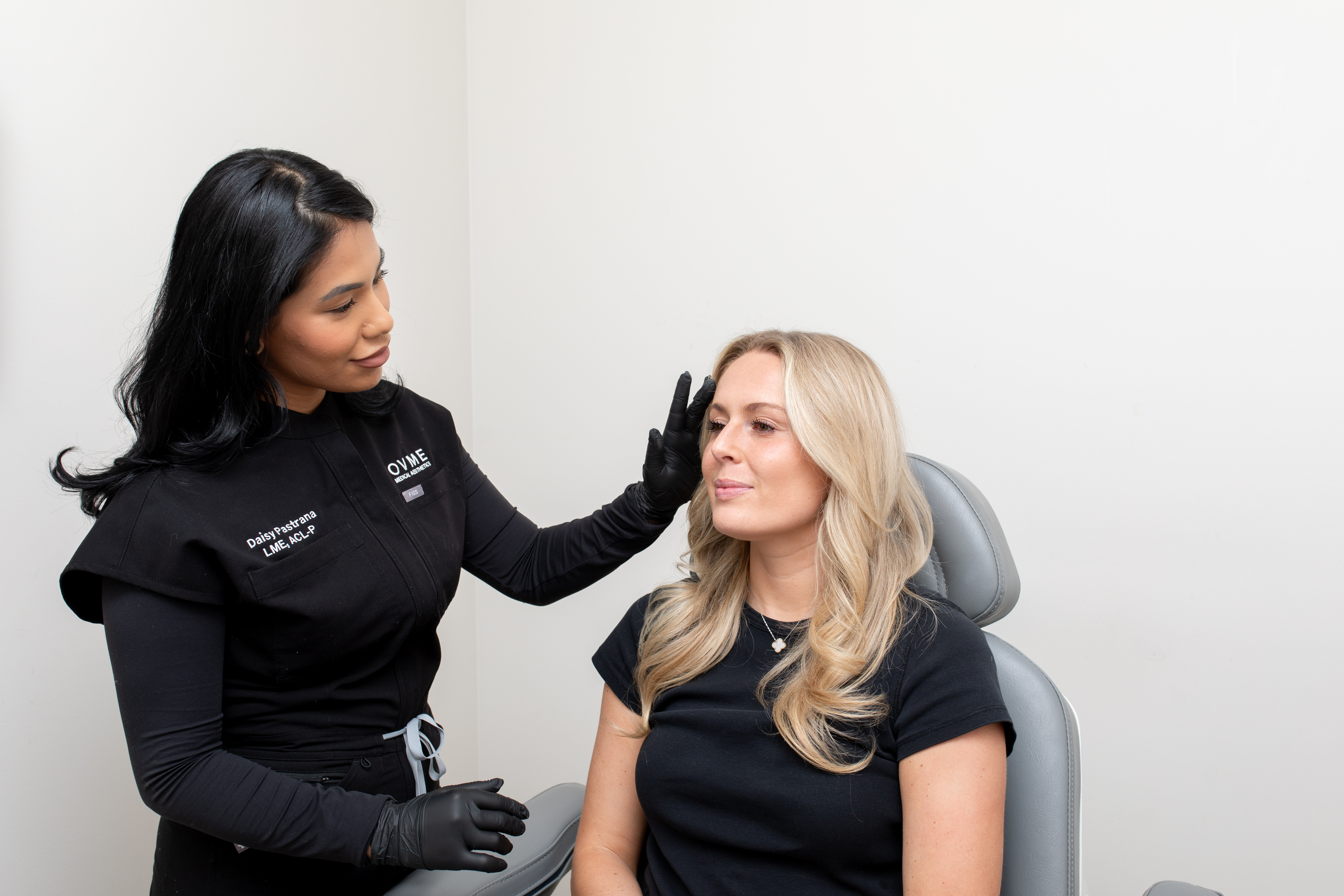
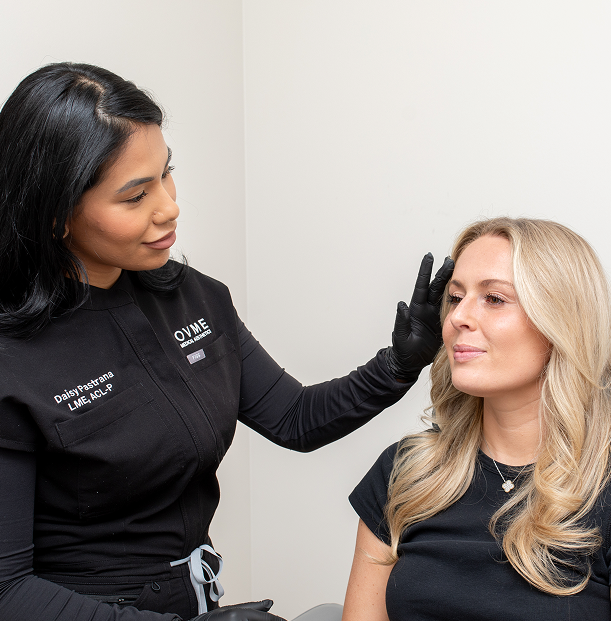
The consultation. Your appointment begins with your medical provider reviewing your goals and assessing your anatomy. This isn’t a formality — it’s where the treatment plan gets built. A skilled provider is deciding which product, placement, and volume will work best for your specific face, not just administering filler to wherever you point.
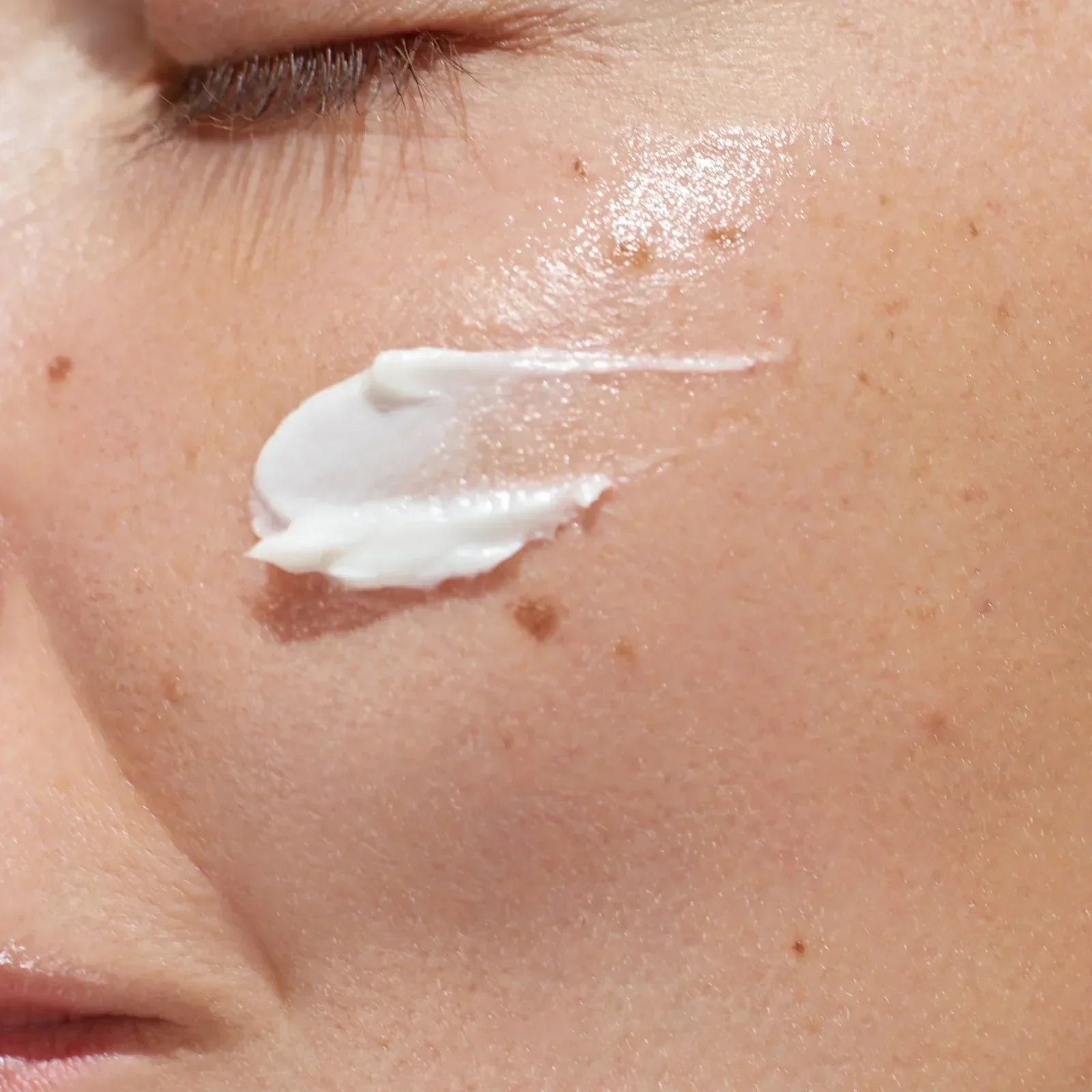
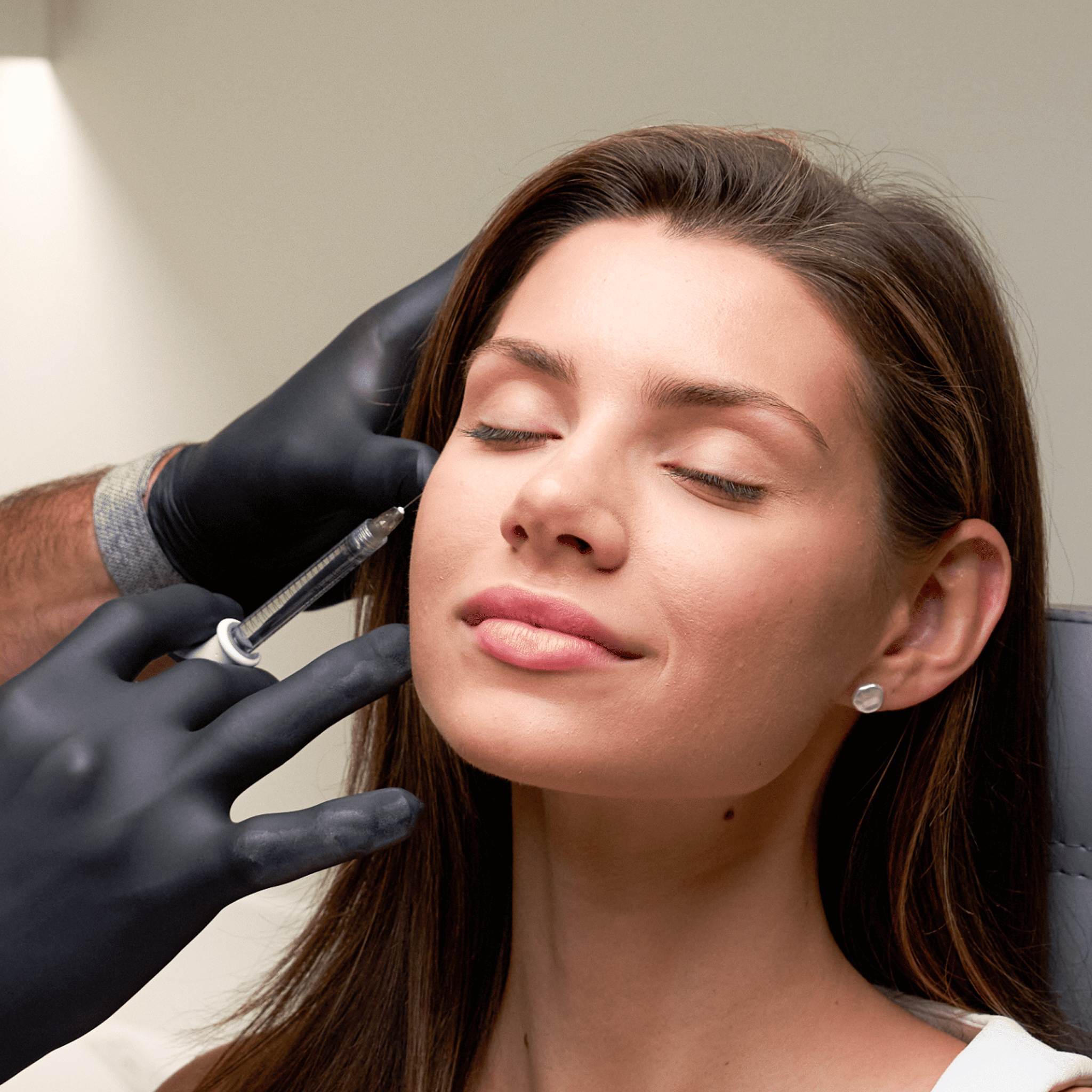
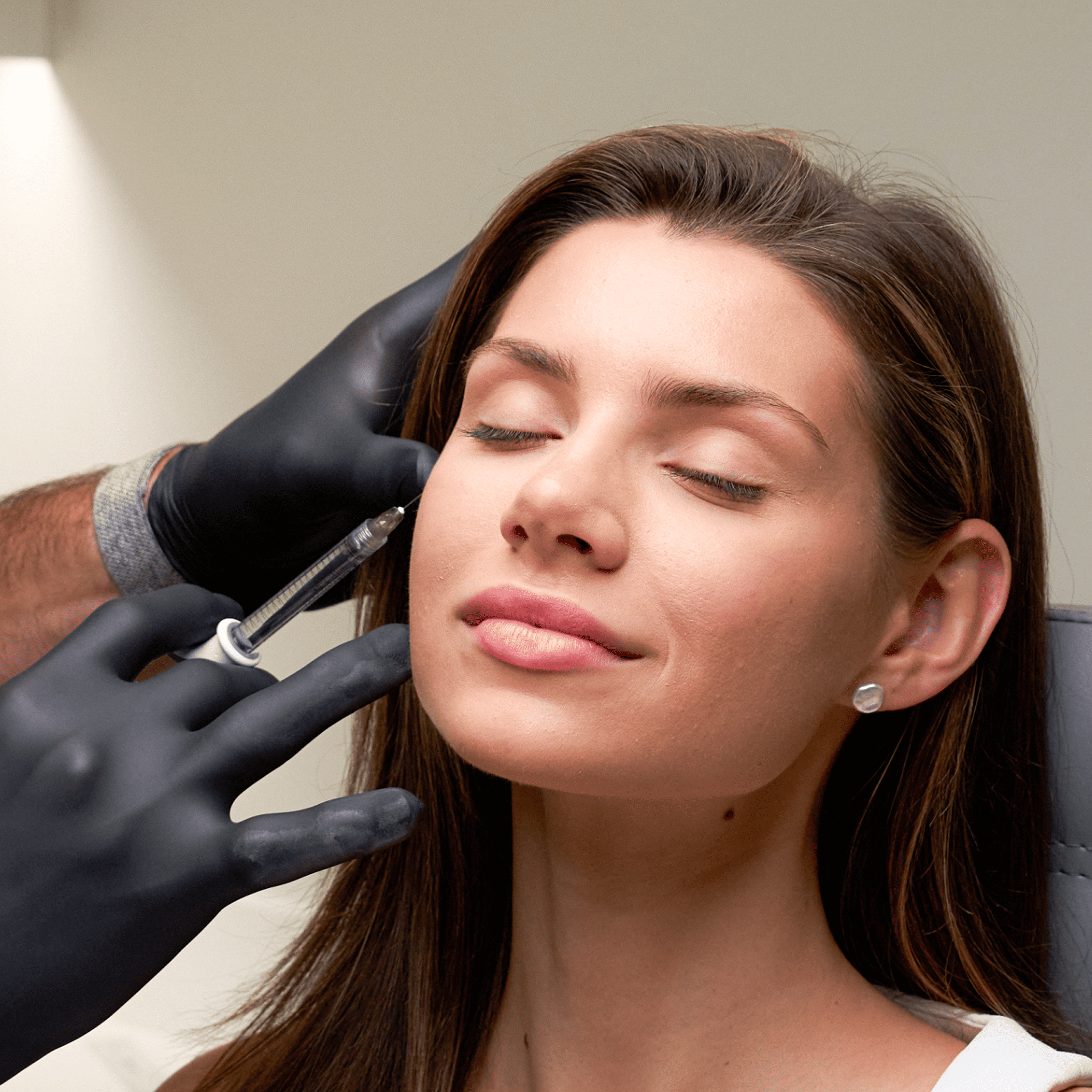
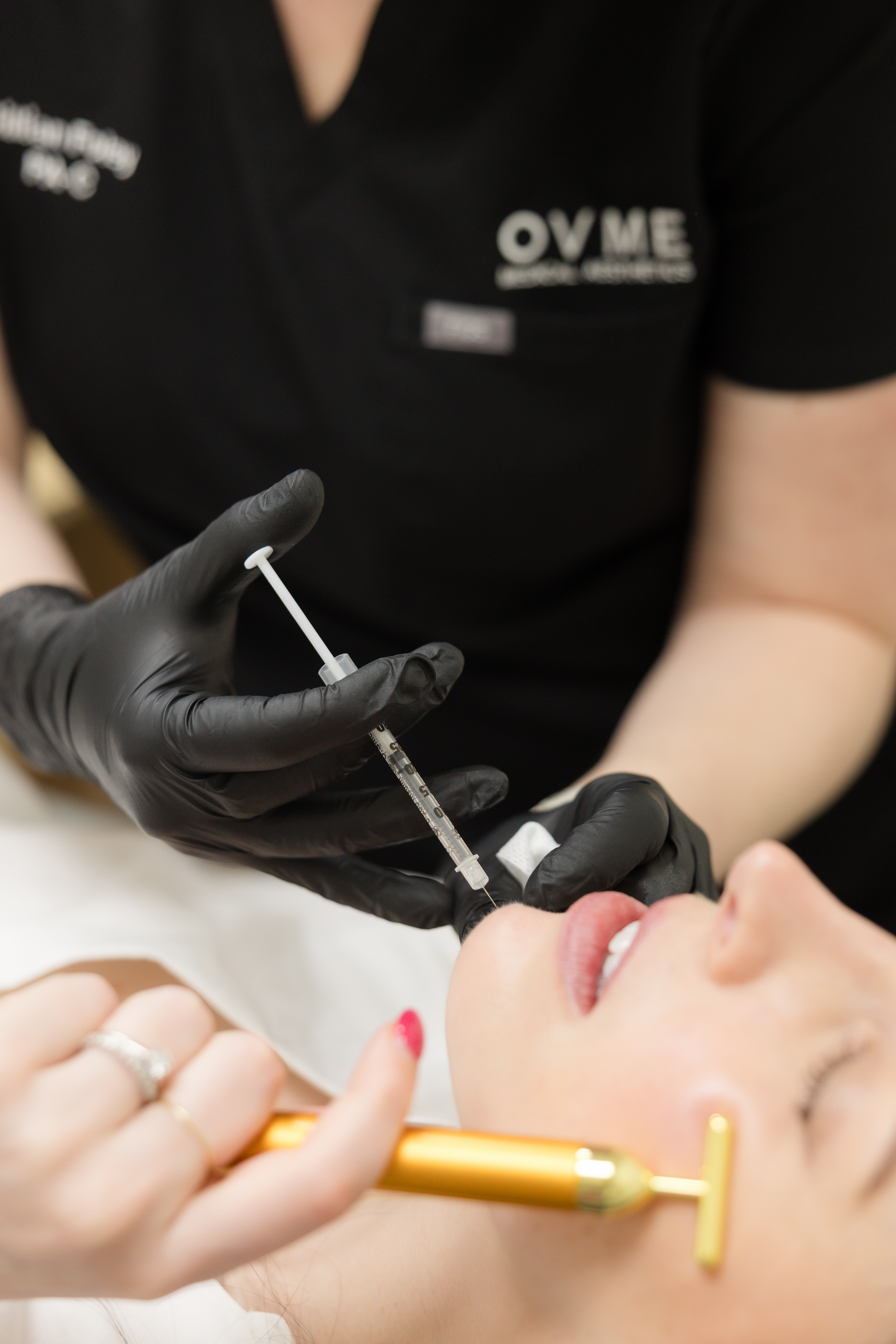
The treatment. Topical numbing cream is applied and allowed to take effect. The injections themselves are relatively quick depending on the areas treated. Most patients describe the sensation as manageable pressure, especially with the numbing in place.
Recovery — day by day.
|
Timeframe |
What to expect |
|
Immediately after |
Mild swelling, redness, possible bruising at injection sites |
|
Hours 0–6 |
Avoid touching or applying pressure to treated areas |
|
Hours 24–48 |
Skip strenuous exercise, heat exposure (sauna, steam), and alcohol |
|
Days 1–3 |
Swelling peaks, then begins to subside |
|
Days 10–14 |
Bruising resolves for most patients |
|
3–4 weeks |
Full results visible as product settles into tissue |
"First-time filler patients are often surprised by how customizable and conservative the process can be. A thorough consultation, clear communication, and a gradual approach help patients feel comfortable and confident, knowing we can enhance their features without looking overdone." — Alaina Blevins, MSPAS, PA-C
Choosing the Right Filler — and the Right Provider
There’s a detail about filler outcomes that tends to get lost in the research phase: the quality of your result is as much about the person holding the syringe as the product being injected. Technique, product selection, placement depth, and aesthetic judgment all shape what you see in the mirror afterward.
When evaluating where to go, the things worth looking for are: licensed medical professionals performing or supervising all injections, specific injectable training beyond base credentials, and a studio where the aesthetic philosophy aligns with yours — natural, enhancing, not aggressive.
Dermal filler and lip filler treatments at OVME are available across 27+ locations nationwide. One feature that matters specifically for filler patients: the OVME mobile app lets you choose your provider before you book — reviewing their work and reading patient feedback rather than being assigned whoever’s available. In a treatment where the provider’s eye shapes the outcome, that kind of transparency isn’t a small thing.
Every consultation at OVME is complimentary, available in-studio or virtually, with no pressure and no obligation.
Start With a Conversation
The benefits of dermal fillers are real — and so is the fact that a great outcome starts with a great conversation. Whether you’re curious about your first lip treatment, thinking about cheek volume, or exploring Sculptra® for longer-term restoration, the right next step is a consultation with a licensed provider who can assess your specific anatomy and goals.
Frequently Asked Questions
What are the benefits of getting dermal fillers?
Dermal fillers restore lost facial volume, soften deep lines, and enhance contours like lips, cheeks, and jawline — all without surgery or significant downtime. Results with hyaluronic acid fillers are immediate, customizable to your goals, and reversible with an enzyme called hyaluronidase if needed. Most patients return to normal activity the same day, with any swelling or bruising typically resolving within one to two weeks. Individual results may vary; consult with a licensed provider to determine what’s right for you.
How long do dermal fillers actually last and are they worth it?
Duration varies by product and area: lips typically last six to twelve months, cheeks twelve to twenty-four months, jawline twelve to eighteen months, and Sculptra® two years. Over 90% of patients report positive outcomes in clinical data, and the reversibility of HA fillers provides a meaningful safety net for first-timers evaluating whether it’s worth the investment. Individual results may vary.
I’m thinking about getting fillers for the first time — what should I expect during and after the appointment?
A typical filler appointment runs forty-five to sixty minutes: a consultation (fifteen to twenty minutes), and injections that are relatively brief. Afterward, expect some swelling and possibly light bruising that resolves in one to two weeks. Most patients return to normal activity the same day. A complimentary consultation can help you set realistic expectations.
What dermal filler treatments does OVME offer and how do I know which one is right for me?
OVME offers a full range of injectable filler treatments including lip filler, cheek filler, jawline and chin filler, tear trough filler, Sculptra® (a collagen biostimulator for gradual volume restoration), and Skinvive® — the first FDA-approved hyaluronic acid skin booster. The right treatment depends on your goals, anatomy, and timeline. A complimentary consultation with an OVME provider, available in-studio or virtually, is the best way to determine which treatment — or combination — is right for you.
Can dermal fillers be dissolved if I don’t like the results?
Hyaluronic acid fillers — the most commonly used type — can be dissolved with an enzyme called hyaluronidase if needed, making them particularly well-suited for first-timers who want flexibility. Your OVME provider will recommend the right type based on your specific goals and comfort level.
Medically reviewed by: Iman Shamloul, Senior Director, Clinical Talent Development
Last medically reviewed: March 27, 2026
Keep on reading