Microdermabrasion vs Microneedling: Which One Is Right for You?
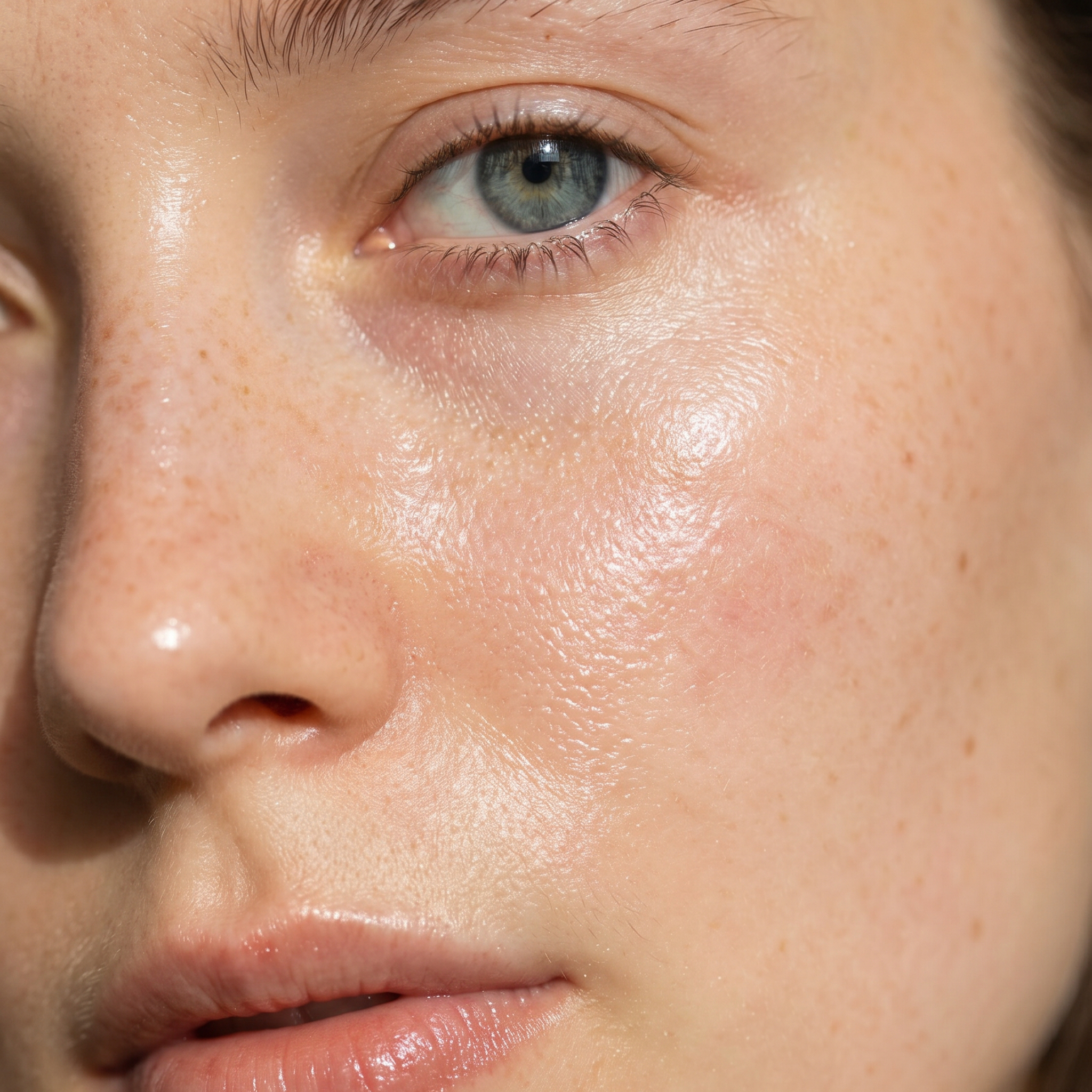
If you’ve been getting facials and microdermabrasion treatments for years and your skin texture still doesn’t look the way you want, the answer probably isn’t a different facial. Microdermabrasion works at the surface of your skin — and the texture concerns that bother most people (acne scars, large pores, fine lines, uneven structure) live deeper than that.
That’s the real difference between microdermabrasion and microneedling, or microneedling vs microdermabrasion, depending on which direction you searched. One is a surface exfoliation; the other is a dermal collagen treatment. Both have their place, but they solve very different problems. As skin texture treatment comparisons go, this one isn’t “one beats the other” — it’s “the right tool for the layer of skin you’re trying to change.” This guide walks the comparison honestly, explains which works for which concerns, and shows what OVME offers in each category.
How Microdermabrasion Works
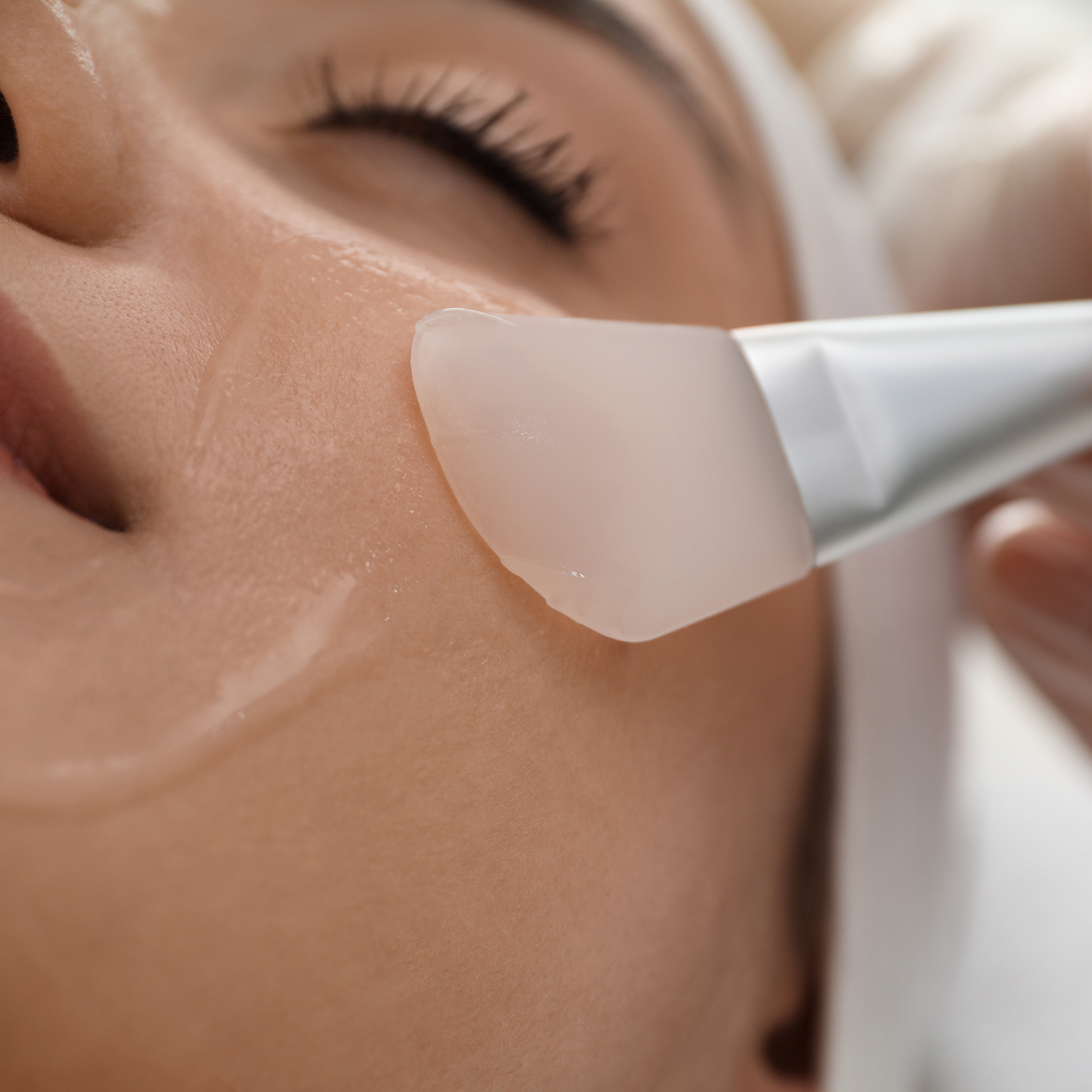
Microdermabrasion is a non-invasive exfoliation treatment that uses either a diamond-tip wand or a stream of fine crystals to mechanically remove the top layer of dead skin cells. The treatment works at the epidermis — the outermost layer of skin — and doesn’t penetrate the dermis below.
Because microdermabrasion is purely a surface treatment, it’s best for dullness, mild congestion, and short-term brightness. Results are visible immediately but temporary; most patients see effects fade within a few weeks, which is why providers typically recommend ongoing maintenance treatments. Downtime is minimal — most people return to their normal routine the same day, sometimes with a few hours of mild pinkness.
What microdermabrasion cannot do: address acne scars, build collagen, reduce enlarged pores, or smooth fine lines that originate in the deeper dermal tissue. That’s a different category of treatment entirely.
How Microneedling Works
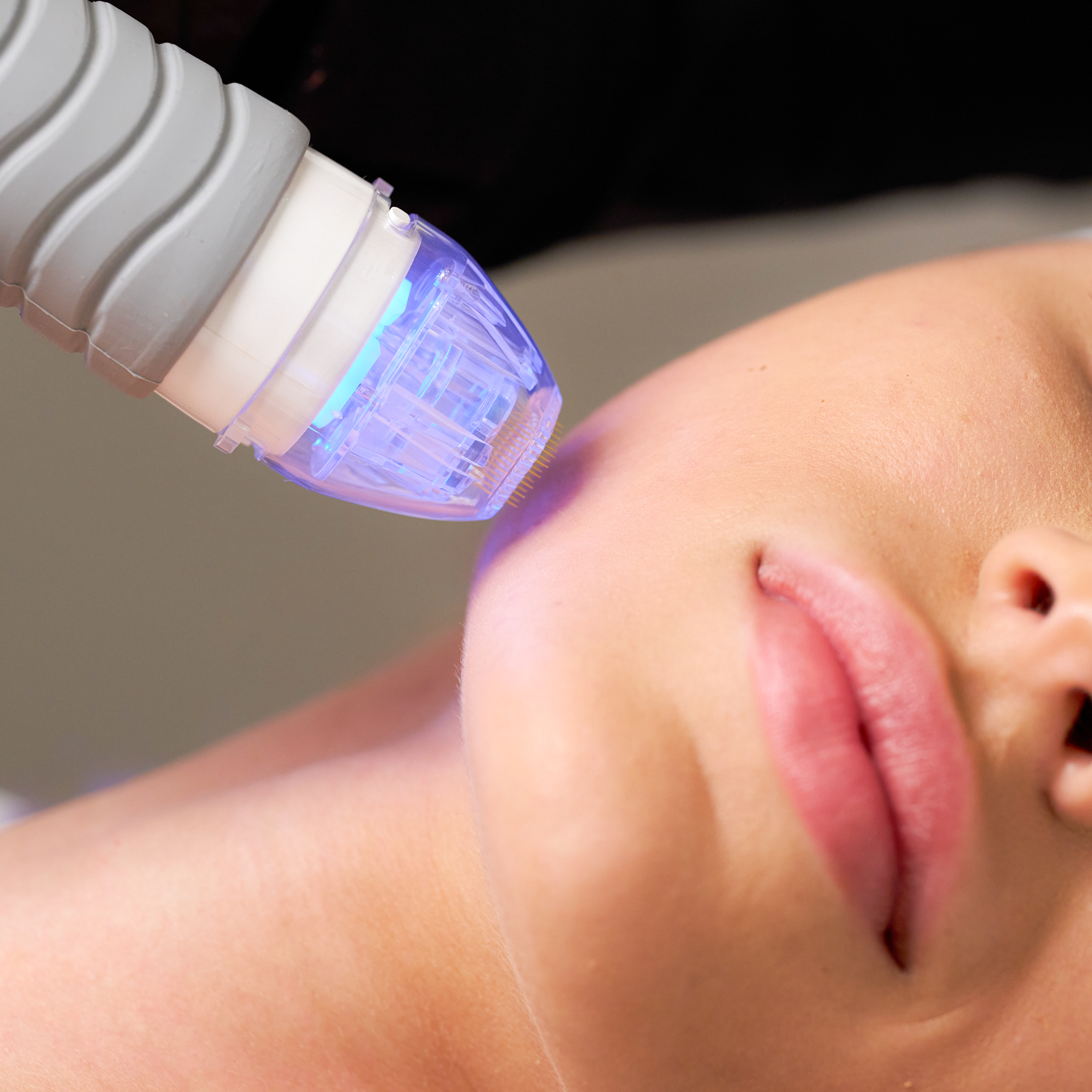
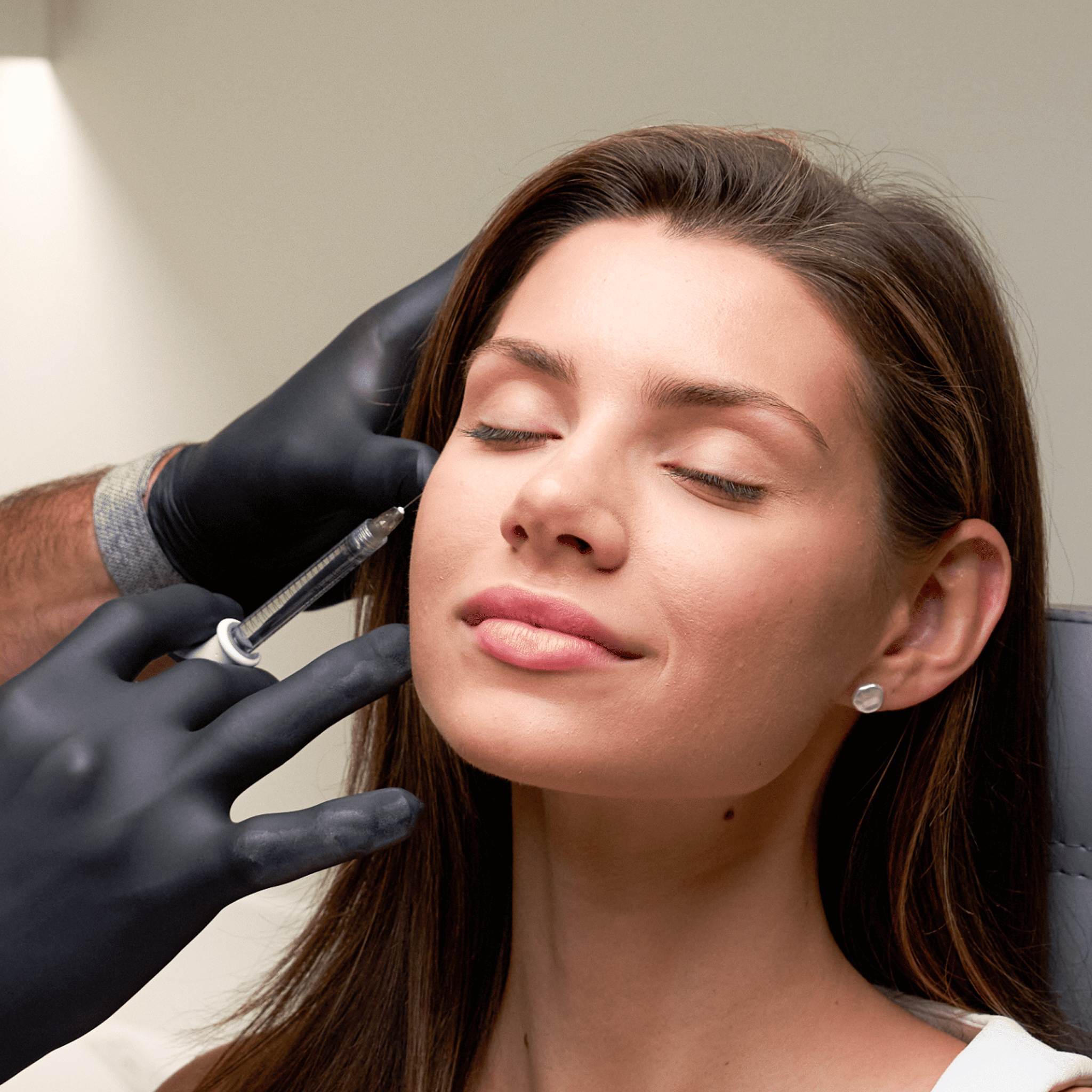
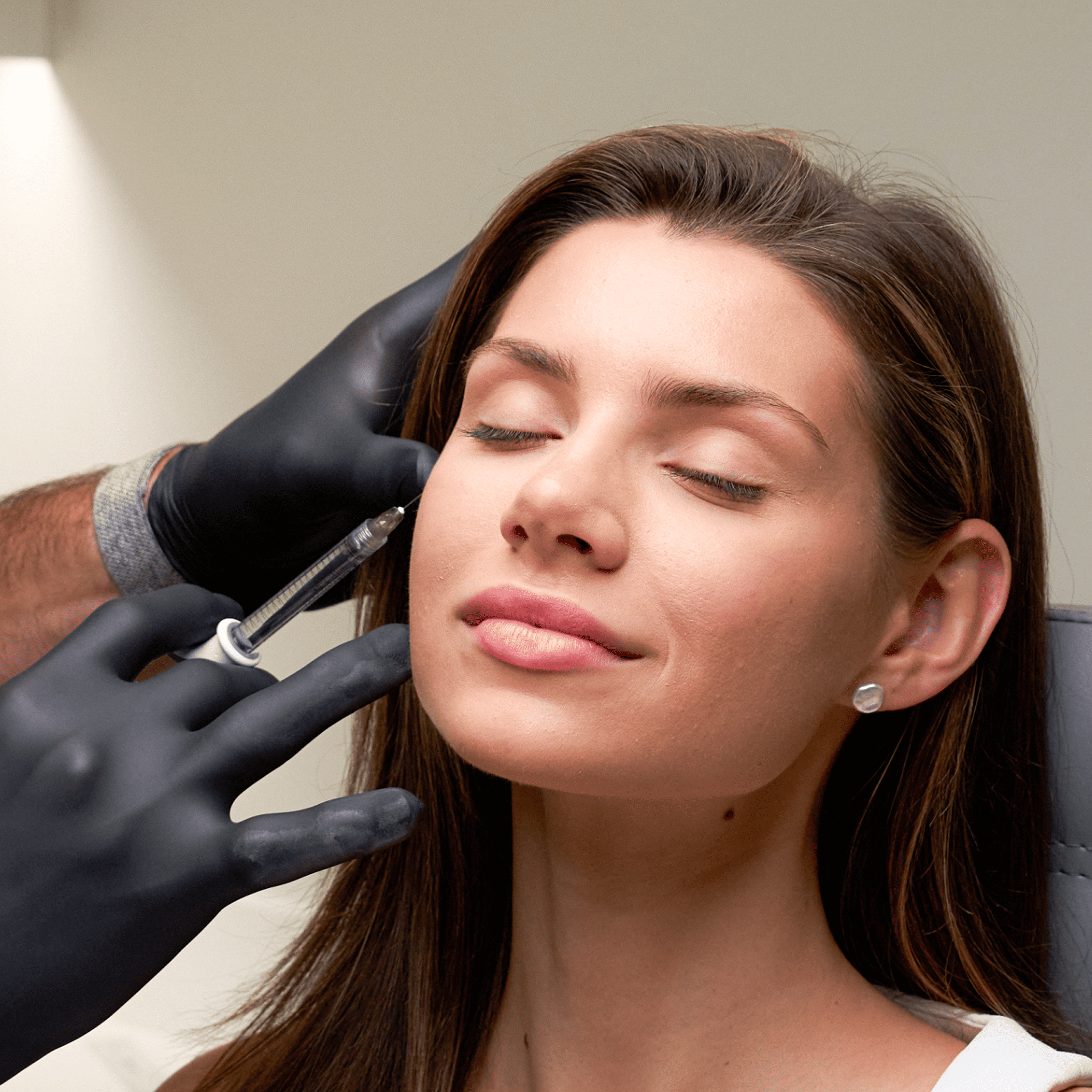
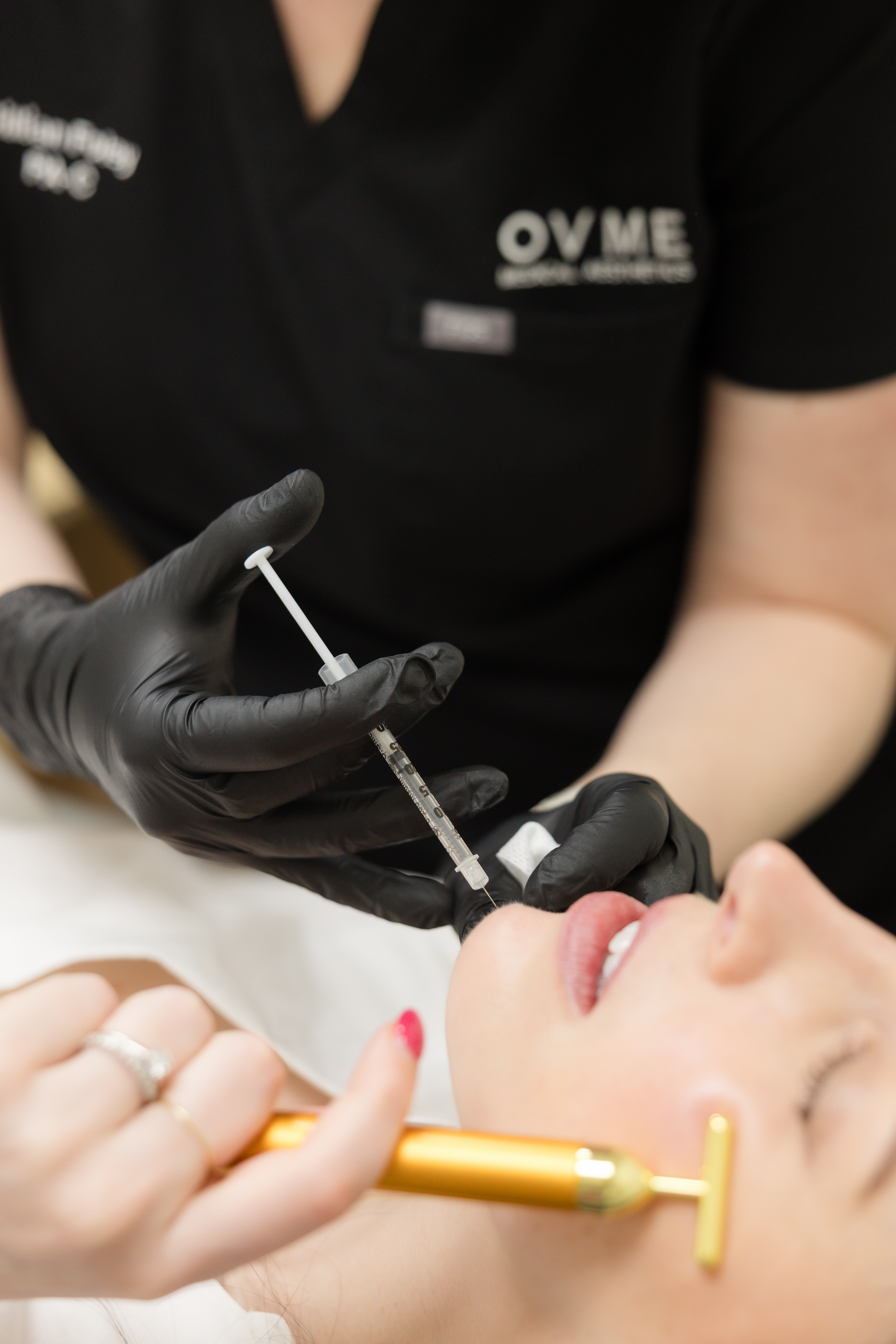
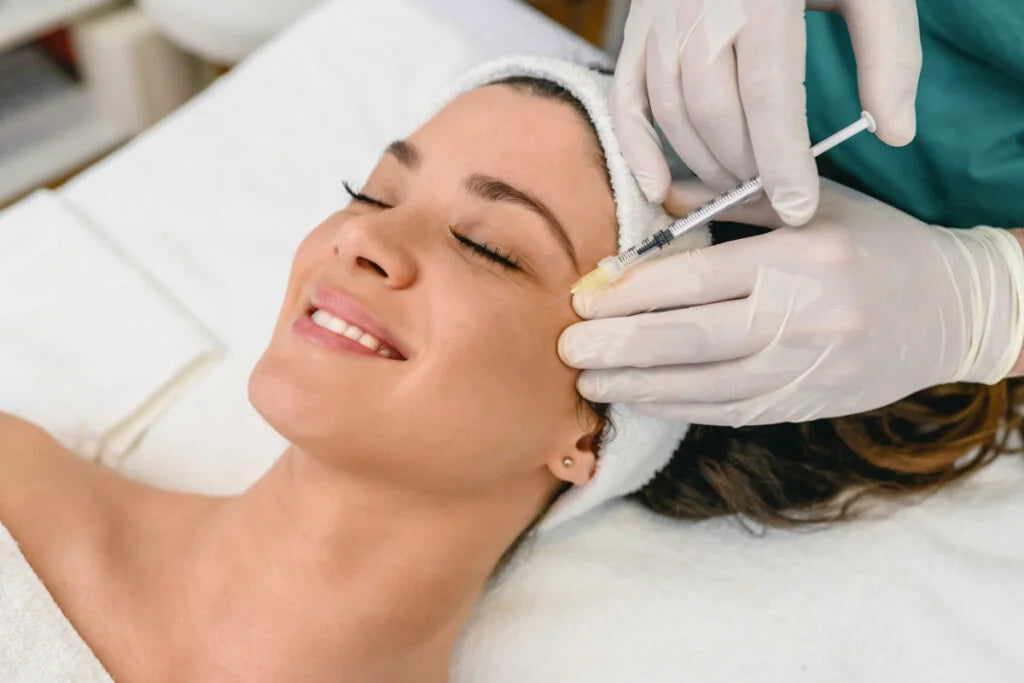
Microneedling uses fine, sterile needles to create controlled micro-injuries and/or channels in the skin. The injuries are tiny and superficial — but they’re deep enough to reach the dermis, where collagen and elastin live. The body responds to these micro-injuries with its natural wound-healing process, producing new collagen and elastin over the weeks and months that follow.
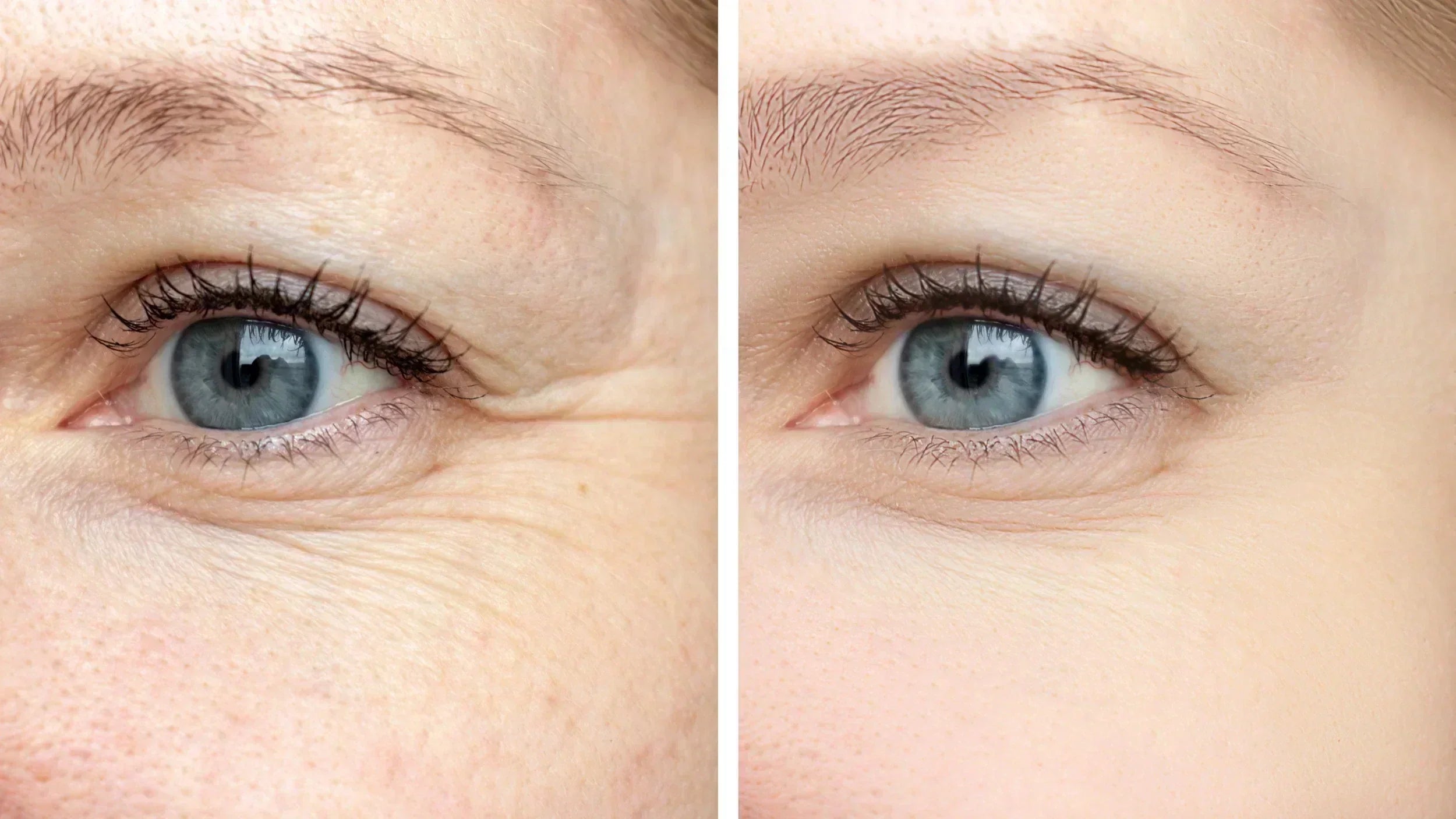
That collagen response is what makes microneedling effective for the texture concerns microdermabrasion can’t touch. Research on microneedling in dermatology shows meaningful, lasting improvement in skin texture and acne scarring.
OVME offers two microneedling options: traditional microneedling (SkinPen®), an automated treatment that uses fine needles alone — with no radiofrequency — to trigger the skin’s collagen response, and RF microneedling, which adds radiofrequency energy into the deeper dermis to support collagen remodeling and skin tightening across a series of sessions.
Downtime varies by skin type and treatment modality used, but most describe it as minimal — typically 24 to 72 hours of redness and mild swelling, with sun avoidance recommended for a week or two afterward. Many clinical studies have used a series of about 3 to 6 sessions spaced roughly a month apart to drive structural improvement, with results developing progressively over several months as new collagen matures; the exact protocol depends on your provider’s assessment.
The Key Differences: Surface vs Structure
The easiest way to think about microdermabrasion vs microneedling is to ask: do you need surface care or structural change?
|
Microdermabrasion |
Microneedling |
|
|---|---|---|
|
Where it works |
Surface (epidermis) |
Dermal layer |
|
Mechanism |
Mechanical exfoliation |
Collagen induction |
|
Best for |
Dullness, mild congestion, surface maintenance |
Acne scars, enlarged pores, fine lines, mild laxity |
|
Results |
Immediate, temporary |
Gradual, longer-lasting |
|
Downtime |
Minimal (a few hours of pinkness) |
1–3 days of redness and mild swelling |
|
Sessions |
Ongoing maintenance |
Typically, a series of 3–6 sessions, roughly a month apart, with maintenance |
|
Pain |
Generally, no pain (vibrating sandpaper feel) |
Topical numbing applied; pressure sensation |
|
Cost over time |
Per-session, indefinite maintenance |
Higher upfront series; results build and persist |
Microdermabrasion isn’t “worse” — it’s just designed for a different layer of skin and a different goal. The frustration patients report online (“microderm is just a fancy exfoliation” or “did nothing for my indented scars”) usually comes from expecting microdermabrasion to do something it is not intended to do.
The microdermabrasion vs microneedling cost comparison usually favors microneedling on a per-year basis. A single microneedling session costs more than a single microdermabrasion, but the multi-session microneedling series delivers persistent collagen-built results that microdermabrasion’s ongoing maintenance cycle can’t match.
Which Is Better for Your Concern?
The right treatment depends on what you’re trying to address. Here’s the breakdown by concern:
-
Acne scars (indented, rolling, boxcar): Microneedling. For the microdermabrasion vs microneedling for acne scars question, microneedling wins clearly — the depth of the needles is essential to remodel scar tissue in the dermis, and microdermabrasion does very little for structural scarring. For deeper or more complex scarring, see OVME’s guide to the best skin treatments for acne scars.
-
Enlarged pores: Microneedling. Pore appearance reflects underlying skin support, which microneedling addresses by stimulating collagen.
-
Fine lines and wrinkles: Microneedling. The microdermabrasion vs microneedling for wrinkles question comes down to depth — surface exfoliation doesn’t change wrinkle structure; collagen induction does.
-
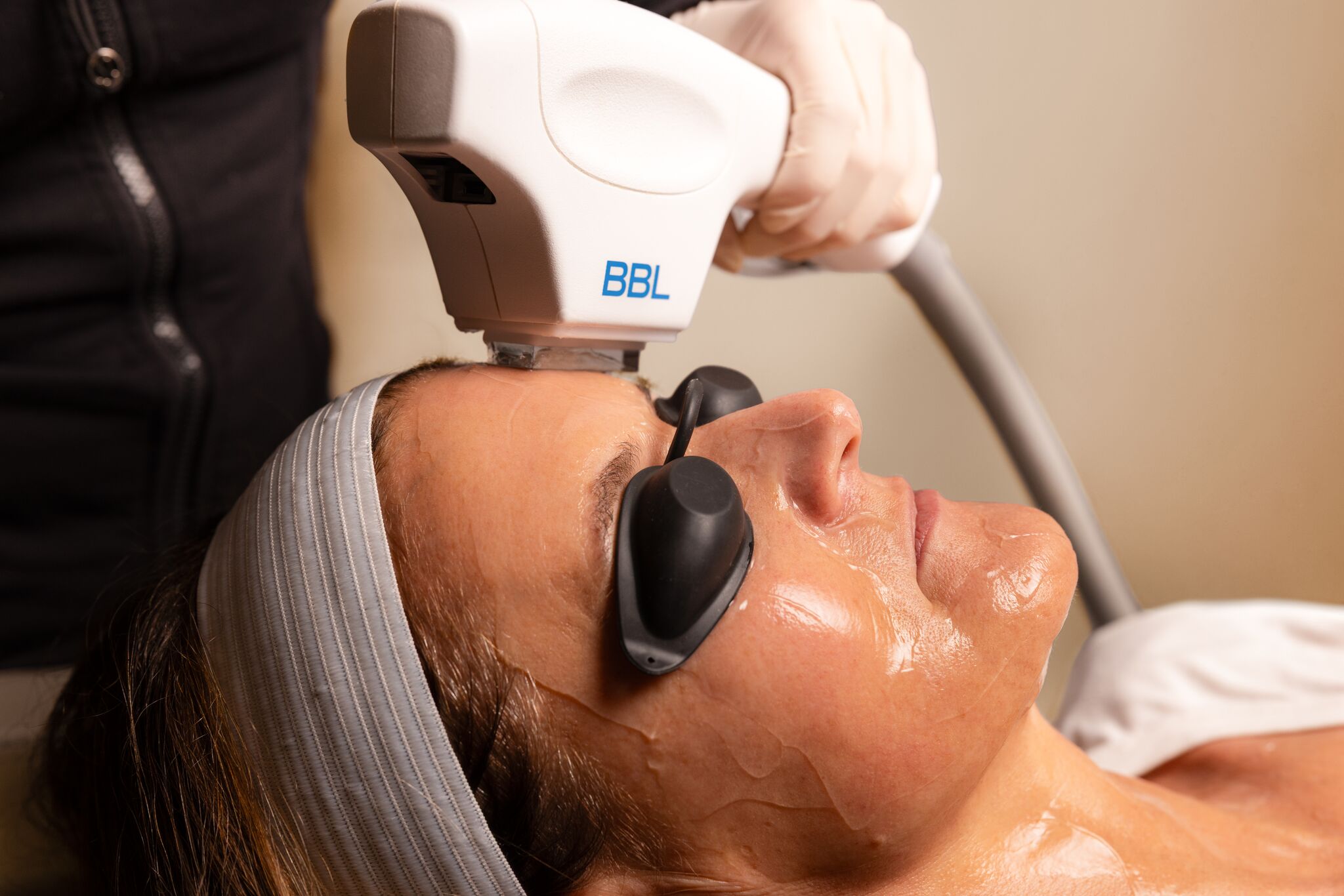
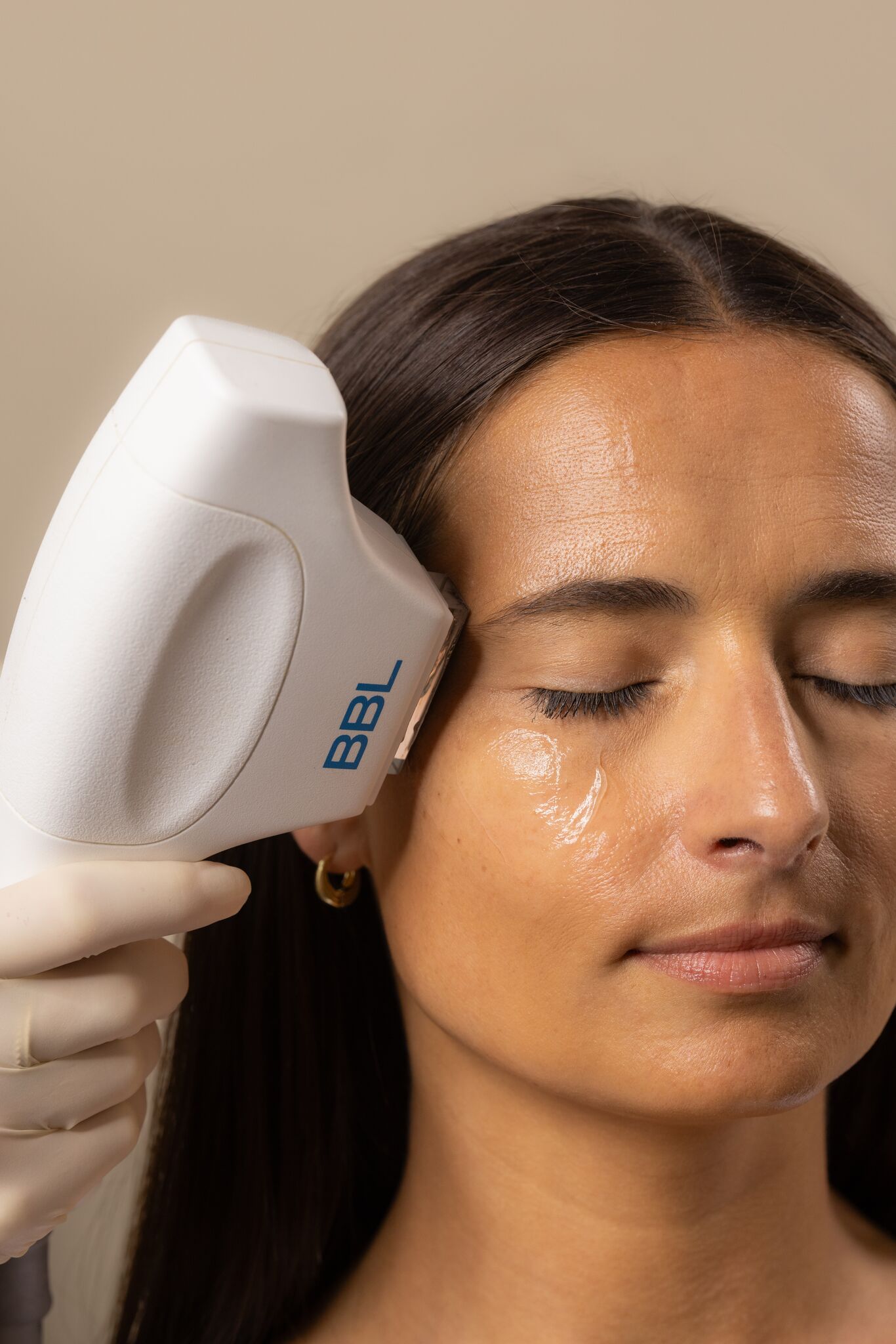
Hyperpigmentation: Both can help with mild surface pigment, but deeper or persistent hyperpigmentation usually needs a different modality (BBL® photofacial or chemical peel). A consultation determines the right path.
-
Mild skin laxity: Microneedling — and especially RF microneedling, which adds dermal heating for additional collagen remodeling.
-
Sensitive or rosacea-prone skin: Both should be evaluated carefully. Some patients benefit from a gentler entry point before progressing to microneedling.
If your concern doesn’t clearly fall into one bucket, the answer is usually a personalized treatment plan with an in-person assessment — not a fixed answer from an article.
What to Expect: Pain, Downtime, and Results
This is where realistic expectations matter most, because the most common patient frustration online is the gap between marketing promises and actual results.
Microdermabrasion experience: - Feels like a vibrating exfoliation across the skin — pressure but not pain - No numbing required - Immediate brightness with possible mild pinkness - Back to normal routine the same day - Results fade over weeks; ongoing series typically needed for maintenance
Microneedling experience: - Topical numbing cream applied for 30–45 minutes before treatment - Sensation during treatment is pressure and tingling, sometimes mild discomfort, rather than sharp pain - Day 1: redness, like a moderate sunburn; mild swelling - Days 2 to 3: redness fades; subtle pinpoint scabbing may appear and flake off - Days 4 to 7: skin may feel tight or look mildly flaky as the healing completes - Sun avoidance recommended for 1 to 2 weeks - Results develop over weeks to months as collagen builds — often visible within a few weeks, with continued improvement typically seen over 3 to 6 months - A series of about 3 to 6 monthly sessions is commonly used to drive structural improvement; your provider tailors the exact plan to your skin
A common patient frustration: expecting to see microneedling results after one session. The mechanism is biological — your body has to do the collagen work — and that takes time. Patients who go in expecting a one-session transformation are the most likely to be disappointed. Patients who plan for a series see the structural improvement microneedling is actually designed to deliver.
Aftercare and Safety
Aftercare and Recovery
For the 24 to 48 hours after microneedling:
-
Wash with a gentle, fragrance-free cleanser using lukewarm water — no hot showers
-
Apply broad-spectrum mineral SPF 30+ daily; sun exposure on micro-injured skin compounds damage
-
Avoid retinoids, AHA/BHA exfoliants, vitamin C, and physical scrubs for at least 5 to 7 days
-
Skip makeup for the first 24 hours — the microchannels created during microneedling typically close within about 24 hours.
-
Avoid heavy exercise, saunas, and chlorinated pools for 48 hours to prevent prolonged inflammation
Most patients return to work and normal social activity within 24 to 48 hours.
Microdermabrasion has a shorter recovery — most patients return to their normal routine the same day. Skip retinoids for 24 to 48 hours and apply daily SPF as you would after any exfoliation.
Safety Considerations
Microneedling is generally well-tolerated when performed by a licensed provider, but it’s not for everyone. Reasons to discuss your candidacy at the consultation before booking:
-
Active acne or skin infections in the treatment area
-
Active rosacea flare or recent dermatitis
-
Bleeding disorders or current use of blood thinners — share your full medication and supplement list (including NSAIDs, fish oil, and vitamin E) so your provider can determine the safest timing
-
Recent or current isotretinoin (Accutane) use — guidance on timing has evolved, so your provider will review your history and decide what’s appropriate rather than applying a fixed waiting period
-
Pregnancy or breastfeeding — most providers defer until after
Microdermabrasion has fewer absolute contraindications but isn’t ideal for very sensitive skin, active inflammatory acne, broken capillaries, or active rosacea.
Texture Treatment Options at OVME: Surface and Structural
For skin texture concerns, OVME’s approach is consultation-first — every visit begins with VISIA® skin analysis, which captures texture, pigmentation, sun damage, pore quality, and underlying skin health to inform the treatment plan. Treatments are performed by licensed registered nurses, nurse practitioners, and physician assistants — all supervised by medical directors who are board-certified plastic surgeons.
For surface care, OVME doesn’t offer traditional microdermabrasion. Instead, the surface options are:
-
Hydrafacial® at OVME — a multi-step cleanse, exfoliate, extract, and hydrate treatment that delivers immediate brightness without the limitations of traditional microdermabrasion.
-
DiamondGlow® at OVME — a wet-exfoliation system that combines diamond-tip resurfacing with the simultaneous infusion of customized serums.
Both work at the surface (like microdermabrasion) but use modern wet-exfoliation technology that is generally gentler and more effective than traditional crystal or diamond-tip microderm alone.
For structural texture work, OVME offers:
-
Microneedling — automated microneedling that delivers a consistent, controlled depth across the treatment area
-
RF microneedling — microneedling combined with radiofrequency for additional dermal heating, supporting more pronounced collagen remodeling and mild skin tightening
Treatments are performed by registered nurses, nurse practitioners, and physician assistants — supervised by medical directors who are board-certified plastic surgeons. For a broader view of how OVME thinks about texture concerns, see the guide to the best treatment for skin texture.
Ready to Find the Right Treatment for Your Texture?
If you’ve been guessing at what your skin actually needs, the next step is a complimentary consultation — not a commitment to a specific treatment. Your provider takes the data from VISIA® imaging and your goals, then builds a sequenced plan that may include surface care, structural work, or both.
Book through the OVME app or find a studio location near you.
Frequently Asked Questions
What are the 5 disadvantages of microdermabrasion?
Microdermabrasion has real limits: it only works at the skin’s surface, so it can’t address structural concerns like acne scars, deep wrinkles, or enlarged pores; the results are temporary and require ongoing maintenance treatments to sustain; it does not stimulate collagen production; it can cause sensitivity, broken capillaries, or transient hyperpigmentation in some skin types; and many providers consider modern wet-exfoliation systems (like Hydrafacial® or DiamondGlow®) more effective for the same goals. If your concern is deeper than dullness or surface congestion, microdermabrasion is unlikely to deliver lasting change.
Is 40 too old for microneedling?
No. Many providers consider 40+ an ideal age range for collagen-stimulating treatments like microneedling, because natural collagen production has slowed and the treatment’s mechanism — triggering your skin’s own repair response — addresses exactly what’s changing. Microneedling is used effectively across a wide age range, with the right protocol for your skin type and concerns determined at consultation.
Should I get microdermabrasion before microneedling?
It’s not necessary. Microdermabrasion and microneedling work at completely different depths — surface vs dermal — so one isn’t preparation for the other. Some providers stack a surface treatment with a microneedling series for ongoing maintenance, but the sequencing and timing depend on your skin and goals. A consultation determines the right order or whether both are even needed.
What does your face look like 2 days after microneedling?
At 24 to 48 hours, most patients have mild to moderate redness (similar to a sunburn), some swelling that’s resolving, and possibly small pinpoint scabs that flake off over the following days. Skin tends to feel tight, sometimes dry. Many patients return to work within 24 to 48 hours; mineral sunscreen and gentle skincare are recommended, and most providers advise waiting 24 to 48 hours before applying makeup so the skin barrier can close.
Which is better for acne scars: microdermabrasion or microneedling?
For indented acne scars, microneedling is significantly more effective. The needles create controlled micro-injuries in the dermis where the scar tissue lives, triggering the collagen remodeling that gradually fills in textural depressions. Microdermabrasion works at the skin’s surface and does very little for structural scarring. For deeper or more complex scarring, your provider may recommend microneedling combined with other treatments — explore options in OVME’s guide to the best skin treatments for acne scars.
Keep on reading