Menopause Skincare: What Changes and What Helps
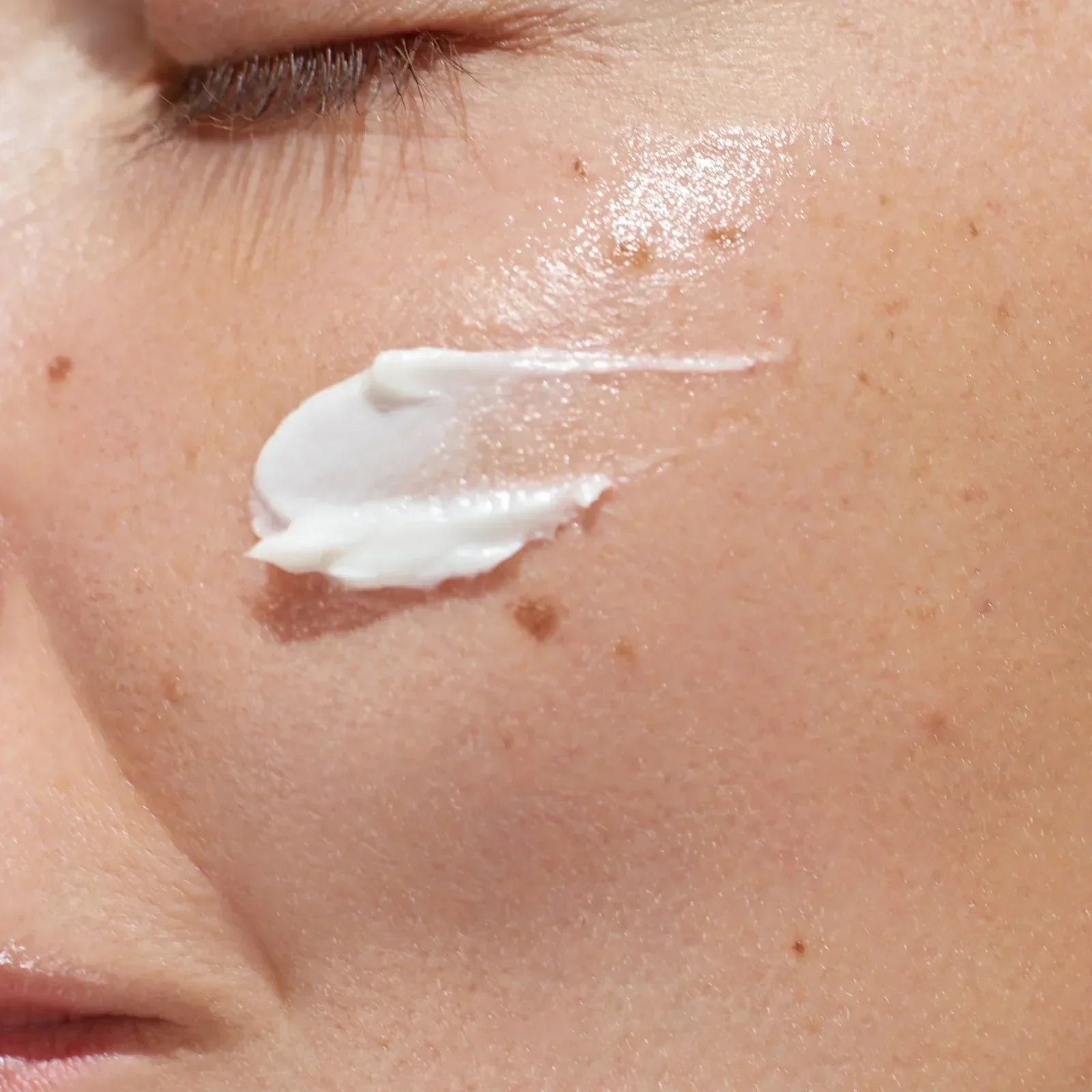
If your skin has changed in ways that feel abrupt, and the routine you relied on for years has stopped answering, you’re not imagining it and you’re not doing anything wrong. Menopause skincare is really a response to a specific biological shift, and almost nobody is told it’s coming.
In a 2025 survey of 50 patients at a menopause clinic, 78% reported itchiness and 76% reported dry skin. Nearly half, 48%, had never raised these symptoms with a doctor at all. Almost everyone goes through it, and almost no one is told it’s coming.
What Lower Estrogen Does to Skin
Estrogen is doing more for your skin than most people realize. It supports dermal thickness, collagen and elastin production, the lipid barrier that holds moisture in, and your skin’s sensitivity threshold. As levels fall, all of those shift at once, which is why the change can feel less like a gradual process and more like several things happening at once.
Three drivers account for most of what people notice:
-
Lower estrogen reduces overall skin thickness and the skin’s ability to hold moisture.
-
Collagen and elastin loss shows up as fine lines and skin that feels less firm than it used to.
-
Less oil production leaves skin drier, more reactive, and easier to irritate with products that used to be fine.
Research by Brincat and colleagues, published in 1987, measured skin collagen content and skin thickness declining at roughly 1 to 2% per year after menopause. A 2025 narrative review in the Journal of Cosmetic Dermatology refined that to about 2.1% per postmenopausal year over 15 years, with skin thickness declining about 1.13% per year over the first 19 years.
That decline follows menopausal age, meaning years since your final period, rather than chronological age. Two women born the same year can be in very different places, depending on when each of them transitioned.
5 Skin Changes People Notice Most
These rarely arrive one at a time, and they interact.
Dryness, and the Itch That Comes With It
Dryness is the most common complaint, and the one people describe most vividly. Lower estrogen means less lipid production and reduced moisture retention, so skin that was balanced becomes persistently dry. Many people also report an itchy, prickling, or crawling sensation that wasn’t there before. It’s commonly linked to the same estrogen-related dryness and barrier changes rather than to anything you applied, though it’s less well studied than the dryness itself. Both barrier-repair ingredients and richer occlusive moisturizers have a place here.
Skin That Suddenly Reacts to Familiar Products
Thinner skin with a compromised barrier has a lower tolerance threshold. Serums and actives you used for years can begin to sting or leave redness, with no change to the formula. The barrier is usually what needs attention first.
Hormonal Acne, Even Without a History of Breakouts
As estrogen and progesterone fall, androgens carry relatively more influence, which can increase oil production while cell turnover slows. That combination clogs pores more easily, and it’s why some people see meaningful breakouts for the first time in their forties or fifties, often along the jawline and chin. Menopausal skin generally does better with gentler, non-drying acne care alongside barrier support than with the strongest available actives.
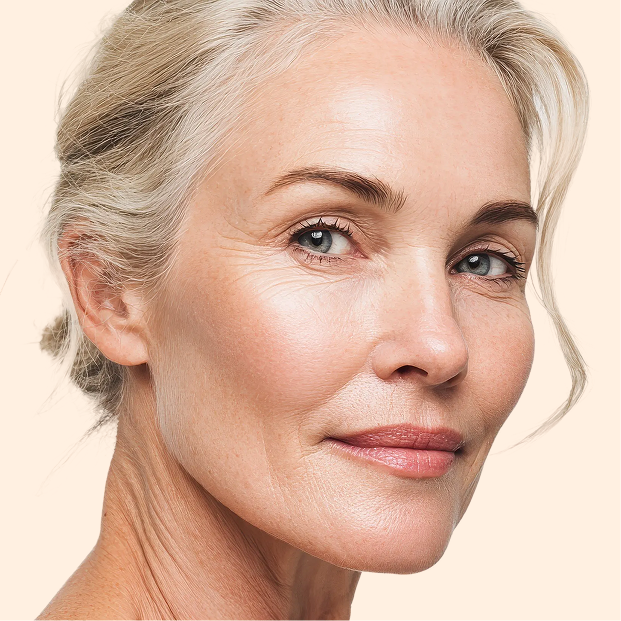
Less Firmness and Newly Visible Lines
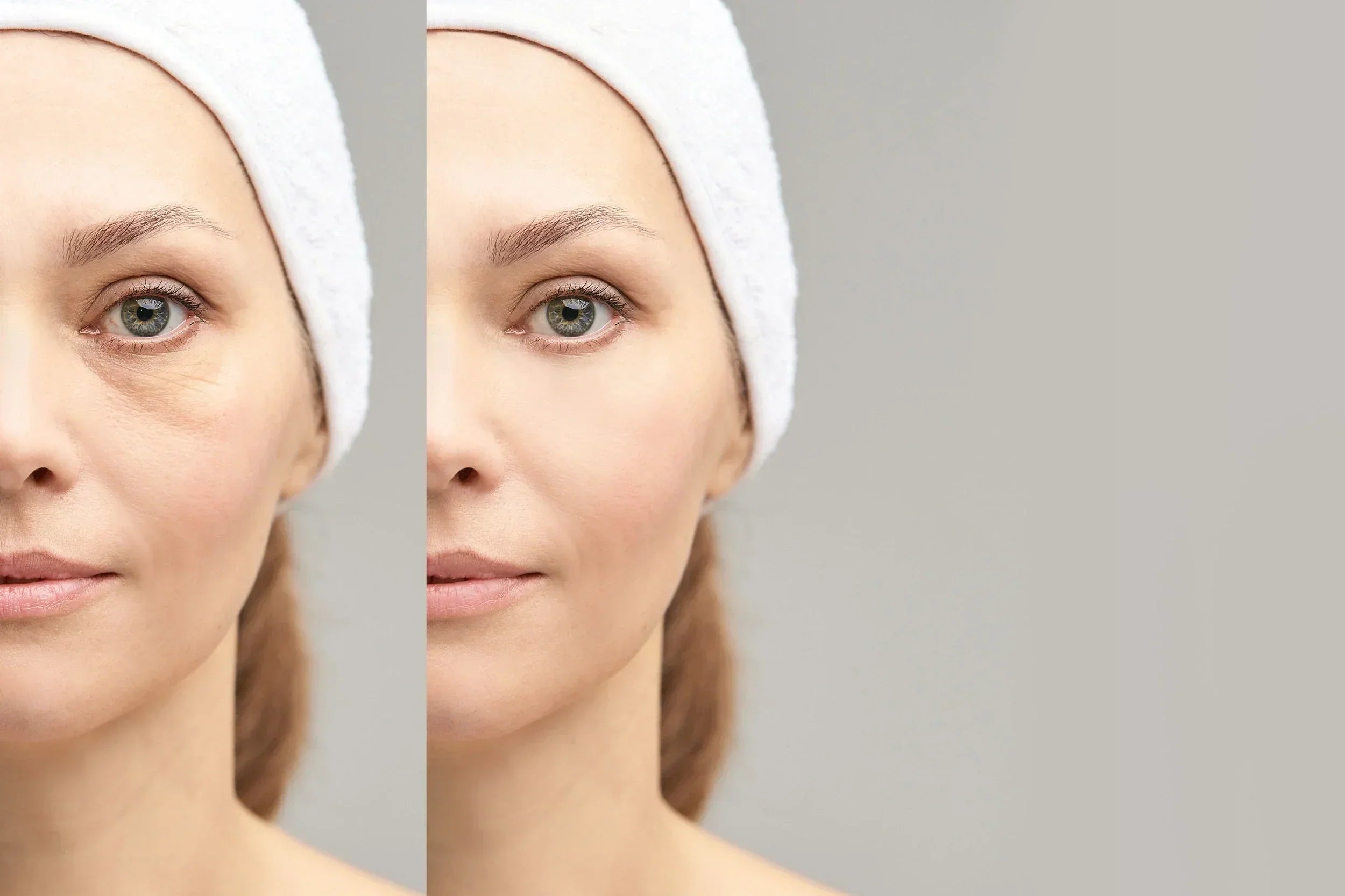
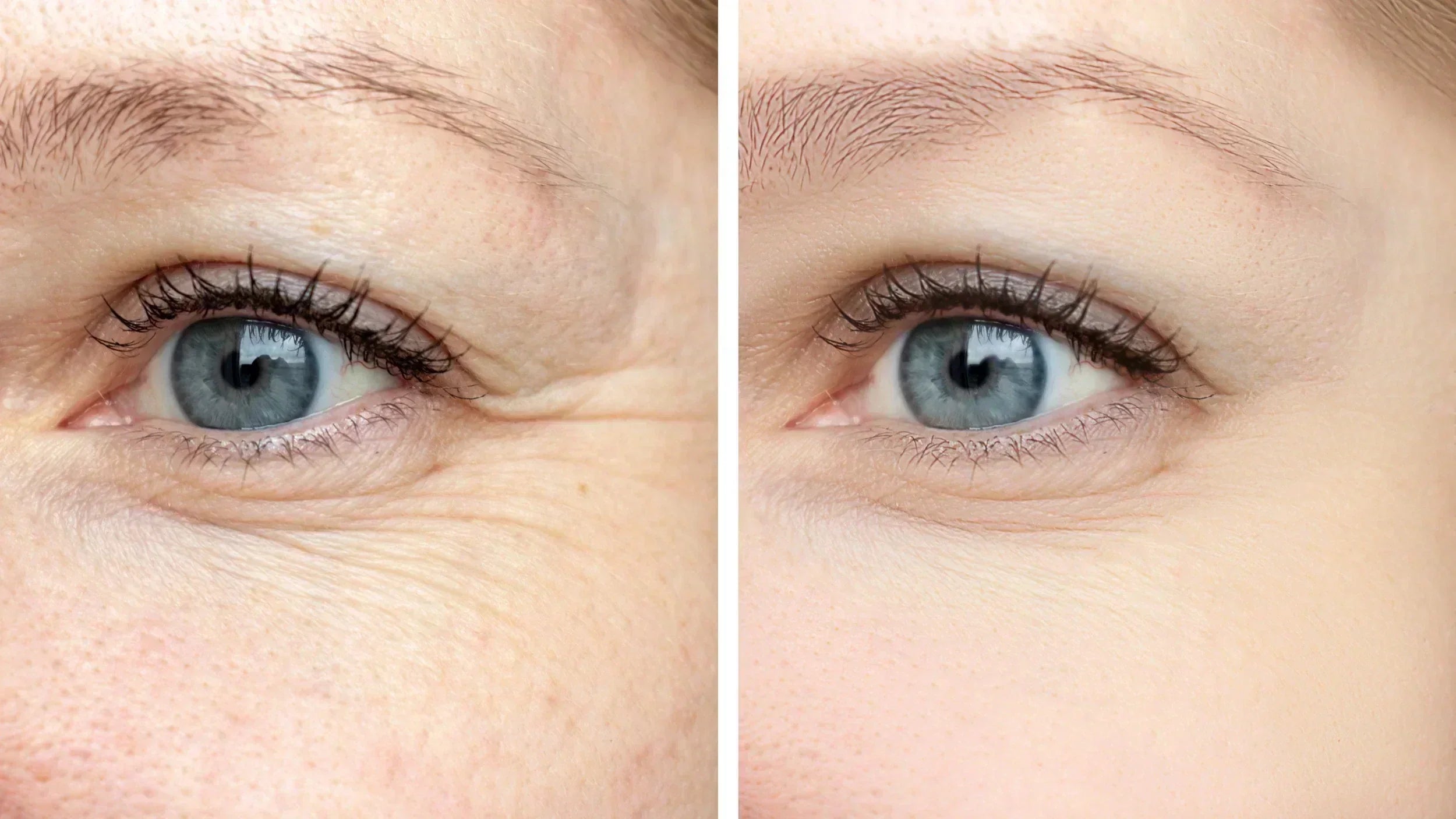
This follows directly from the collagen and elastin changes above. Skin feels less resilient and lines that were only visible in movement start to hold. Skin health at this stage responds to support, and the options run from a simplified routine to in-studio treatment.
Uneven Tone and Dark Spots
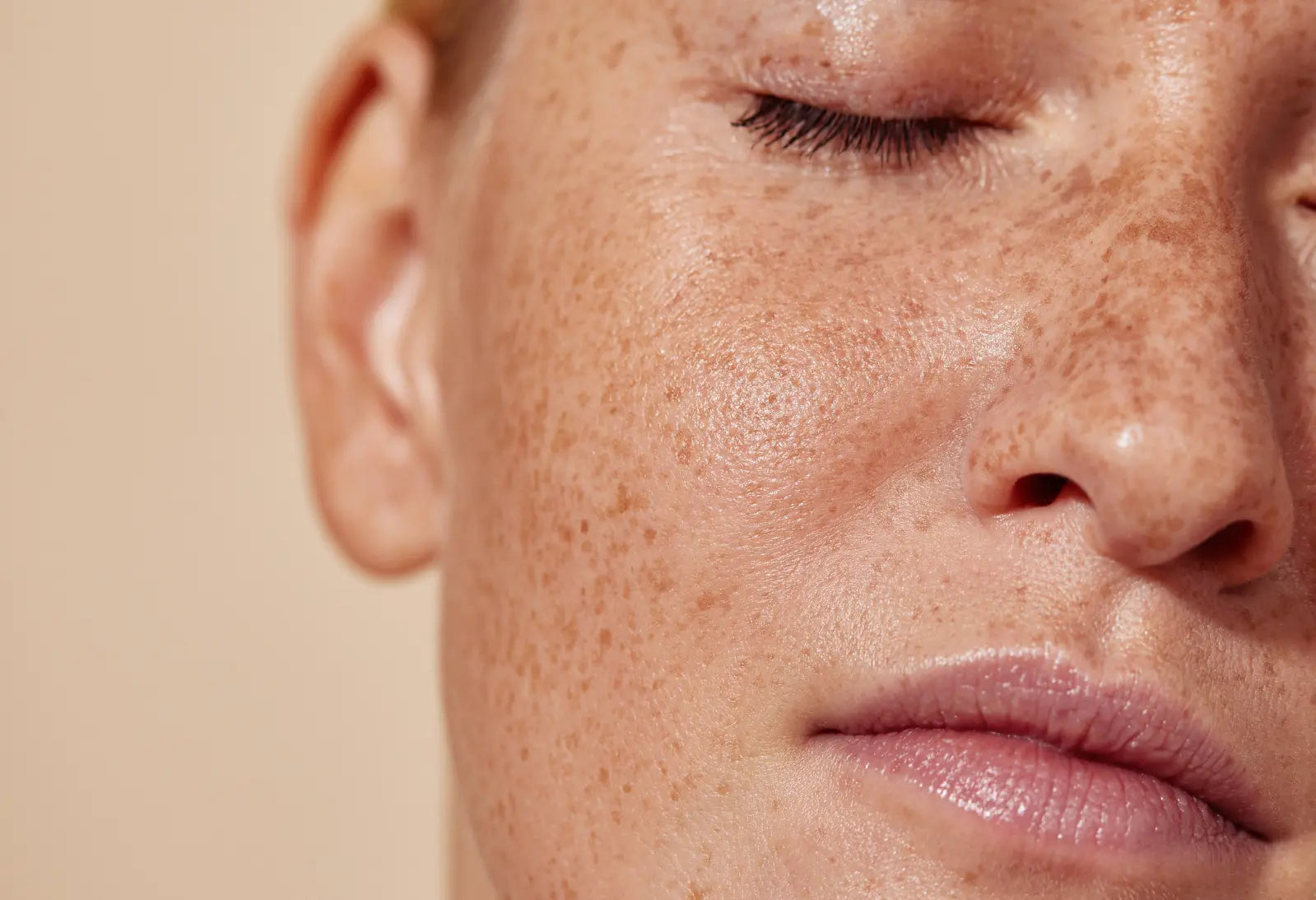
Hormonal fluctuation can trigger or worsen melanin production, producing new patches of pigment or a generally less even tone, especially where there’s sun exposure. This happens for a different reason than the dryness and thinning, which is why a single routine change rarely addresses everything at once. Daily sunscreen does more for this than any product applied after the fact, and it’s the one step worth keeping consistent even on the days a longer routine feels like too much. Pigment that’s already there tends to respond slowly, so it’s worth judging progress over months rather than weeks.
Building a Menopause Skincare Routine Your Skin Can Tolerate
The instinct when skin changes is to add more. Simplify first, then rebuild.
Cut back how many actives compete at once and repair the barrier before reintroducing them. Actives on a compromised barrier cause the stinging and redness that makes people quit a routine. Retinoids are still worth keeping, but frequency and strength usually need adjusting rather than abandoning: buffer with moisturizer, or drop to a few nights a week.
Read the formulation, not the label. A product marketed for menopause usually groups familiar ingredients rather than offering anything unique to hormonal skin. Medical-grade lines like Revision Skincare are best chosen with guidance from a provider who has looked at your skin.
Ingredients Worth Prioritizing
Hyaluronic acid draws water into the upper layers of the skin and helps hold it there. It works best applied to slightly damp skin and sealed with a moisturizer, rather than used on its own.
Ceramides are part of the barrier itself, so replacing them supports the structure that keeps moisture in and irritants out. On skin that has become dry and reactive, that support is worth prioritizing.
Peptides and retinoids support collagen production, which is what firmness depends on. Retinoids are the better-evidenced of the two, and the caution about frequency applies to them specifically.
Niacinamide helps calm redness and even out tone, and it’s generally well tolerated on reactive skin, which makes it easier to keep in a simplified routine than a stronger active.
Ceramides and squalane cover the barrier side, hyaluronic acid the hydration side. Most people do not need more than that plus a sunscreen to see a difference.
A Daily Routine That Holds Up
Cleanse gently. Harsh, high-irritancy cleansers can compromise the barrier and increase dryness, so a gentle hydrating wash is the safer default once skin is already dry. Skin that felt oily at 30 often doesn’t at 55.
Layer moisture, then seal it. Applying a humectant serum and following with a moisturizer improves hydration. Many people find applying to slightly damp skin more comfortable, though the evidence for that specific step is limited.
Use broad-spectrum SPF 30 or higher every morning. This is one of the best-evidenced steps for reducing photoaging, and it matters more on thinner skin, not less.
Patch test anything new before adding it to the routine.
When to Bring in a Professional
Most gradual change responds to the adjustments above. It’s worth booking a consultation if the change is sudden or severe, if a barrier-focused routine hasn’t helped after several weeks, or if a new spot or a persistent patch of irritation appears.
The difficulty with self-assessing this is that menopausal skin change is diffuse. It affects texture, tone, hydration, and firmness at once, which makes it hard to tell what is hormonal, what is product-related, and what needs a different kind of attention.
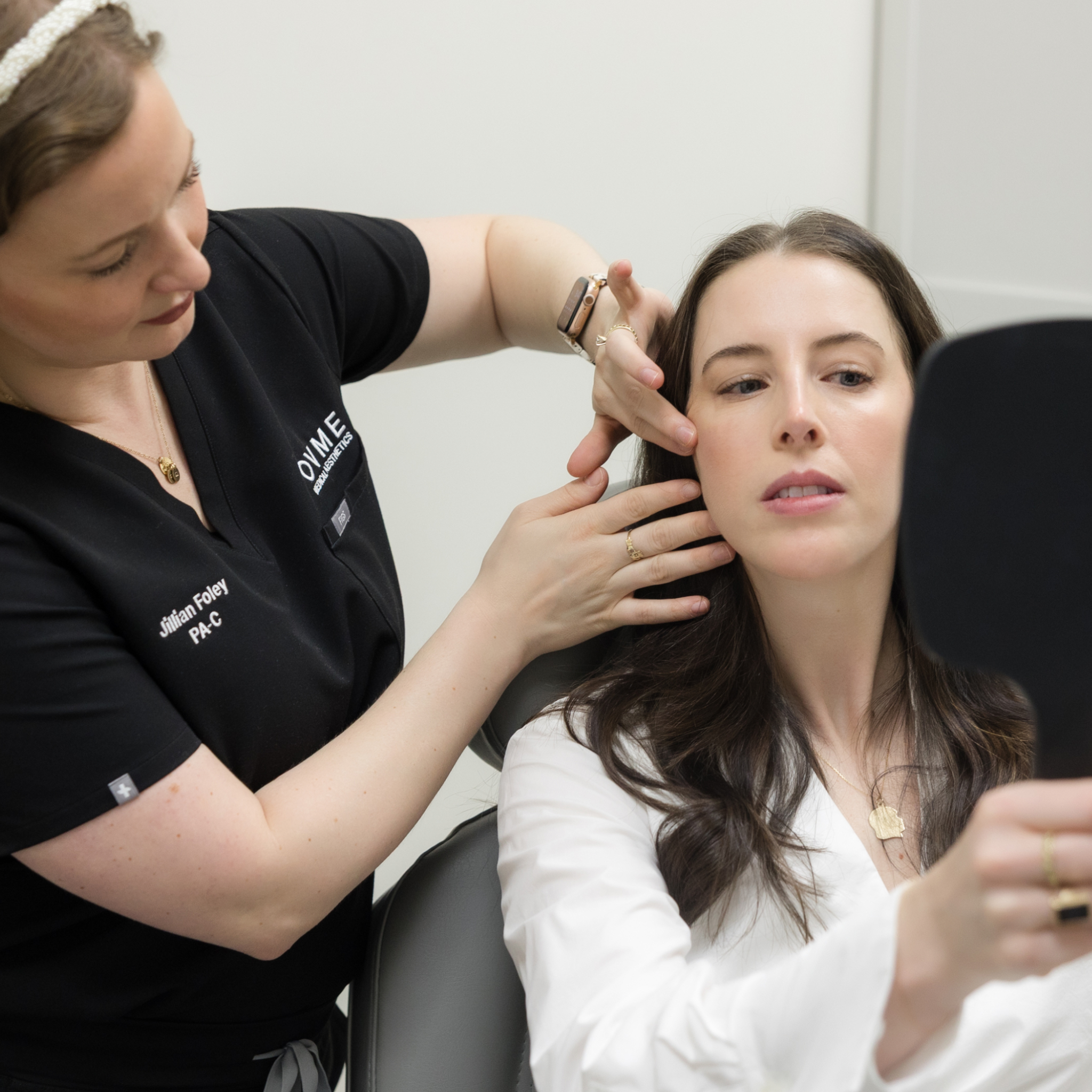
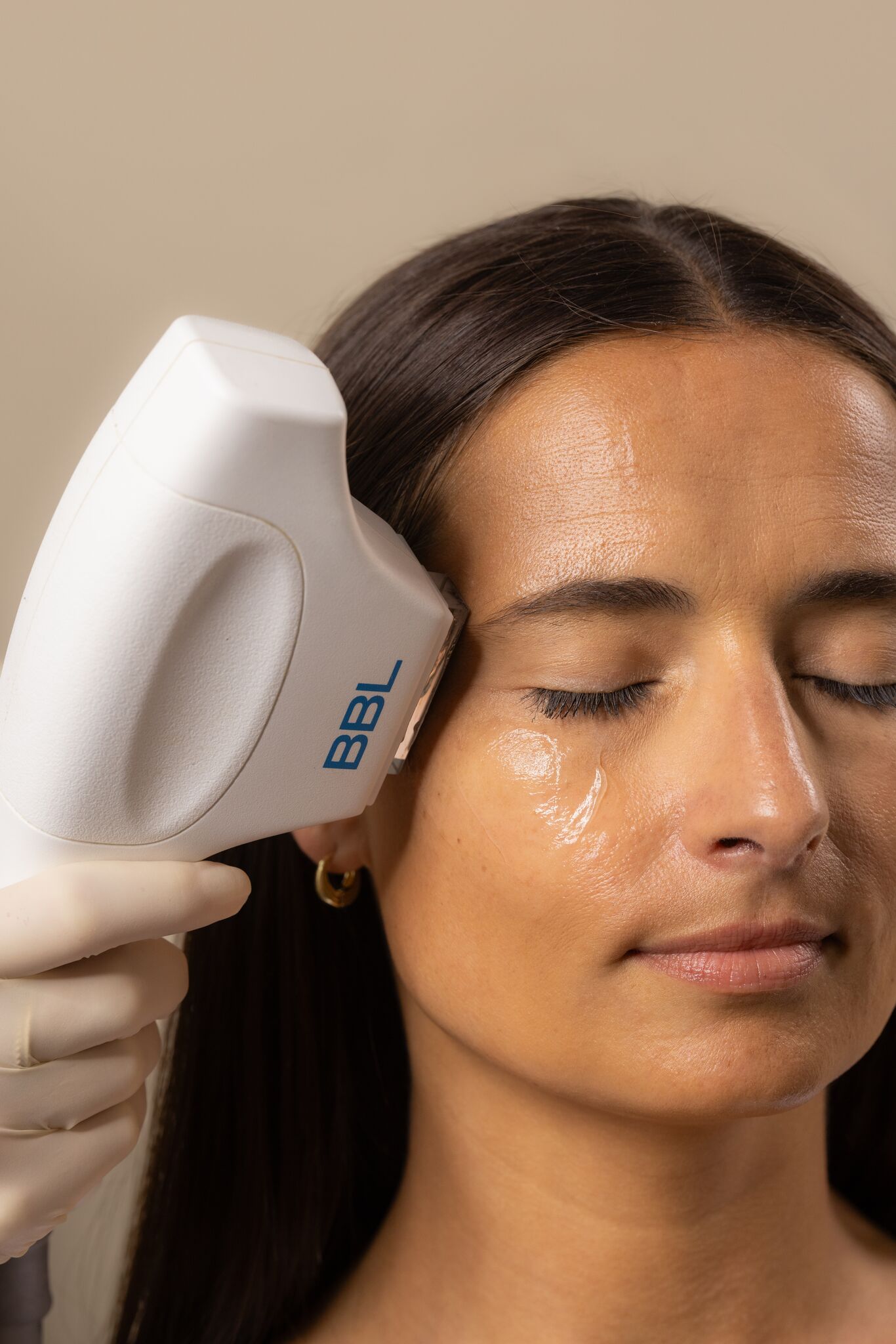
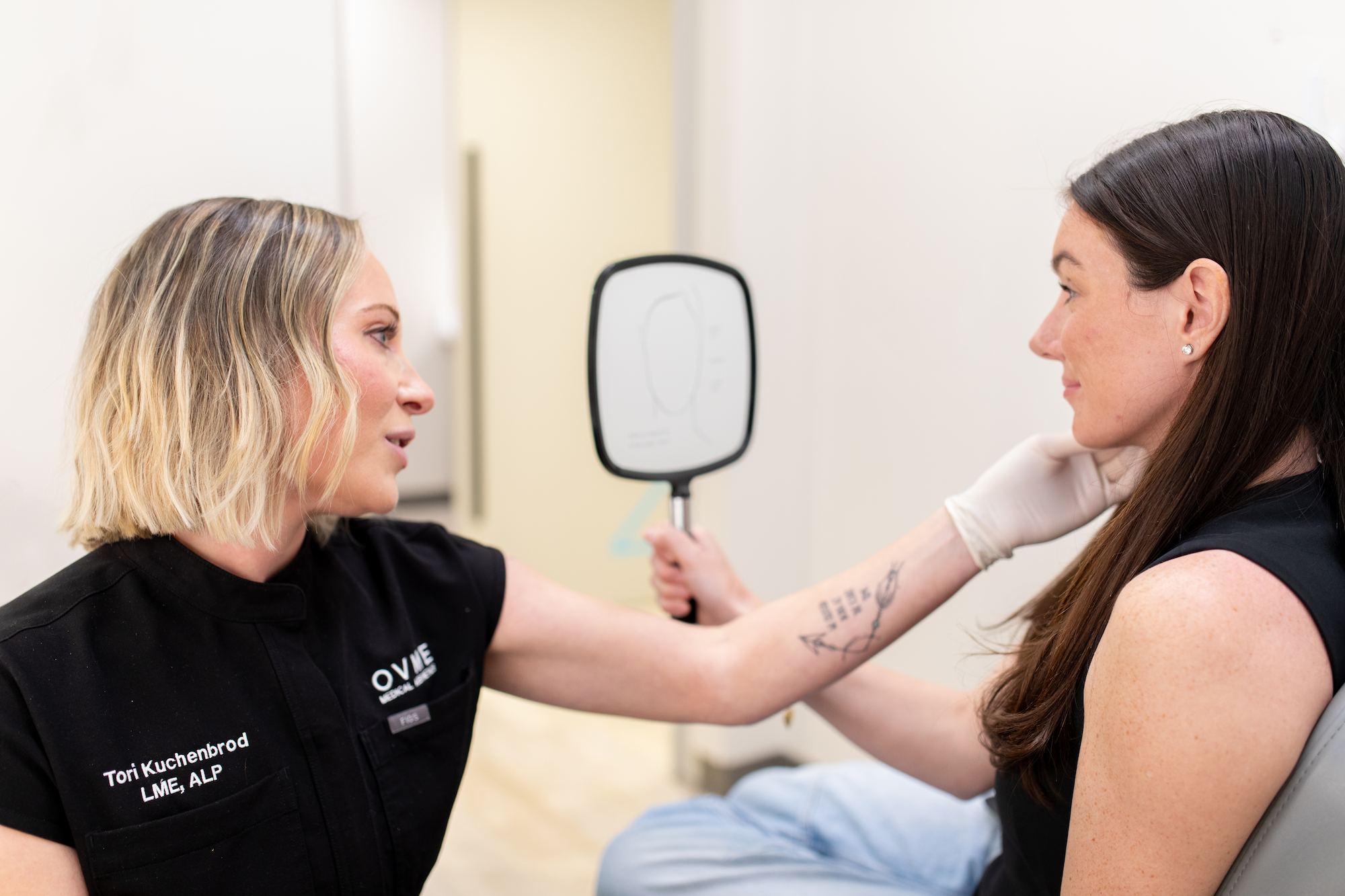
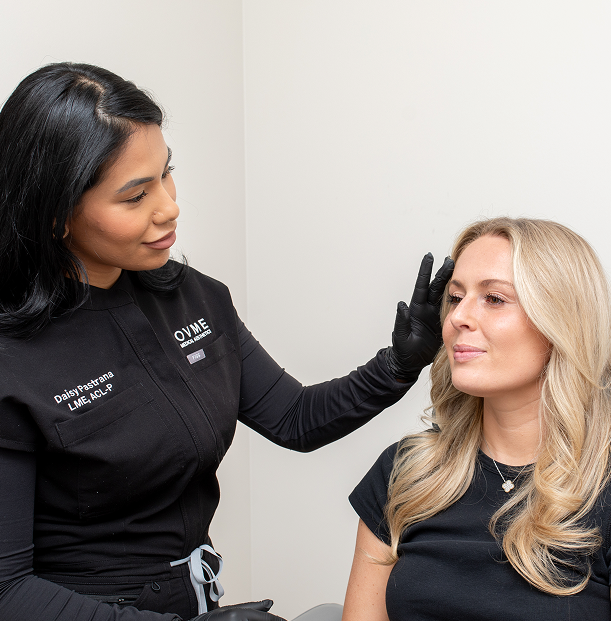
At OVME, an in-studio assessment starts with an OVME Skin Analysis using VISIA® imaging, which captures skin texture, pigmentation, sun damage, and pore quality. It establishes a documented baseline you can measure against later. Treatments are performed by registered nurses, nurse practitioners, physician assistants, and licensed aestheticians, all supervised by medical directors who are board-certified plastic surgeons.
OVME Treatments for Menopausal Skin
These are matched to what has changed in your skin, not to your age, and the right one depends on which change is bothering you most.
-
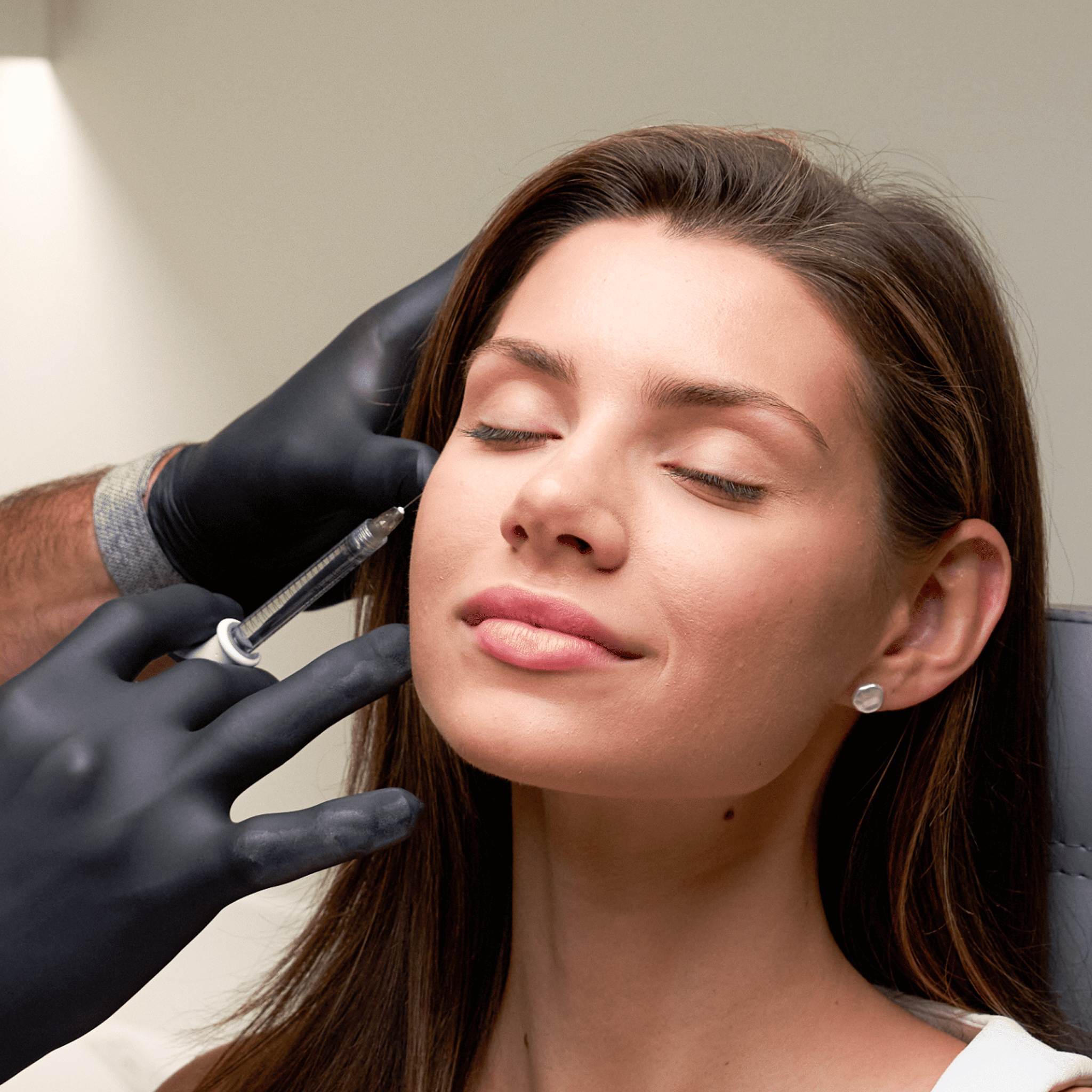
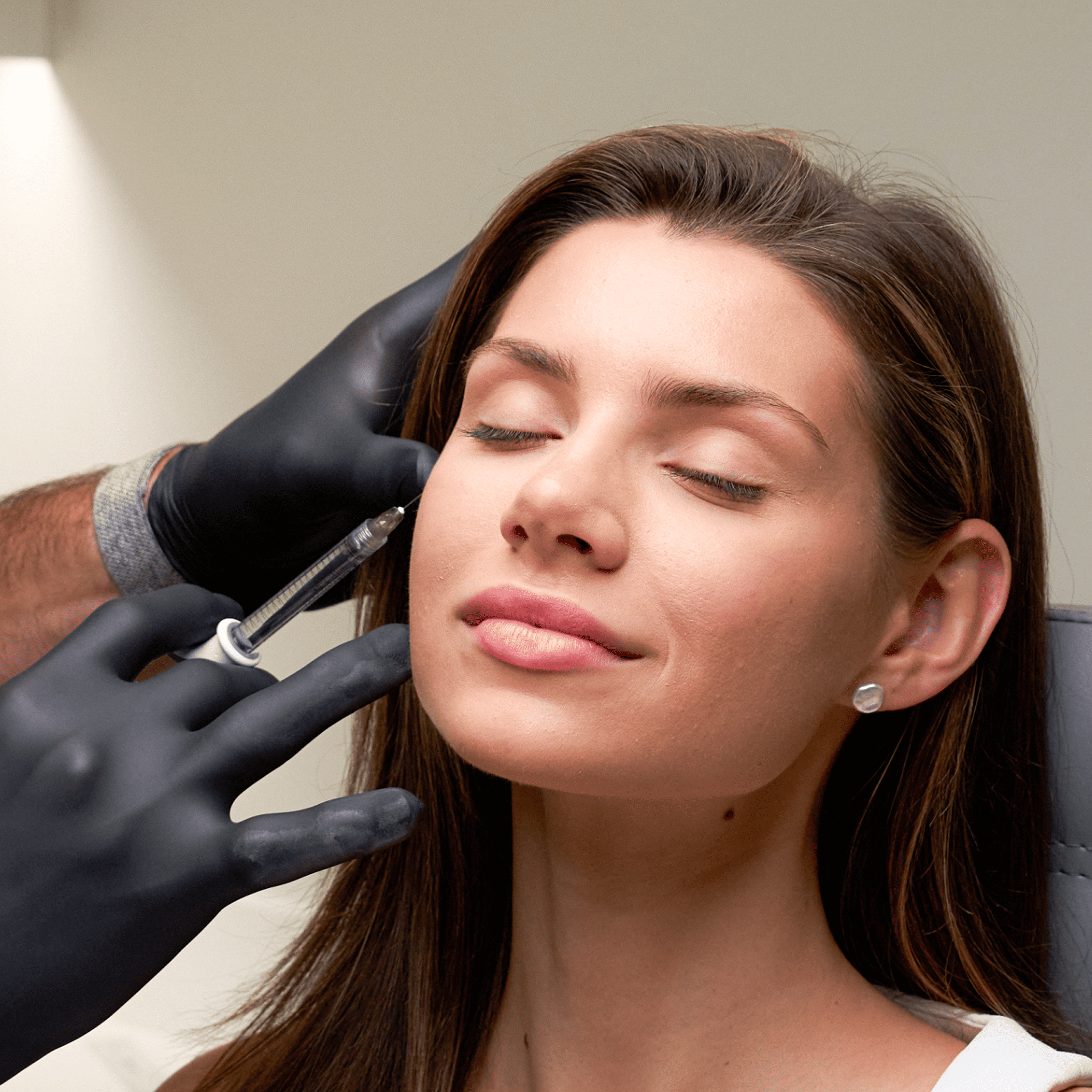
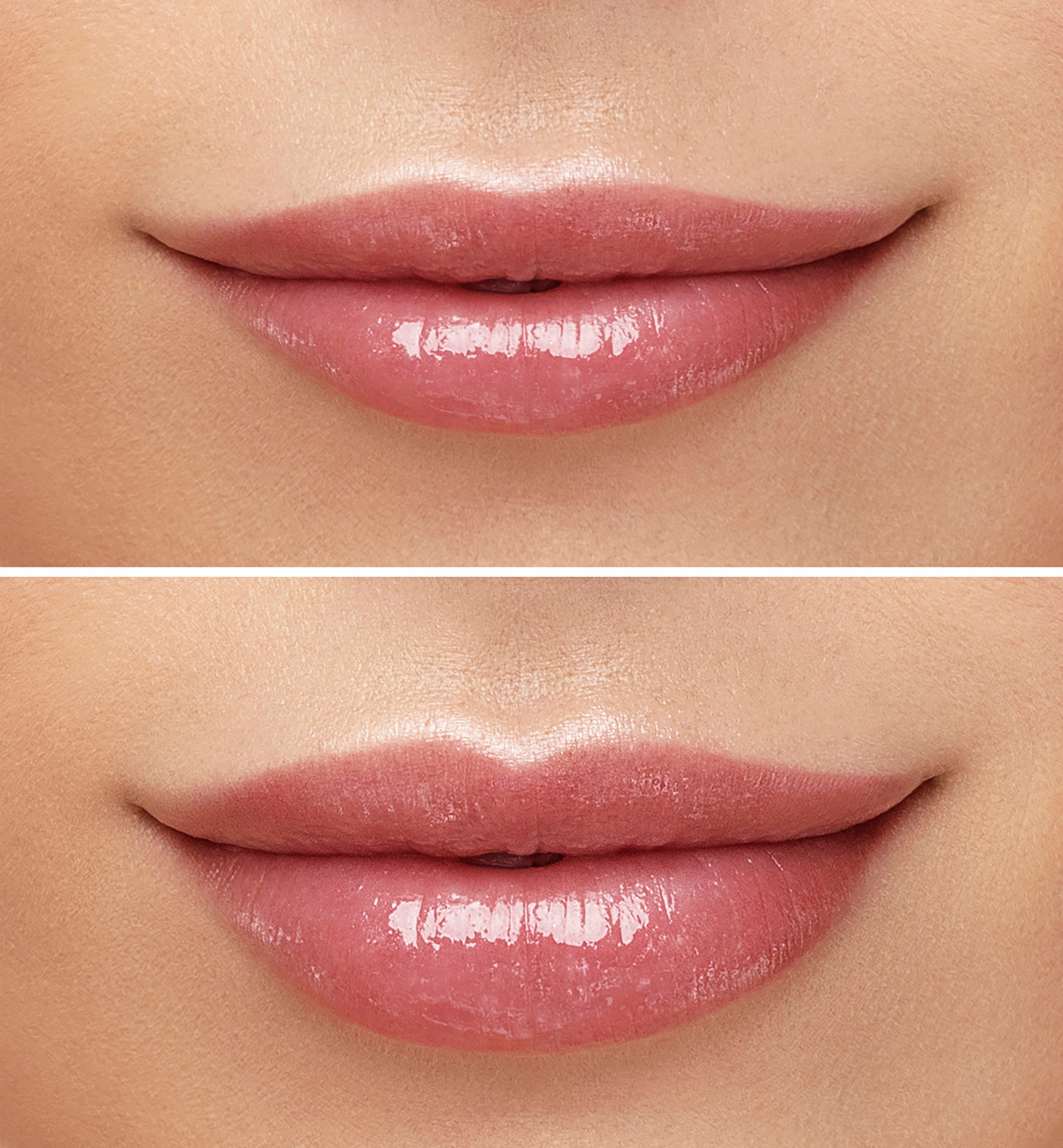
Skinvive®, for hydration. The first and only FDA-approved hyaluronic acid skin booster. It addresses moisture at the level of the skin itself rather than sitting on top of it. A retrospective study of hyaluronic acid injected into the skin, in patients averaging 53 years old, found improved skin quality with fewer maintenance treatments needed.
-
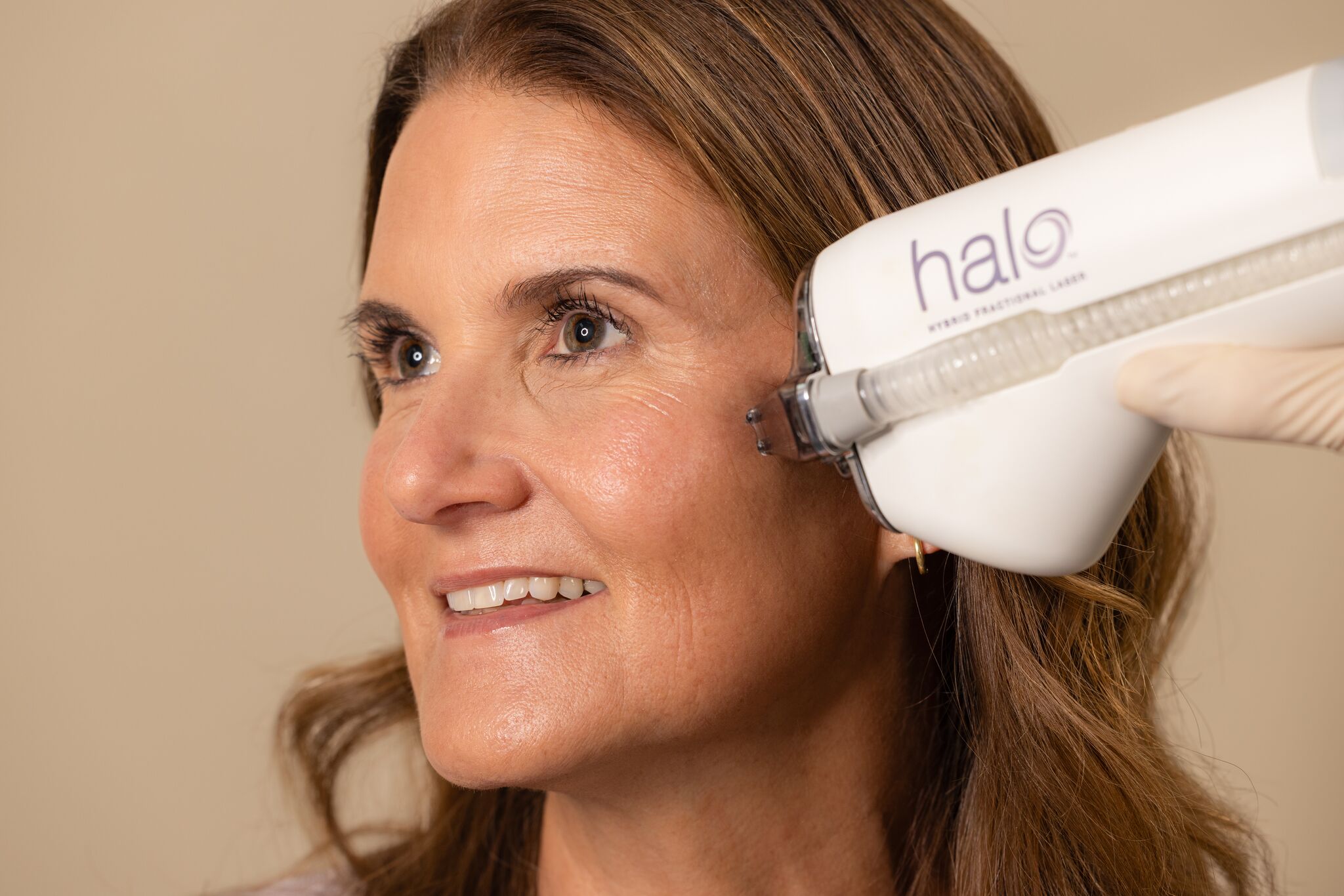
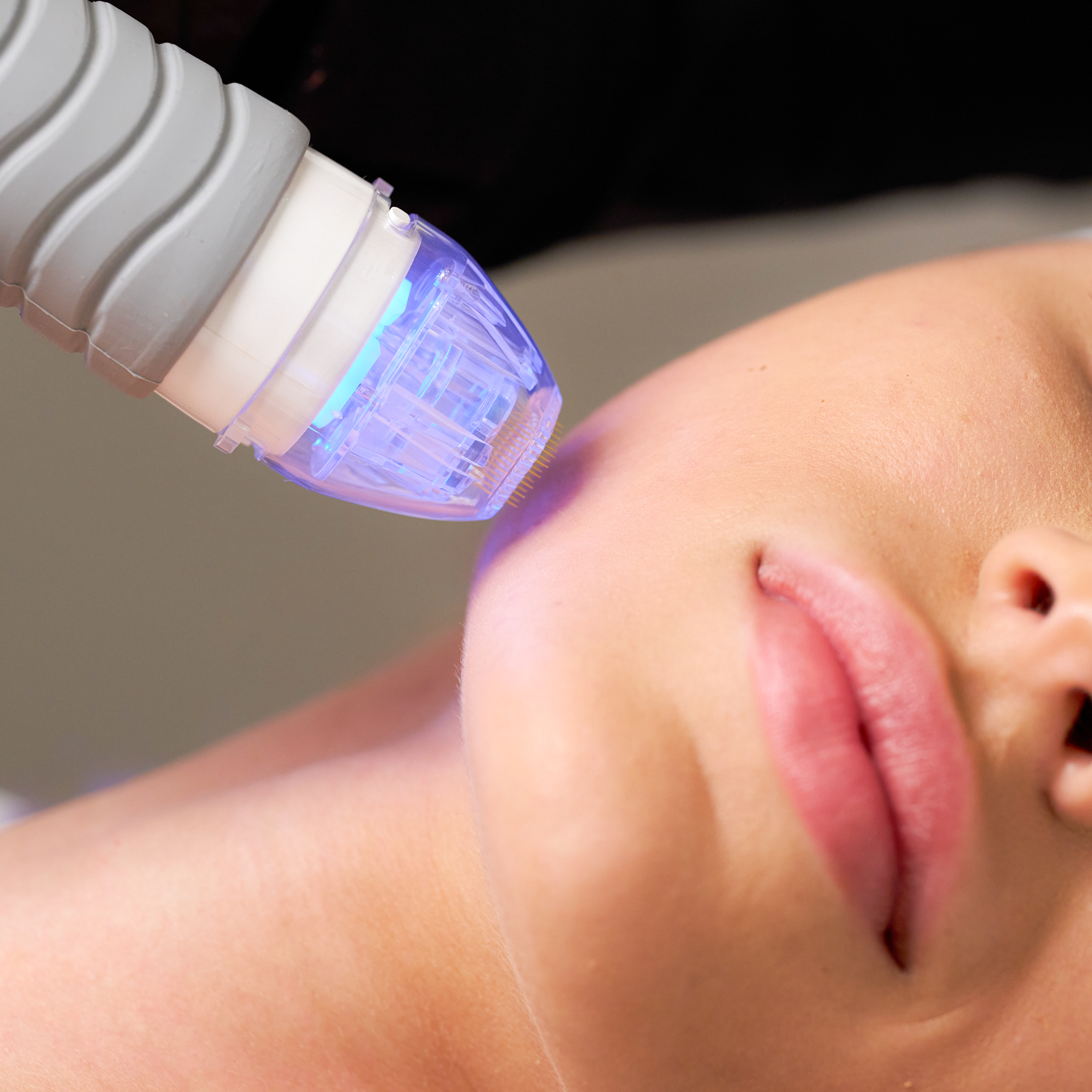
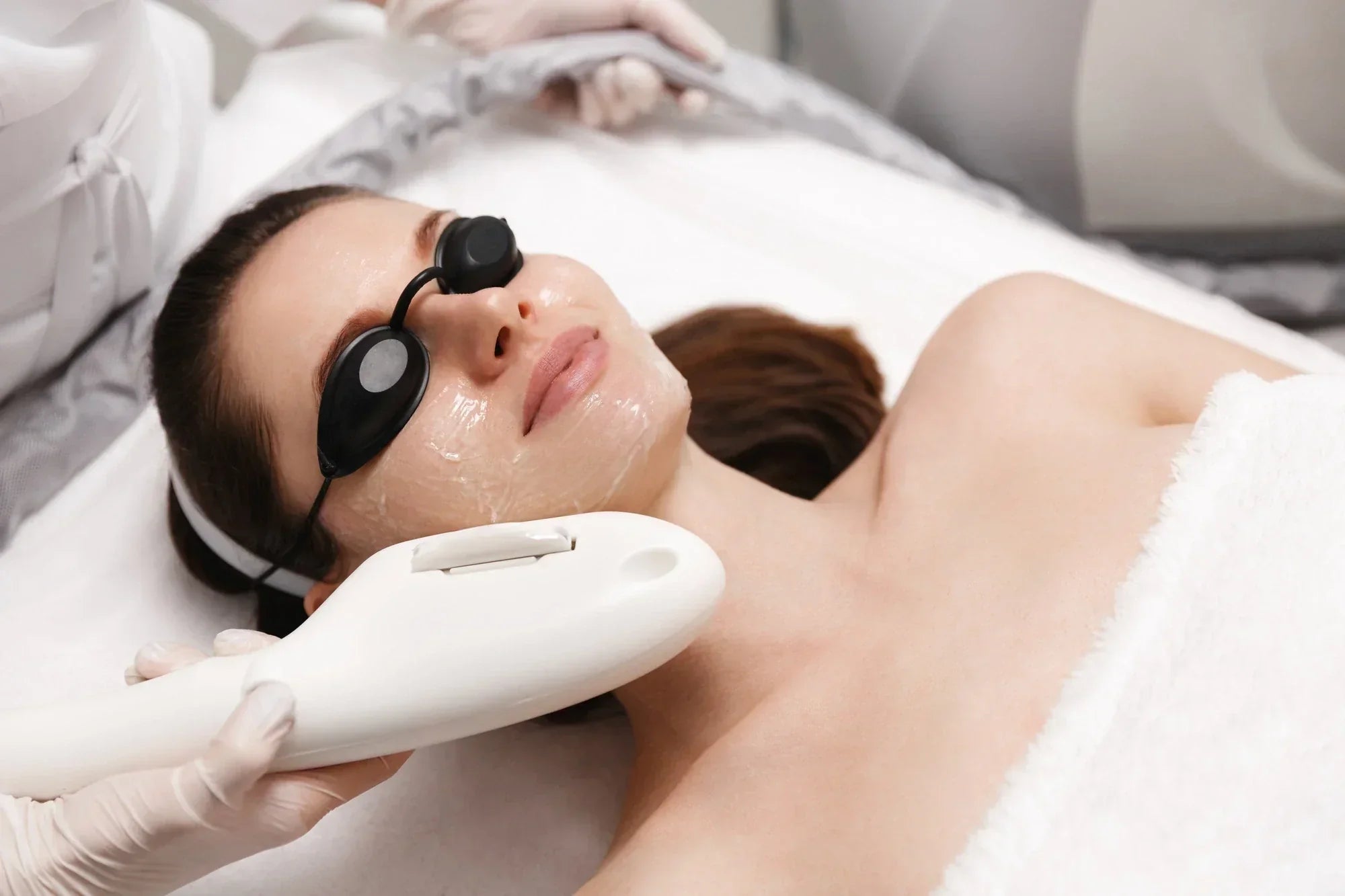
RF microneedling, for collagen and barrier support. It prompts your skin’s own remodeling response, so firmness builds over weeks rather than arriving at once.
-
A chemical peel, for texture and tone. The strength can be calibrated to what more sensitive skin will tolerate, which matters on a thinner barrier.
-
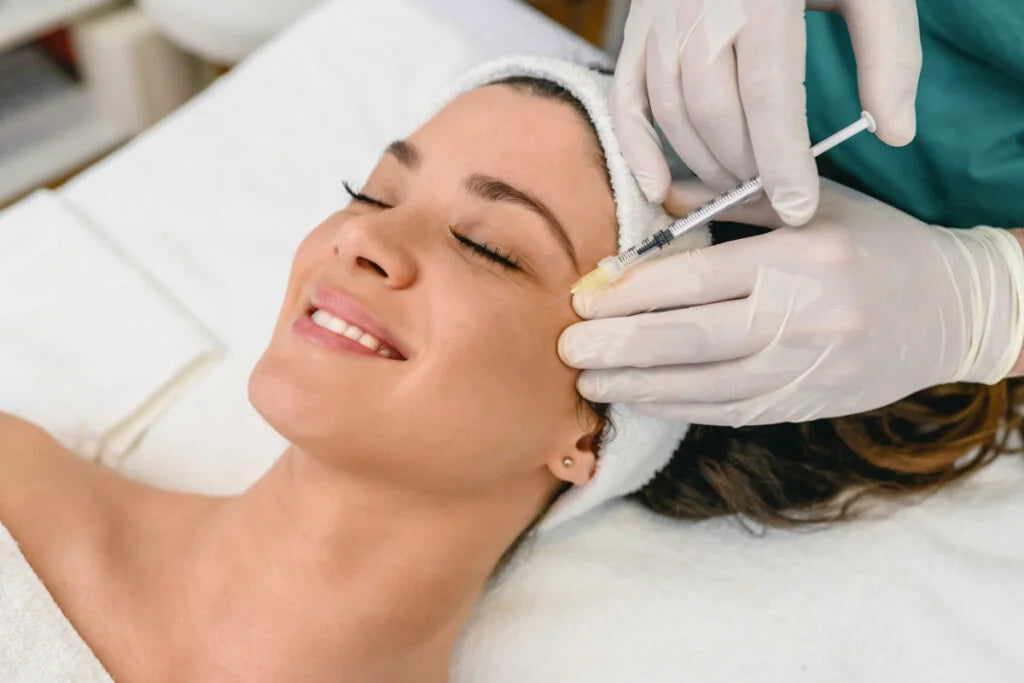
Sculptra®, for structural volume. Rather than adding volume the way a filler does, it prompts your own skin to build collagen over the following months. Its active ingredient has randomized trial evidence for improvements in skin smoothness, elasticity, and hydration at 12 months.
All four involve some short-term redness or swelling, and how long that lasts depends on the treatment and on how reactive your skin currently is. Injectable options tend to settle within a few days, while treatments that work by prompting collagen remodeling build over weeks. A provider walks through what to expect for whichever option you choose, including whether your barrier needs rebuilding first so the treatment is better tolerated.
Very few aesthetic studies deliberately track menopausal status, so most of this evidence is general adult data that happens to include women in midlife.
If you’re weighing how these fit together, what is facial rejuvenation covers the broader picture.
What the Research Says About Hormone Therapy and Skin
Estrogen supports collagen production and skin hydration, so some people notice skin changes while taking hormone therapy for menopausal symptoms. Older studies back that up: one randomized trial measured an 11.5% increase in skin thickness against placebo.
The evidence isn’t settled, though. The most recent placebo-controlled trial, a four-year study within the KEEPS program, found no significant improvement in wrinkle scores or skin firmness, though its authors noted it may have been underpowered and used lower doses.
The regulatory position is clear. FDA-approved indications for menopausal hormone therapy are hot flashes and night sweats, vaginal dryness and thinning, and for some products osteoporosis prevention. Skin improvement is not an approved indication for any hormone therapy product.
Hormone therapy is a medical decision made with a licensed provider, based on your full health history rather than on skin alone. If you have other menopausal symptoms, it’s worth raising with them.
Starting From Where Your Skin Is Now
The reassuring part of all this is that the changes have a known cause, which means they have a response. Skin that feels unfamiliar can be reassessed and given a routine built for where it is now.
A complimentary consultation is a direct way to find out which changes are driving what you’re seeing, and to leave with a routine and a treatment plan matched to your skin’s current condition. Consultations are complimentary in-studio or virtually across OVME’s locations, and the in-studio visit is the one that includes VISIA® imaging.
Frequently Asked Questions
What’s the difference between how perimenopause and menopause affect skin?
During perimenopause, estrogen fluctuates rather than steadily declining, so skin can swing between dry one week and breakout-prone the next. After menopause, estrogen settles at a consistently lower level, and that’s when the most noticeable collagen loss tends to accumulate. Knowing which stage you’re in helps determine whether your routine needs to flex with hormonal swings or rebuild for a new baseline.
How long should you give a new menopause skincare routine before deciding it isn’t working?
Give a simplified, barrier-focused routine several weeks before judging it, since skin cell turnover and barrier repair both take time and slow somewhat with lower estrogen. Judging a routine after a few days usually leads to adding or swapping products faster than skin can respond. The exception is stinging, burning, or a rash, which is worth raising with a provider instead of waiting to see if it settles.
Can in-studio treatments be done on thinner, more sensitive menopausal skin?
Often yes, but candidacy depends on your skin’s current condition rather than your age. A provider assesses barrier integrity, active irritation, and how reactive your skin has become before recommending anything. Providers often start at the lowest effective setting and space sessions further apart on reactive skin, then adjust once the barrier is holding. Intensity and intervals can also be adjusted for more sensitive skin.
Can you still use vitamin C or exfoliating acids on menopausal skin?
Usually yes, but frequency and strength often need to come down rather than the ingredient coming out entirely. Skin with a compromised barrier tolerates less of both, so a gentler formulation used less often tends to work better than a stronger one used on the old schedule. Introduce one at a time so you can tell which product is responsible if something stings.
What order should you apply products in if your skin has become more reactive?
Work from thinnest to thickest: cleanser, any water-based serum, then moisturizer, then sunscreen in the morning. If you’re using a retinoid or acid, applying moisturizer first as a buffer reduces how sharply it lands on thinner skin. Giving each layer a moment to absorb before the next also cuts down on the stinging that makes people abandon a routine.
Keep on reading