The Best Treatments for Uneven Skin Texture and Which One Is Right for You
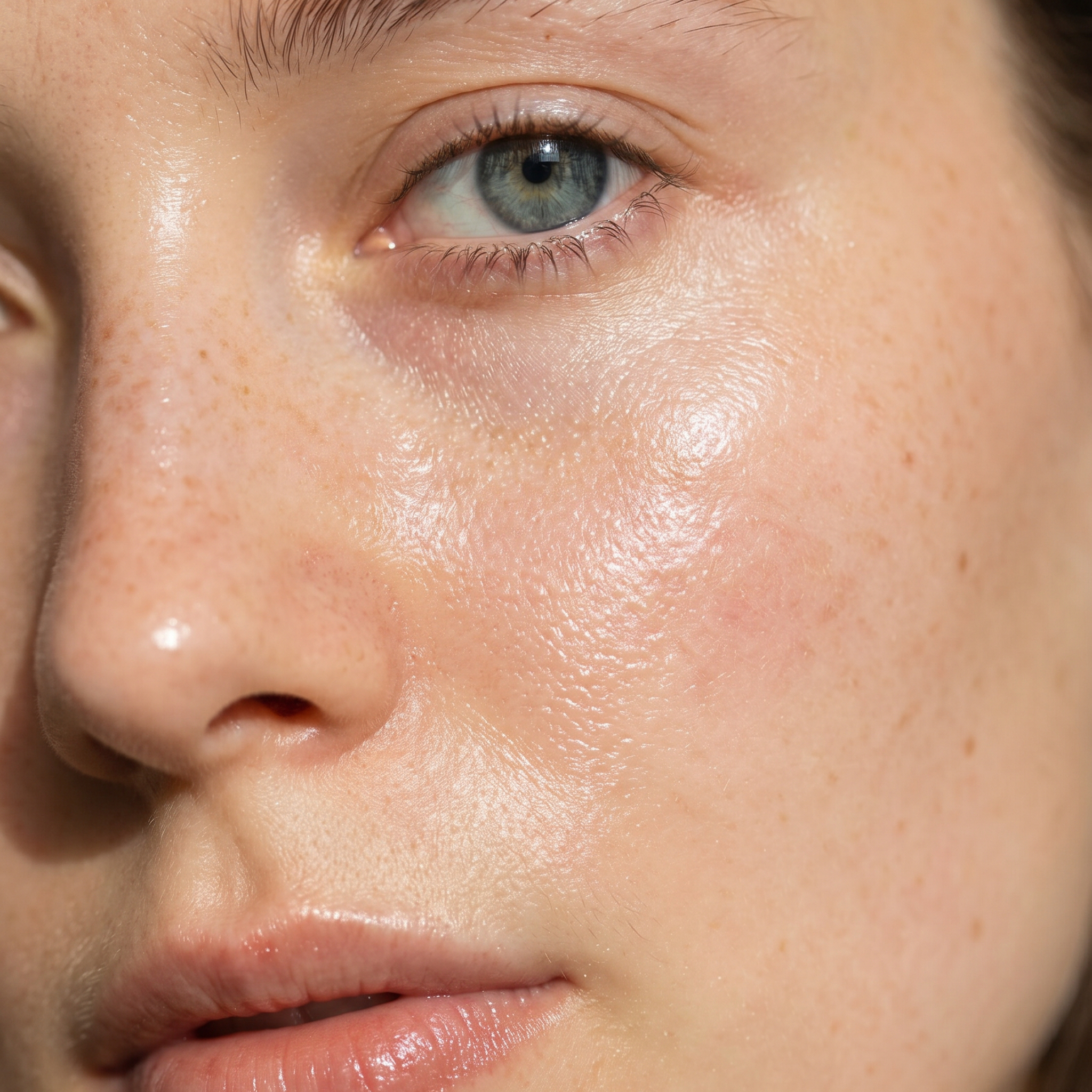
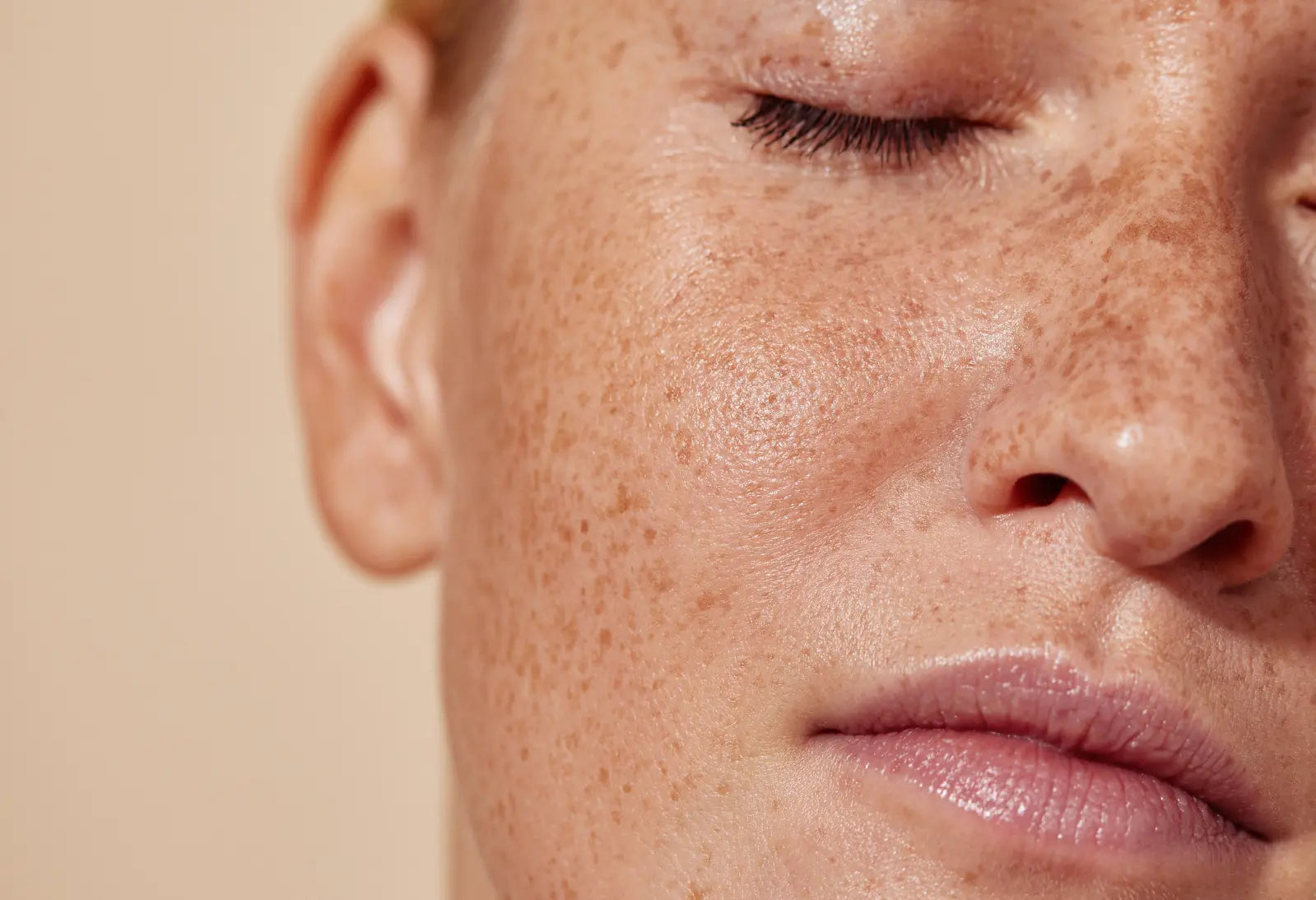
You’ve been consistent. The serums, the retinoid, the SPF, the occasional facial — all of it. And yet when you run your fingers across your cheek, the skin still feels like sandpaper. Foundation sits on top instead of melting in, clinging to every pore. There’s that grainy skin texture on your forehead that looked fine in the bathroom mirror and ruthless under office lighting. Maybe you’ve started calling it “orange peel” because that’s what it is.
If you’ve tried everything and your texture is still bad, the issue probably isn’t your routine — it’s where the routine can reach. Most at-home products work at the surface. Persistent rough patches, enlarged pores, and bumpy texture are structural; they live in the dermis, several layers beneath where your serums actually go.
This guide walks through what causes uneven texture and which professional treatments can help reduce it.
What Causes Uneven Skin Texture?
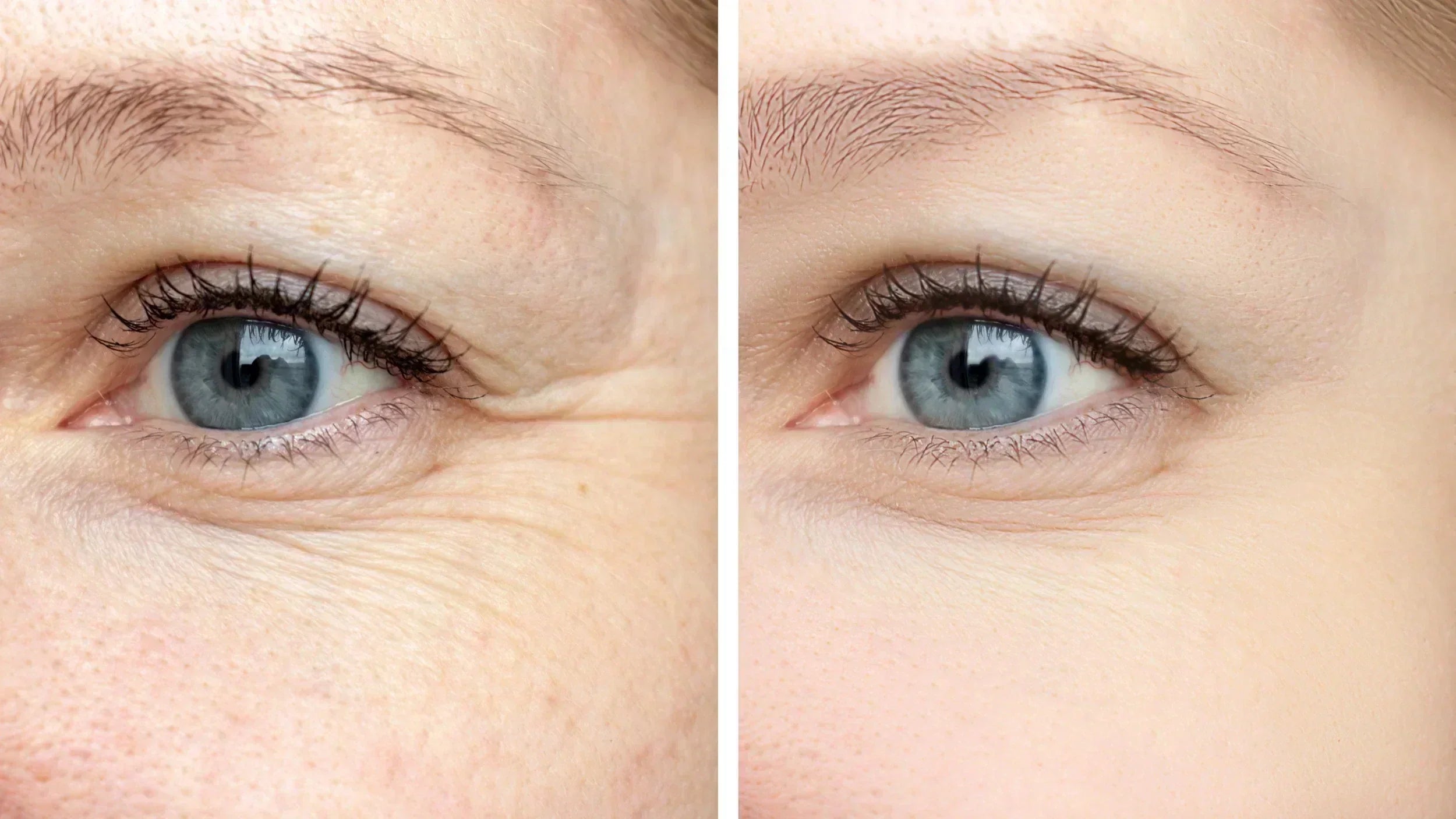
Uneven skin texture is what you see when several structural skin processes fall out of sync. Most of it has nothing to do with how diligent your routine is — it comes down to five underlying causes.
Dead cell accumulation. As your skin’s natural cell turnover slows over time and with UV exposure, dead cells pile up unevenly rather than shedding cleanly — creating rough, dull patches and a coarser surface.
Collagen and elastin decline. When collagen and elastin gradually break down through sun exposure, lifestyle factors, and the natural slowdown that happens with time, the surface above starts to look and feel irregular.
Enlarged pores and sebum buildup. Pore size is partly genetic, but the appearance of pores changes when excess sebum, congestion, and loss of pore elasticity stretch them out — especially across the cheeks, nose, and chin.
Post-acne changes. Even after active acne resolves, the skin can hold onto changes in surface texture, post-inflammatory pigmentation, and shallow textural scarring for months or years. For deeper scarring specifically, see OVME’s guide to the best skin treatments for acne scars.
Sun damage. UV exposure degrades collagen, thickens the outer skin layer, and creates uneven pigment distribution. It’s the single biggest accelerator of the other four causes above.
When Is It Time to See a Provider?
A solid at-home routine — a retinoid, a gentle BHA or AHA, daily SPF — does real work. It maintains the surface, keeps congestion in check, and protects the gains you make from any professional treatment.
But when texture has been persistent despite a consistent routine, or when the concern involves structural issues like collagen decline, enlarged pores, or post-acne scarring, at-home products can’t rebuild what’s already broken down. That’s the point where a professional evaluation is worth considering — not as a replacement for your routine, but to address what topical products are structurally unable to reach.
5 Proven Treatments for Uneven Skin Texture
The treatments that move the needle for texture all share one thing: they work below the surface.
RF Microneedling
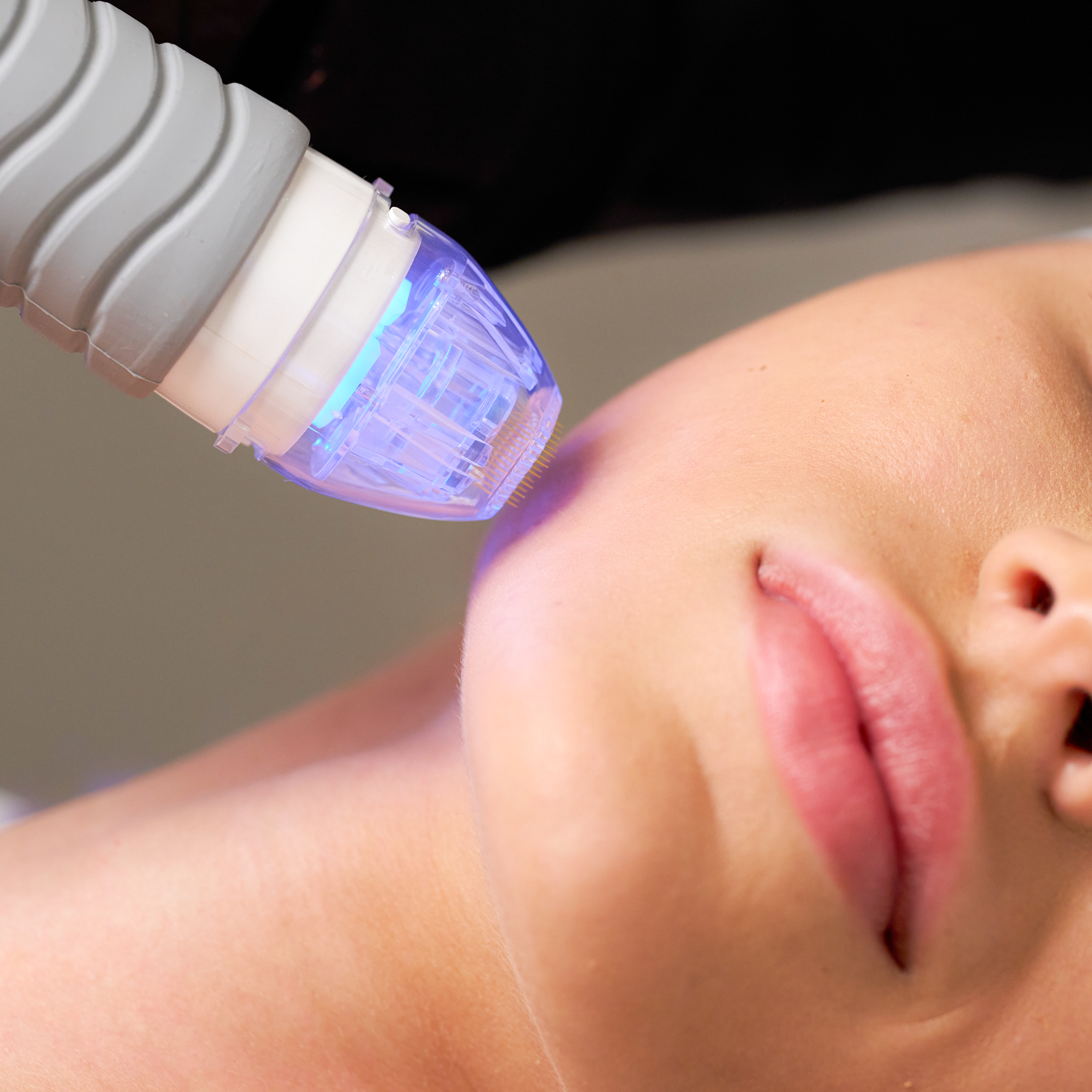
RF microneedling uses fine needles to create controlled micro-injuries in the skin while delivering radiofrequency energy into the deeper dermis. The result is a two-phase collagen response — the needling triggers the skin’s natural repair process, while the RF energy heats deeper tissue to stimulate longer-lasting structural remodeling. For texture specifically, it’s one of the most effective tools for enlarged pores, surface roughness, and shallow post-acne scarring. It also helps with mild laxity, which is why it overlaps with the skin-tightening category.
Best for: Mild skin laxity, enlarged pores, overall surface roughness, post-acne textural changes. Works across a range of skin tones.
Session expectations: A series of 3 to 4 monthly sessions produces the most noticeable structural improvement; results continue to develop over the following months as new collagen matures.
Downtime: Minimal — typically 1 to 3 days of redness and minor swelling. Topical numbing is applied beforehand to keep comfort manageable.
Learn more about RF microneedling at OVME.
HALO® Laser Resurfacing
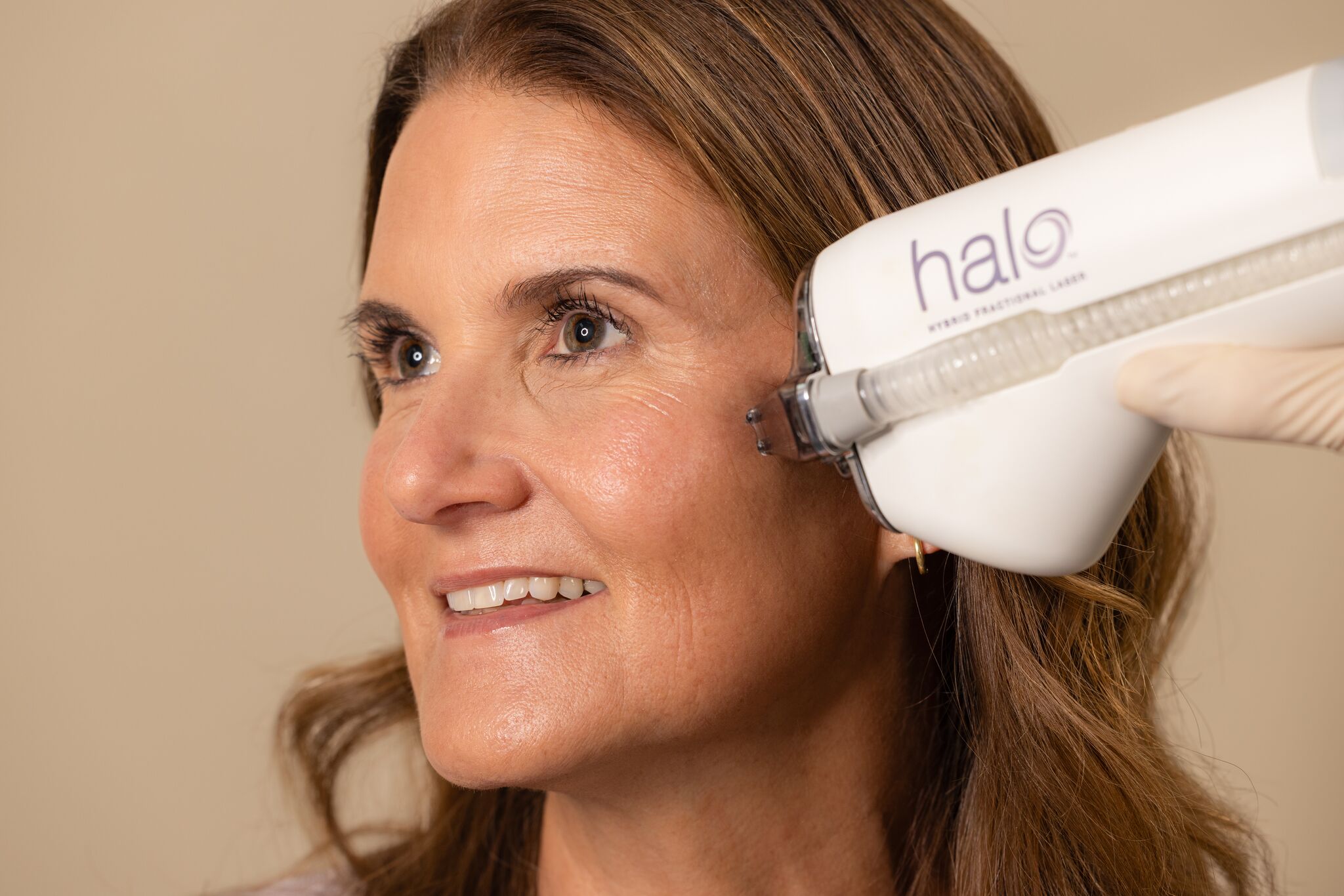
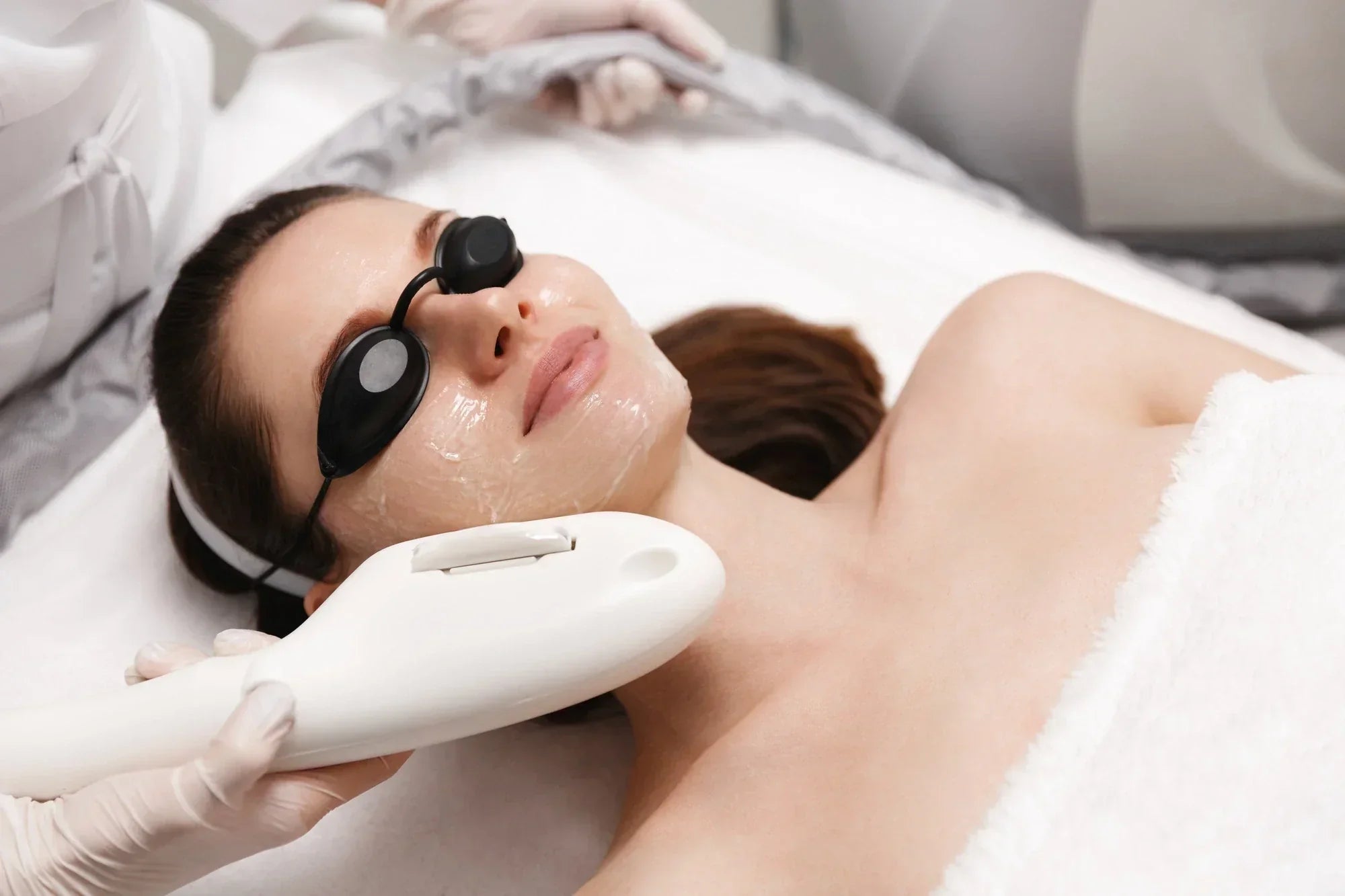
HALO® is a hybrid fractional laser that combines two wavelengths in a single pass — one that works at the dermal level to stimulate collagen, and one that resurfaces the outer skin layers to address tone and texture at the surface. It addresses both the root cause of textural irregularity (collagen structure) and its surface expression (roughness, dullness, uneven tone) in a single treatment.
Best for: Patients with moderate to significant texture concerns, sun damage, fine lines, and uneven tone alongside roughness. A strong fit when texture and pigmentation are both in play. For fine lines specifically, OVME’s guide to wrinkle reduction treatments covers the broader toolkit.
Session expectations: Most patients see meaningful improvement after a single HALO® session; some skin concerns benefit from a second session spaced 2 to 4 months later. Results develop over 4 to 6 weeks as the skin regenerates.
Downtime: Social downtime of 4 to 7 days — redness, a bronzed appearance, and mild peeling are typical. Strict sun avoidance and daily SPF are required after treatment to protect the freshly regenerated skin. This is the highest downtime of the options covered here, which is worth weighing during candidacy discussion.
Learn more about laser resurfacing at OVME.
Chemical Peel
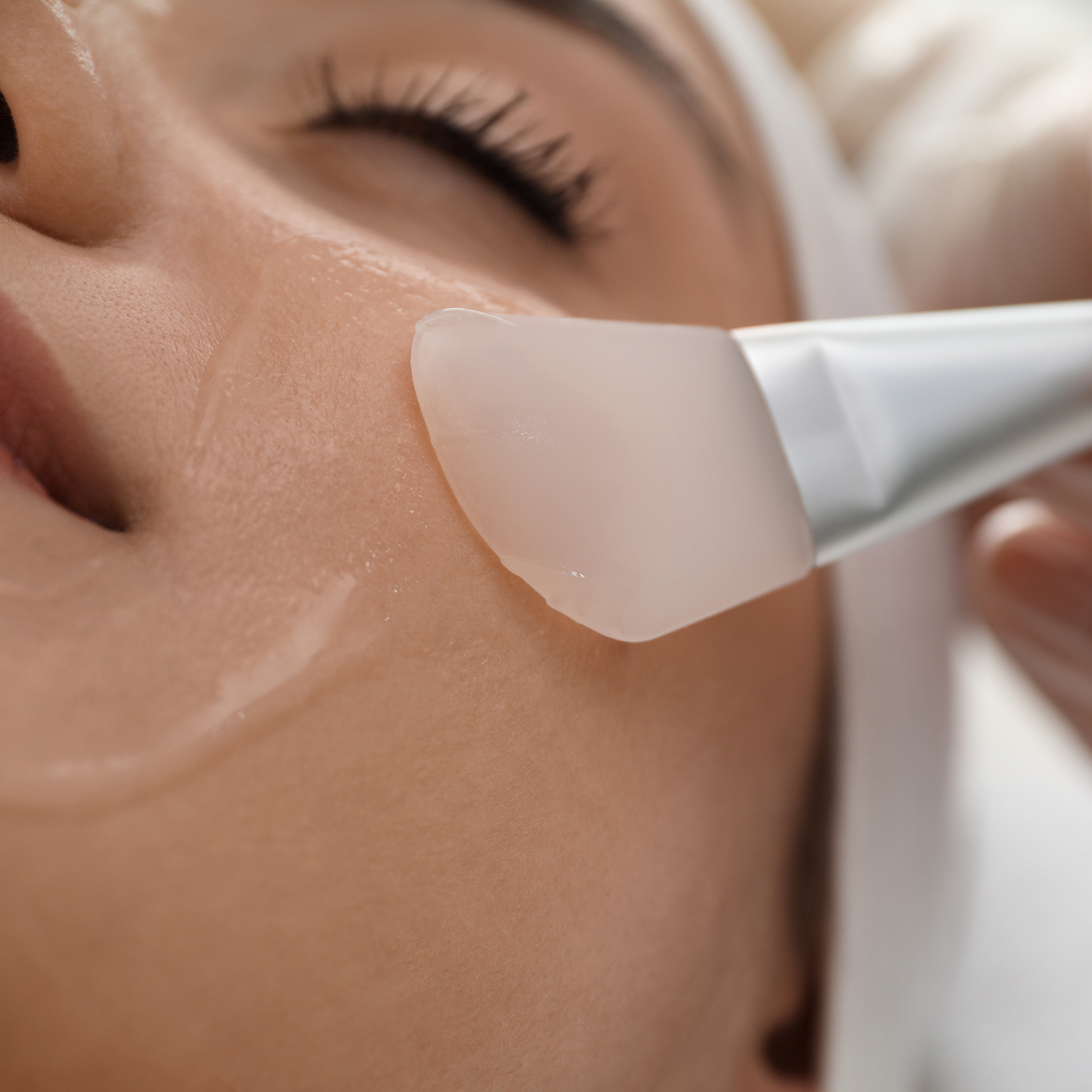
Chemical peels use professional-grade, multi-acid blends to loosen and remove damaged outer skin layers, accelerate cell turnover, and, over time, stimulate collagen renewal. They address texture mostly at the surface level — most effective for mild to moderate roughness, congestion, and early post-acne skin changes. The peels offered at OVME combine multiple acids in a single formulation, which is what makes them clinically useful for several concerns at once.
Best for: Mild to moderate surface texture, congestion, dullness, and early post-acne pigment. Often, the right entry point is before progressing to laser or RF microneedling.
Session expectations: A series of 3 to 6 peels spaced about 4 weeks apart builds progressive improvement. Results develop over the following months as cell turnover accelerates.
Downtime: Minimal to moderate depending on peel depth, with self-neutralizing formulas that keep recovery predictable.
Learn more about a chemical peel at OVME.
BBL® Photofacial
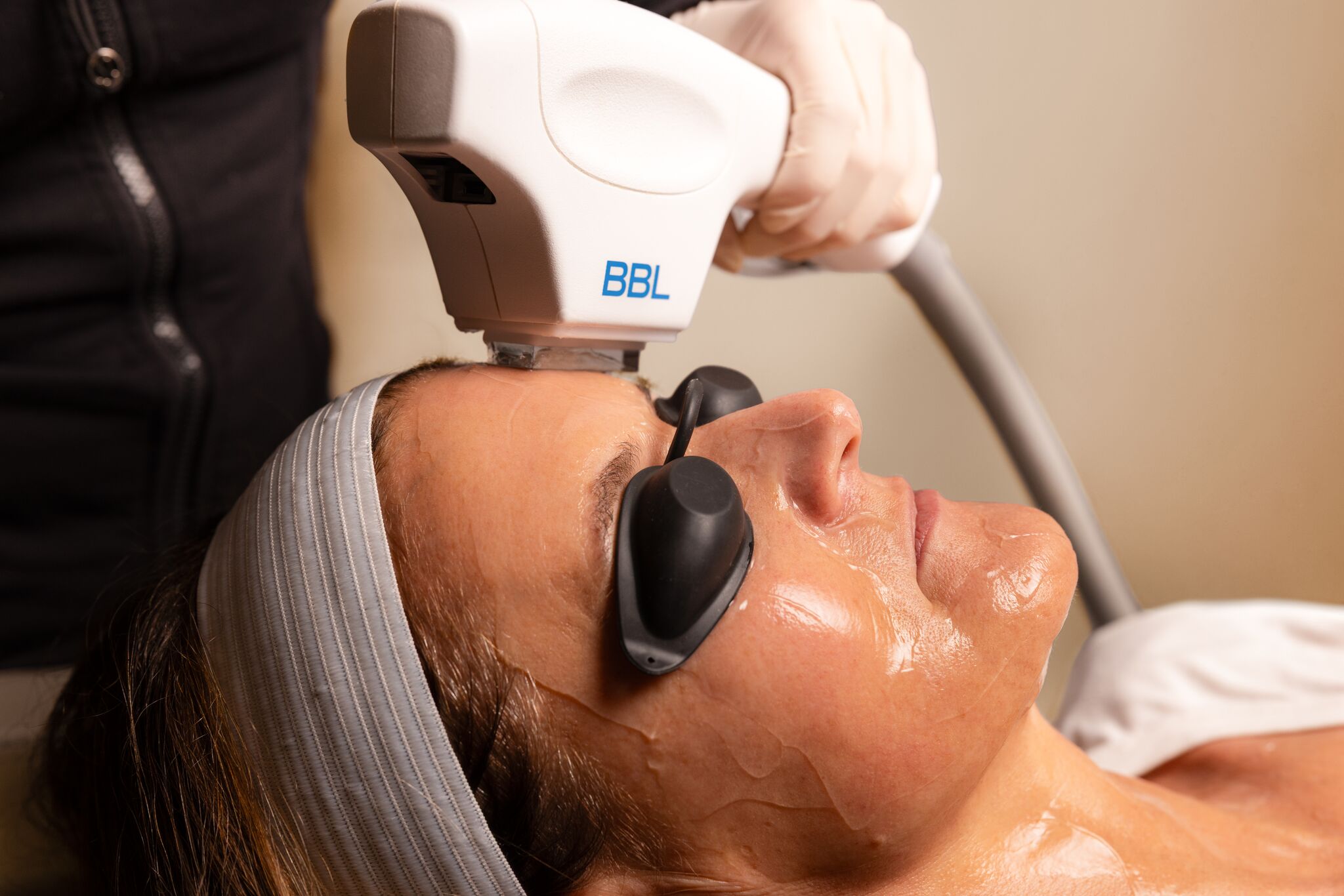
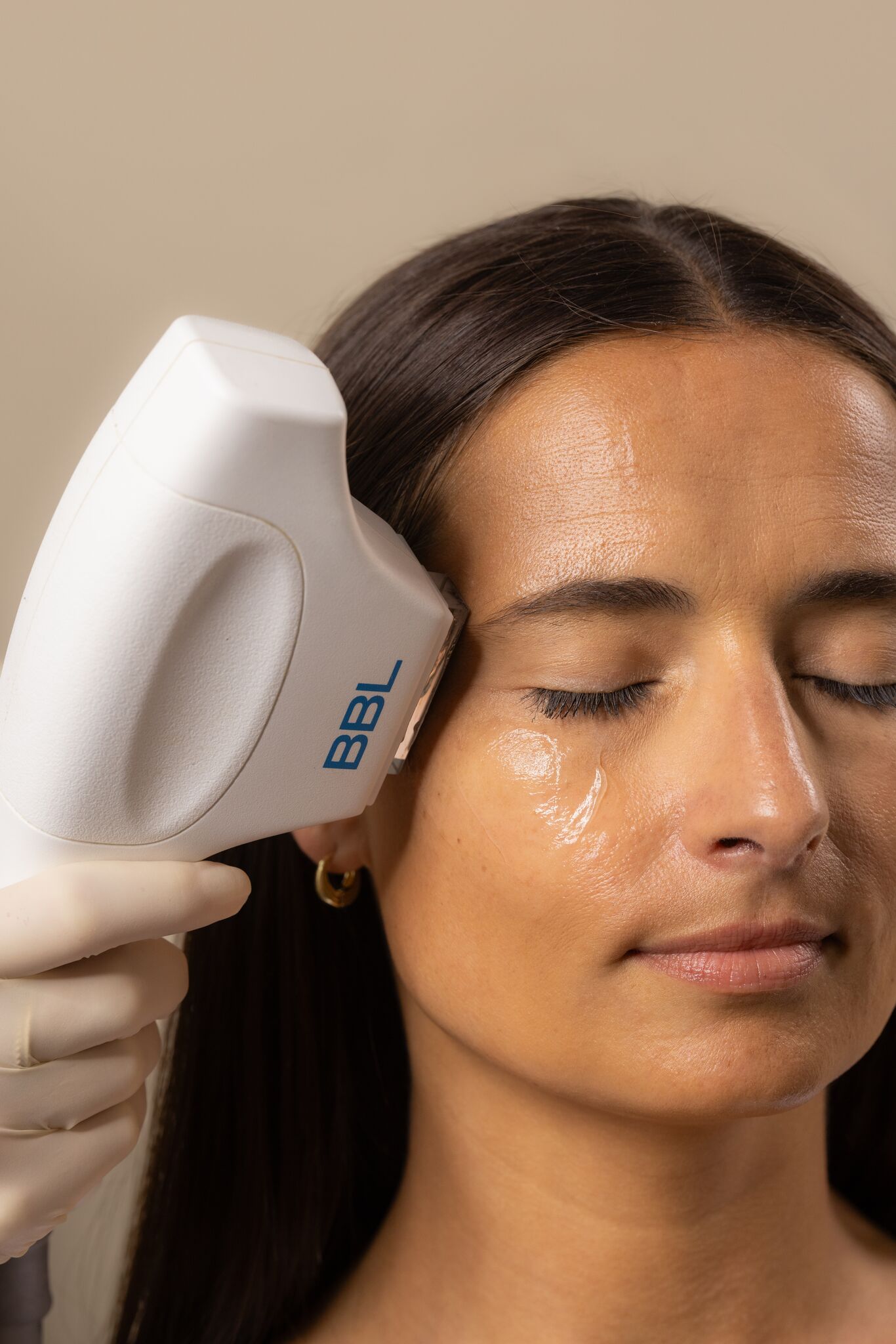
BBL® (BroadBand Light) delivers controlled pulses of light energy that target pigmentation, redness, and visible vessels beneath the skin’s surface. It doesn’t resurface in the same way HALO® or RF microneedling do — its texture contribution is addressing the tone irregularities (sun spots, diffuse redness, broken capillaries) that sit alongside roughness and make uneven texture look worse than it actually is.
Best for: Patients whose texture concerns include significant pigmentation or redness alongside roughness. Most impactful when paired with HALO® — see the OVME approach section below.
Session expectations: Typically, 3 sessions for noticeable tone improvement.
Downtime: Minimal, mild redness for 24 to 72 hours; treated pigment darkens briefly before shedding over several days.
Learn more about BBL photofacial at OVME.
Maintenance Facials — Hydrafacial® and the OVME Signature Facial
These belong in a different category from the treatments above. Hydrafacial at OVME and the Signature Facial at OVME work at the surface — cleansing, exfoliating, and hydrating — which is the right scope for keeping skin looking and feeling its best between resurfacing or remodeling sessions. They’re not designed to rebuild collagen or close large pores. Treat them as maintenance, not as primary texture-improvement treatments.
How OVME Approaches Skin Texture
By the time most people are reading an article like this one, the frustration isn’t a lack of options — it’s that every provider seems to recommend something different. What’s missing isn’t another treatment; it’s a clear, personalized plan grounded in what your skin actually needs.
That’s exactly the gap OVME can help with. OVME is a technology-enabled medical aesthetics company with 27+ boutique studios across the United States, offering the full range of professional skin treatments — including skin rejuvenation treatments — tailored to each patient’s skin.
VISIA Imaging Skin Analysis: The Starting Point
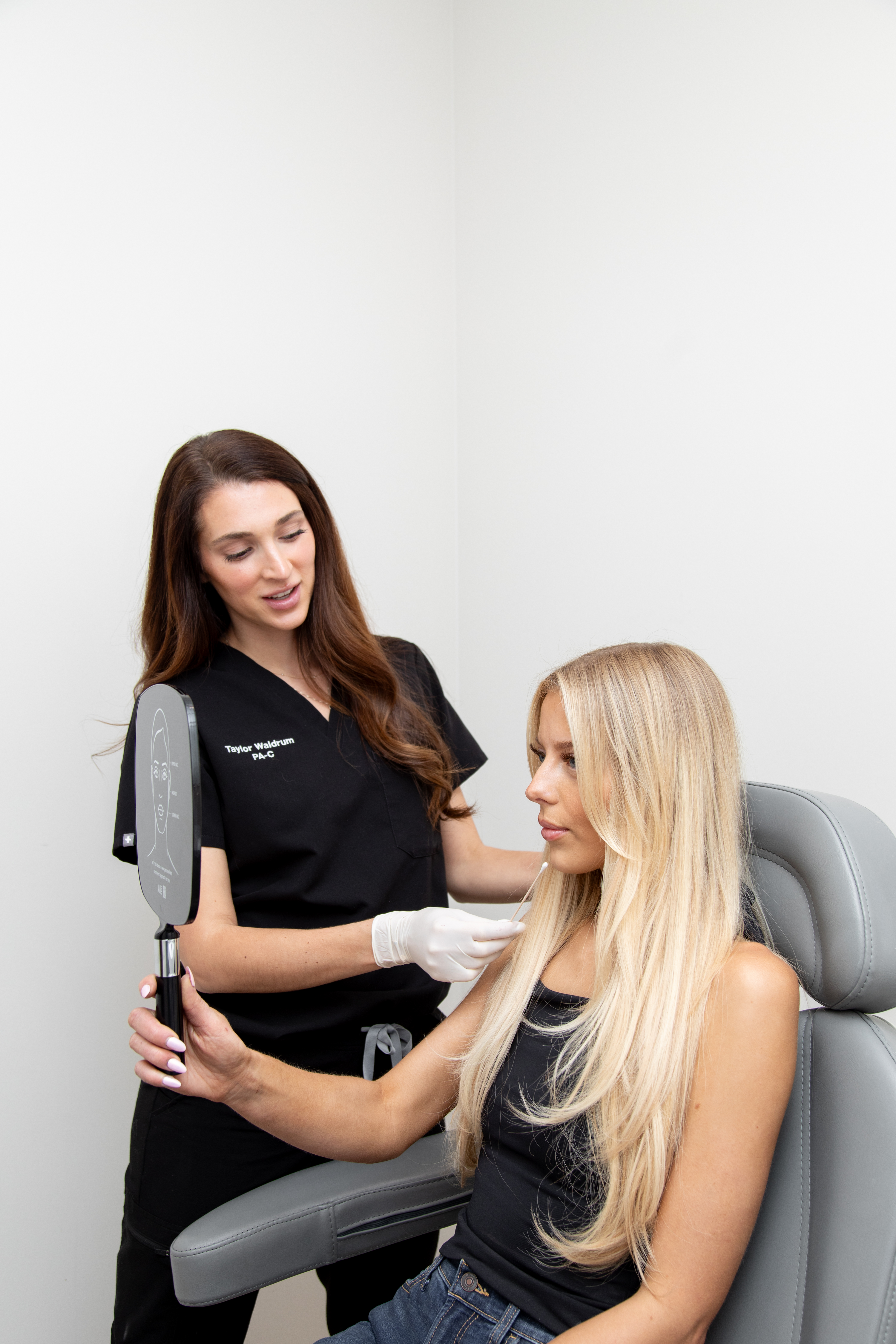
Every skin-quality consultation at OVME begins with VISIA Imaging Skin Analysis. VISIA captures high-resolution images of your skin and maps texture, pigmentation, subsurface sun damage, pore condition, and underlying skin health that aren’t visible to the naked eye. The result is a data-backed baseline — not a guess — that your provider uses to build the rest of the conversation. For anyone who has been frustrated by random, contradictory recommendations, VISIA is the diagnostic anchor: a roadmap of what’s actually happening in your skin, before any treatment is on the table. Learn more about OVME skin analysis.
HALO® + BBL® — OVME’s Same-Session Combination for Texture and Tone
For patients evaluated as candidates, OVME combines HALO® and BBL® in the same session. HALO® resurfaces and rebuilds dermal collagen; BBL® targets the pigmentation, diffuse redness, and visible vessels that sit alongside texture concerns. Performed together, they address both the structural cause and the surface expression of uneven texture in a single appointment, which is why it’s one of the most common multi-concern protocols for texture and tone at OVME.
SkinVive® and RF Microneedling — Separate Sessions That Work Well Together
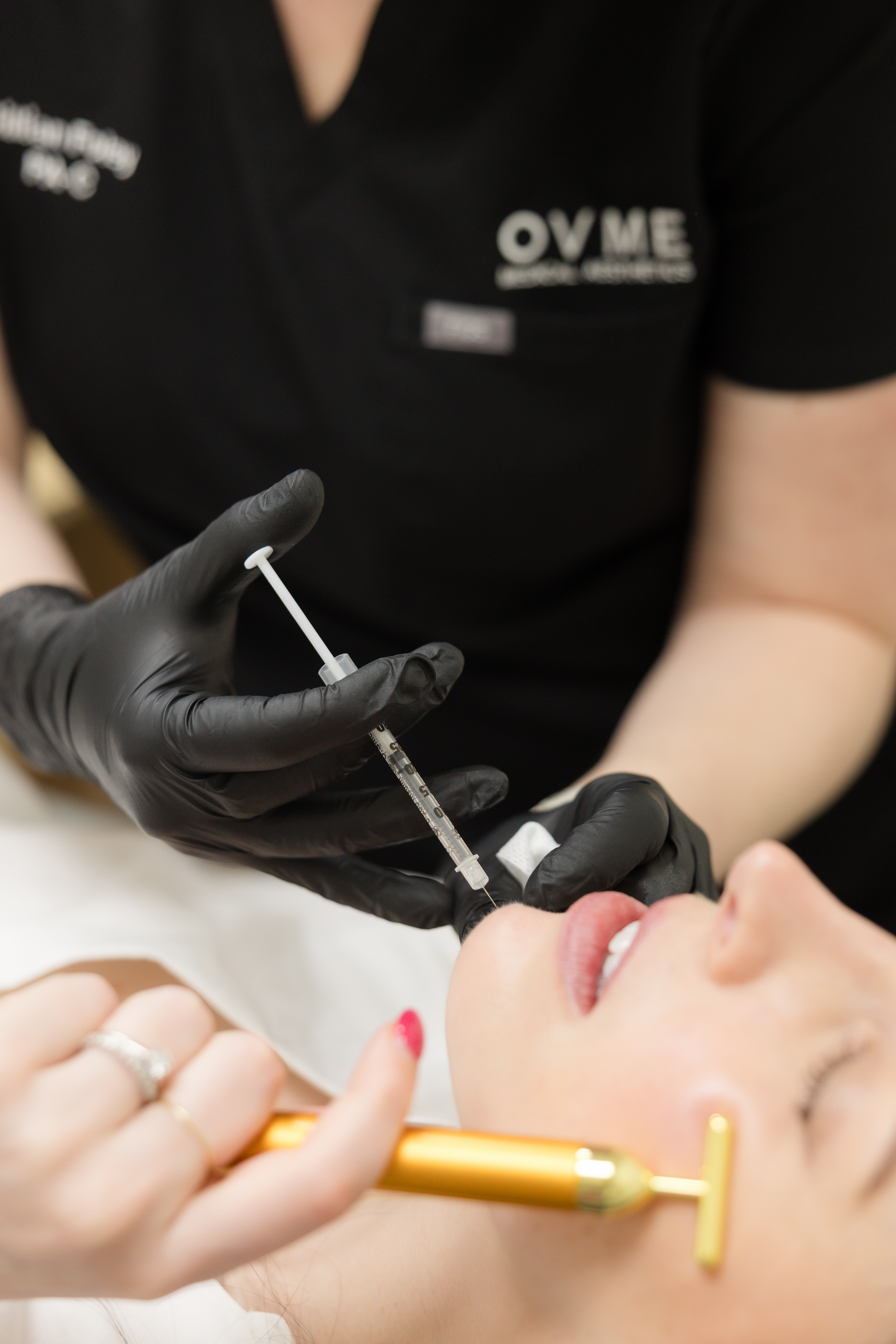
When skin quality and structural remodeling are both part of the plan, Skinvive® at OVME — the first and only FDA-approved hyaluronic acid skin booster — works alongside RF microneedling as a complementary pairing. These are kept as separate sessions, not combined in a single appointment, but together they support hydration and dermal smoothness over time as part of a broader skin quality plan.
Who Performs the Treatments
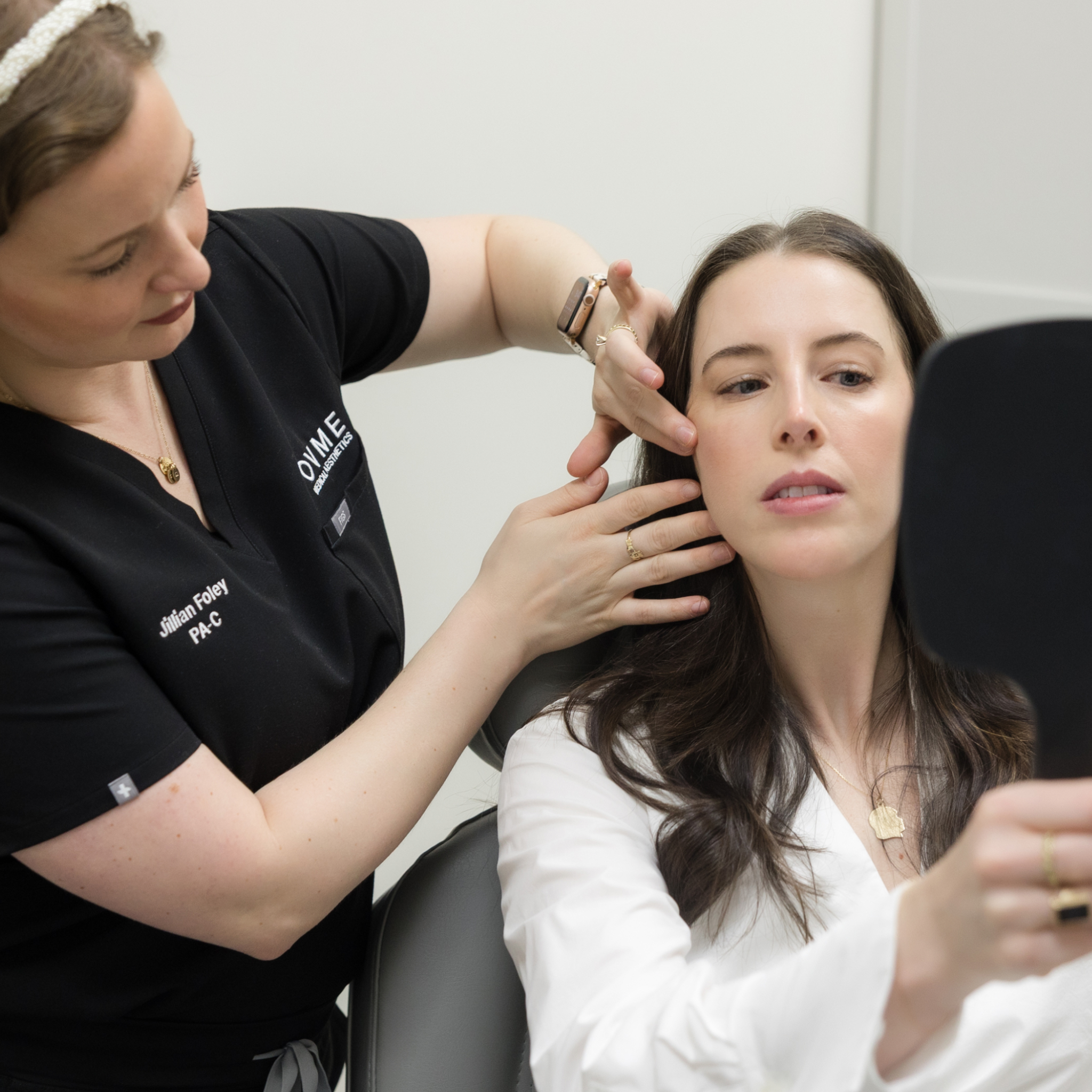
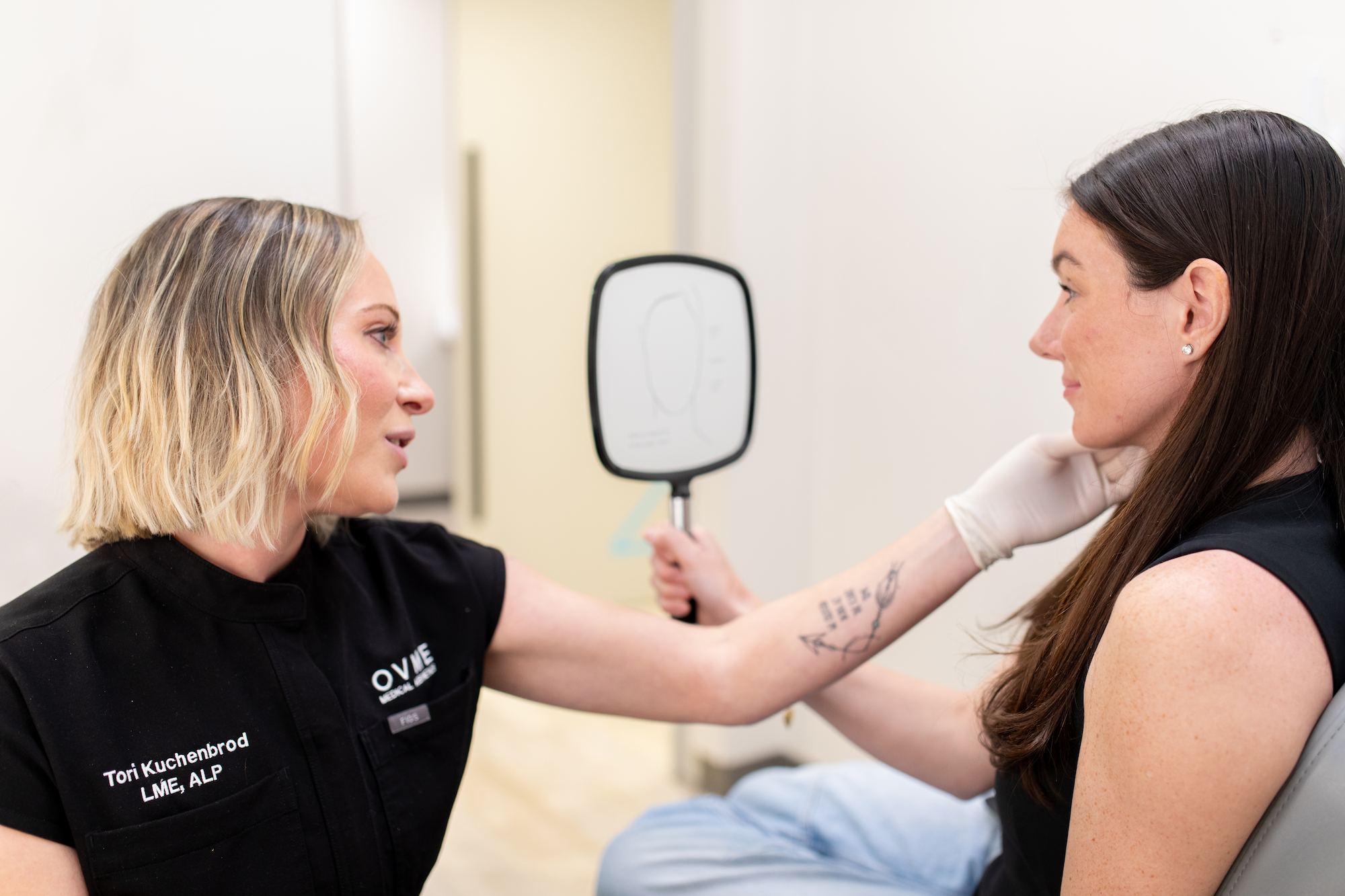
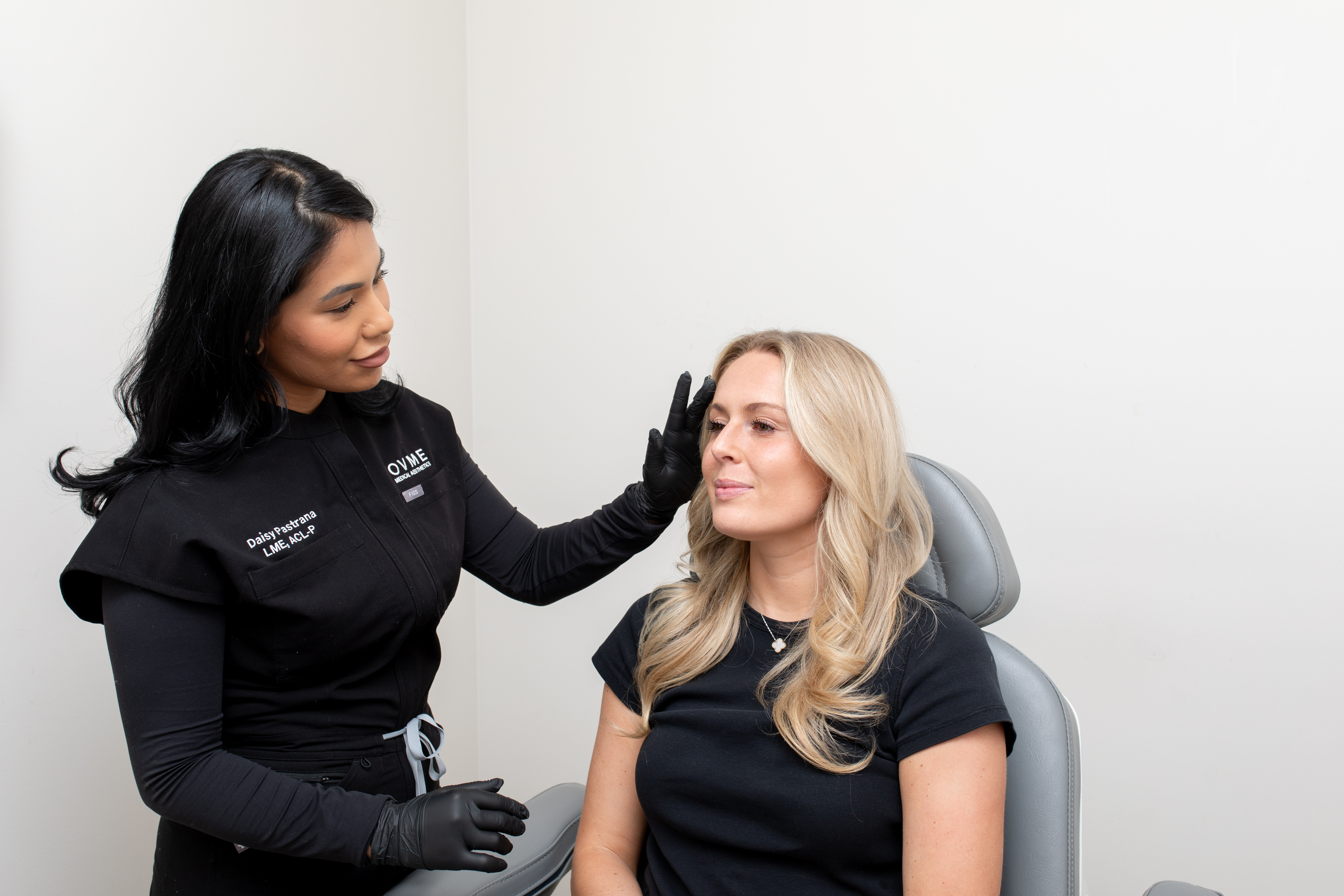
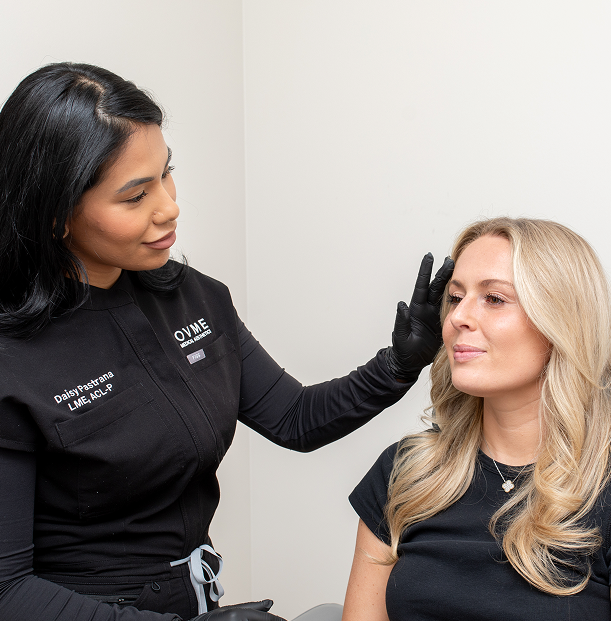
Every treatment at OVME is performed by licensed medical professionals — registered nurses, nurse practitioners, and physician assistants — all supervised by medical directors who are board-certified plastic surgeons. The consultation itself is the first step: an expert listens to your goals, assesses your skin and facial anatomy in person, walks you through a personalized plan with the reasoning behind each treatment, and shares transparent pricing before anything is booked. It’s complimentary, available in-studio or virtually, and bookable through the OVME app or any studio location.
Frequently Asked Questions
What causes rough or uneven skin texture?
Uneven skin texture is the visible result of structural changes in the skin — dead cells accumulating unevenly as natural cell turnover slows, gradual collagen and elastin decline that weakens the smooth scaffolding under the surface, enlarged pores from sebum buildup and loss of pore elasticity, lingering surface changes after acne, and sun damage that degrades collagen and thickens the outer skin layer. Most of these changes live in the dermis, not the epidermis, which is why at-home products can only do so much. Professional treatments work at the structural level that the surface can’t reach.
Is RF microneedling or a chemical peel better for improving skin texture?
RF microneedling and chemical peels work at different depths and address different parts of the texture picture. RF microneedling rebuilds deeper collagen and refines the appearance of enlarged pores by stimulating long-term remodeling in the dermis. Chemical peels work primarily at the surface — they accelerate cell turnover, brighten tone, and soften mild to moderate roughness. The right choice depends on the severity of the concern, skin type, and goals; a licensed provider can map this during your consultation.
How many sessions do you need to see a real difference in skin texture?
Session counts vary by treatment. RF microneedling typically takes a series of 3 to 4 monthly sessions for the most noticeable structural improvement. HALO® laser resurfacing often delivers meaningful results after 1 to 2 sessions. Chemical peels work best in a series of 3 to 6 spaced about 4 weeks apart. BBL® photofacial usually takes 3 sessions when used as a tone-focused complement. Results continue to develop over several months as new collagen matures.
Can professional treatments help with large pores and a bumpy texture?
Yes, and they tend to address what at-home products structurally cannot. Retinoids, exfoliating acids, and consistent SPF play a real maintenance role at the skin’s surface, but enlarged pores and persistent bumpy texture are usually rooted in the dermis. Professional treatments like RF microneedling, HALO® laser resurfacing, and professional chemical peels work at that deeper level — stimulating collagen, resurfacing damaged outer layers, and refining the look of pores in a way topical products cannot replicate.
Where can I find skin texture treatments in the US?
OVME offers a full range of professional skin texture treatments — including HALO® laser resurfacing, RF microneedling, professional chemical peels, BBL® photofacial, and Skinvive® — across 27+ boutique studio locations in the United States. Each studio is staffed by registered nurses, nurse practitioners, and physician assistants, all supervised by medical directors who are board-certified plastic surgeons. You can find your nearest studio at OVME studios near you and book a complimentary in-studio or virtual consultation.
Individual results may vary. Consult with a licensed provider to determine if these treatments are right for you.
Keep on reading