HALO vs MOXI: Which Laser Your Skin Actually Needs
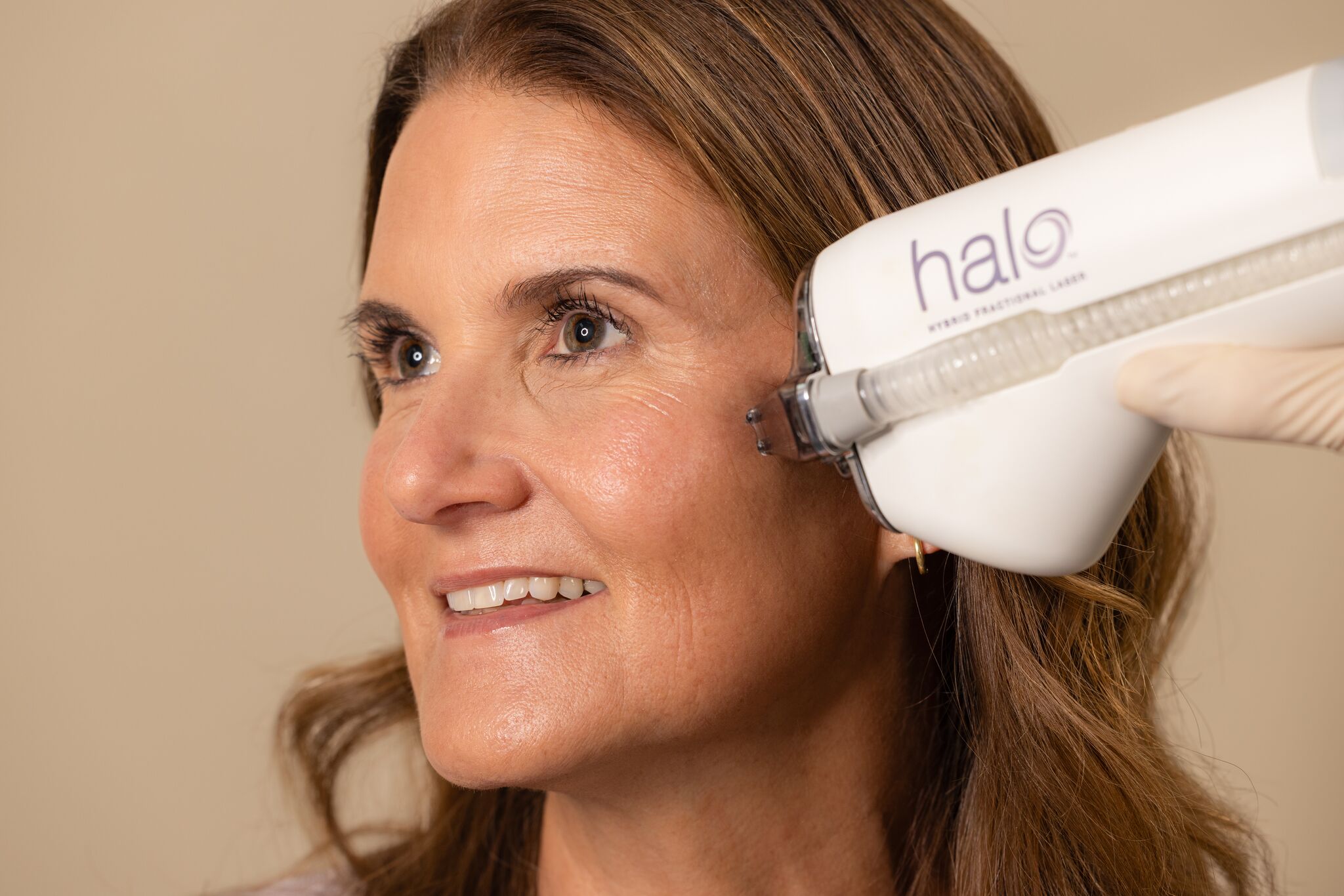
HALO® and MOXI® both treat sun damage, and they work at different depths. Which one suits you depends on how much correction your skin needs and how much recovery you can plan around.
Here’s what each one addresses, what the results look like at each stage, and how providers decide between them.
How Much Correction Your Skin Needs
MOXI® sits closer to maintenance: keeping tone even, texture smooth, and pigment from accumulating faster than your skin clears it. HALO® sits closer to correction: addressing sun damage that has already settled in and become part of how your skin looks in daylight.
Neither position is better. They address different needs.
The key is matching intensity to the concern. Go too strong for a mild issue, and you’re looking at more downtime than necessary. Go too light for established damage, and you may need session after session without ever reaching the result you wanted.
How HALO and MOXI Work Differently
How each laser works determines the results, the recovery, and the number of appointments.
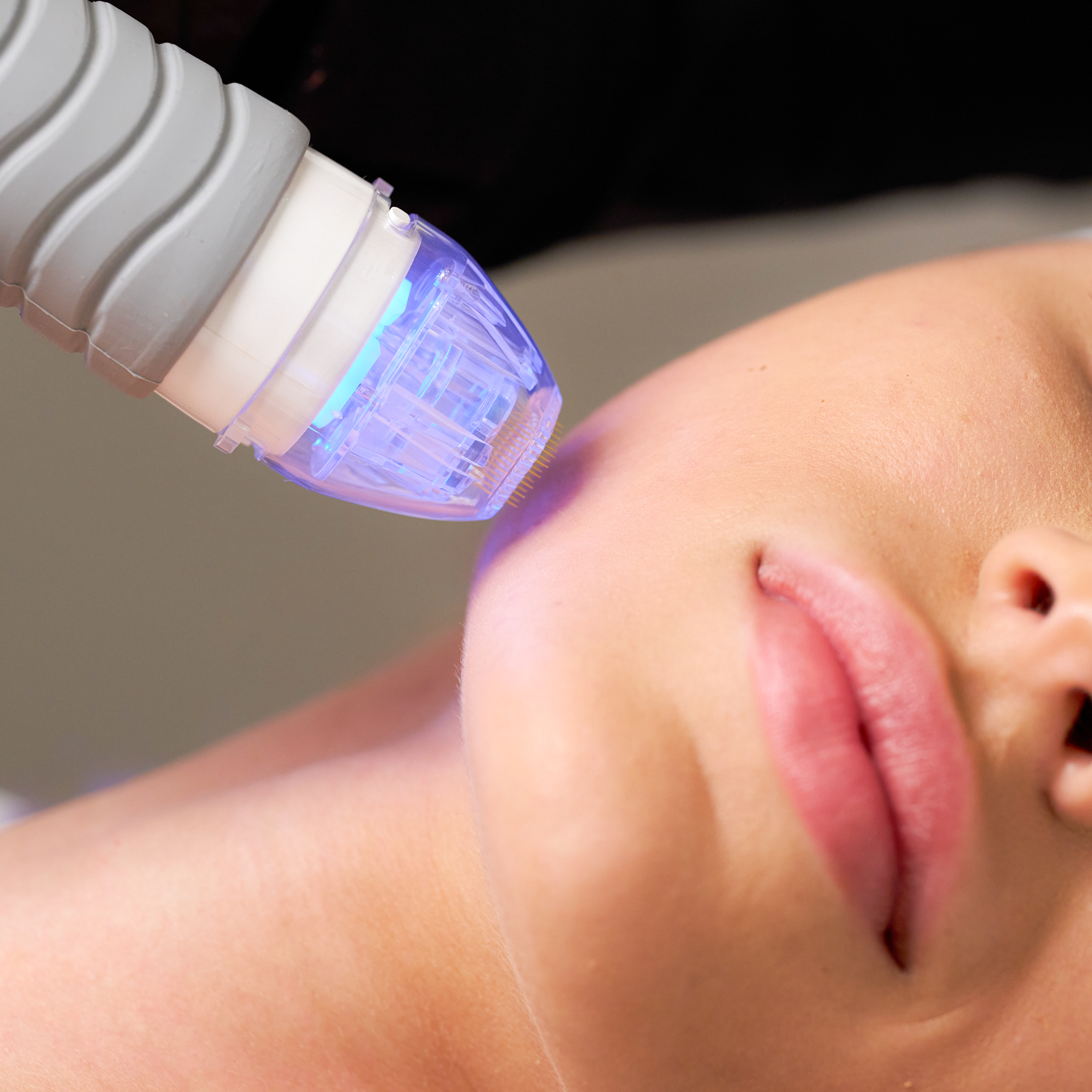
MOXI® is a fractional laser that works just beneath the surface, about as deep as two sheets of paper stacked together. It targets the water in your skin rather than removing any tissue, so it prompts renewal while leaving your skin barrier largely intact. Treatment takes about eight to ten minutes.
HALO® does two jobs in a single pass. One of its two wavelengths works beneath the surface without removing any skin, prompting collagen to rebuild over the following weeks. The other works right at the surface, taking off a fraction of the outer layer to smooth texture and even out tone. Because both happen together in one coordinated pass, HALO® reaches concerns that have settled further into the skin.
Depth drives both the result and the recovery.
HALO Laser Before and After: The Week That Follows
Results from HALO® laser resurfacing arrive in stages. Knowing the sequence prevents the mid-week surprise that catches people off guard.
Days one to two. Skin looks flushed and feels warm and tight, similar to significant sun exposure. Swelling is most noticeable on the first morning after.
Days two to three. A bronzed appearance develops along with a fine, sandpaper-like texture across the treated area. This is MENDS (microscopic epidermal necrotic debris), the treated pigment and tissue working its way to the surface. It’s the phase people find visually surprising, and it means the treatment did what it was supposed to do.
Days three to five. That bronzed layer flakes away, revealing brighter skin underneath.
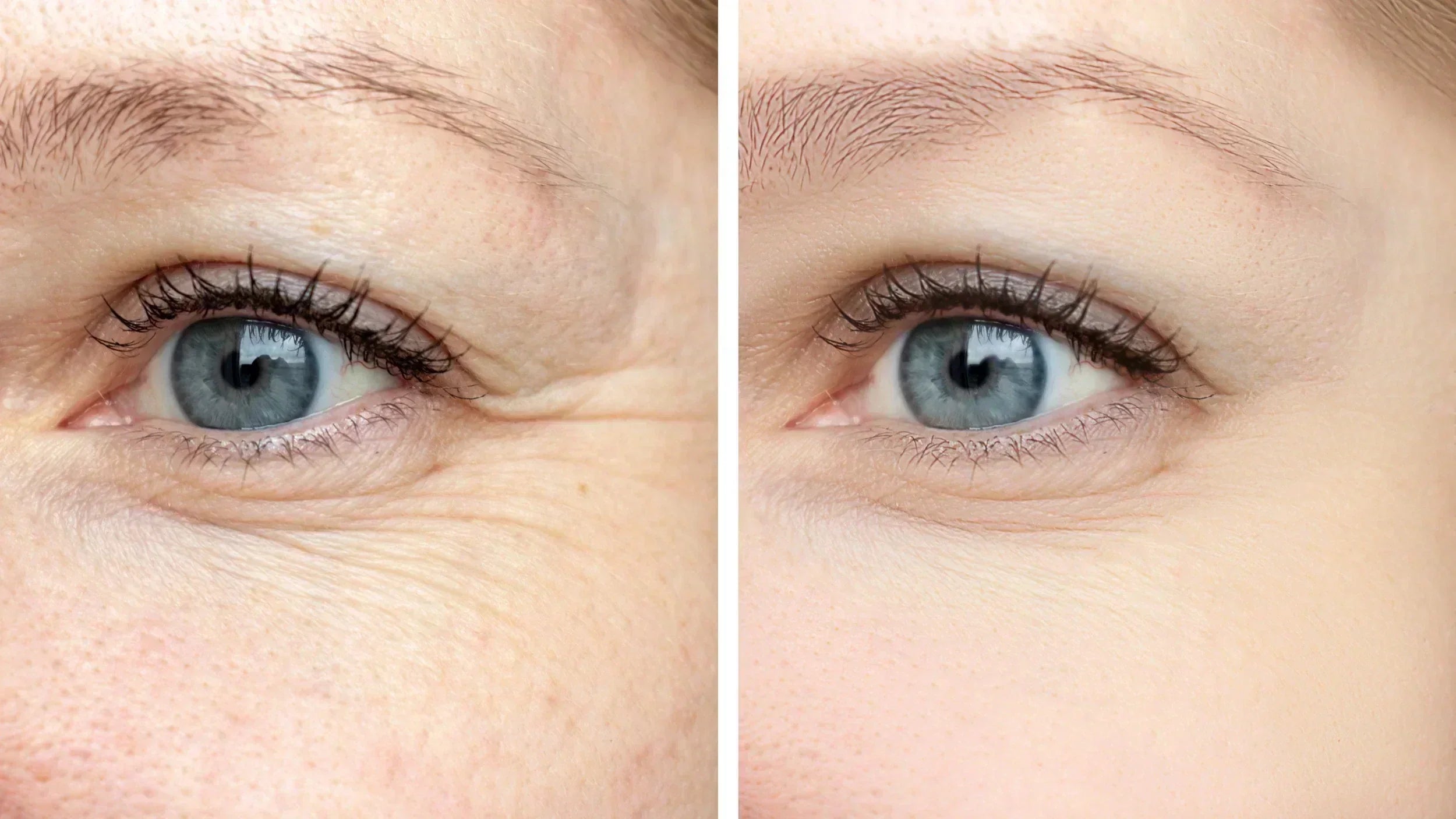
Two to five days in, the first improvement is usually visible. Through the first two to three weeks, pigment clearance is at its most noticeable, and this is when brown spots and uneven tone visibly resolve. Across three to six months, collagen continues remodeling, which is when textural change and fine lines soften further.
Most people are treated with one to two corrective sessions spaced roughly four weeks apart, though your provider may recommend a different course.
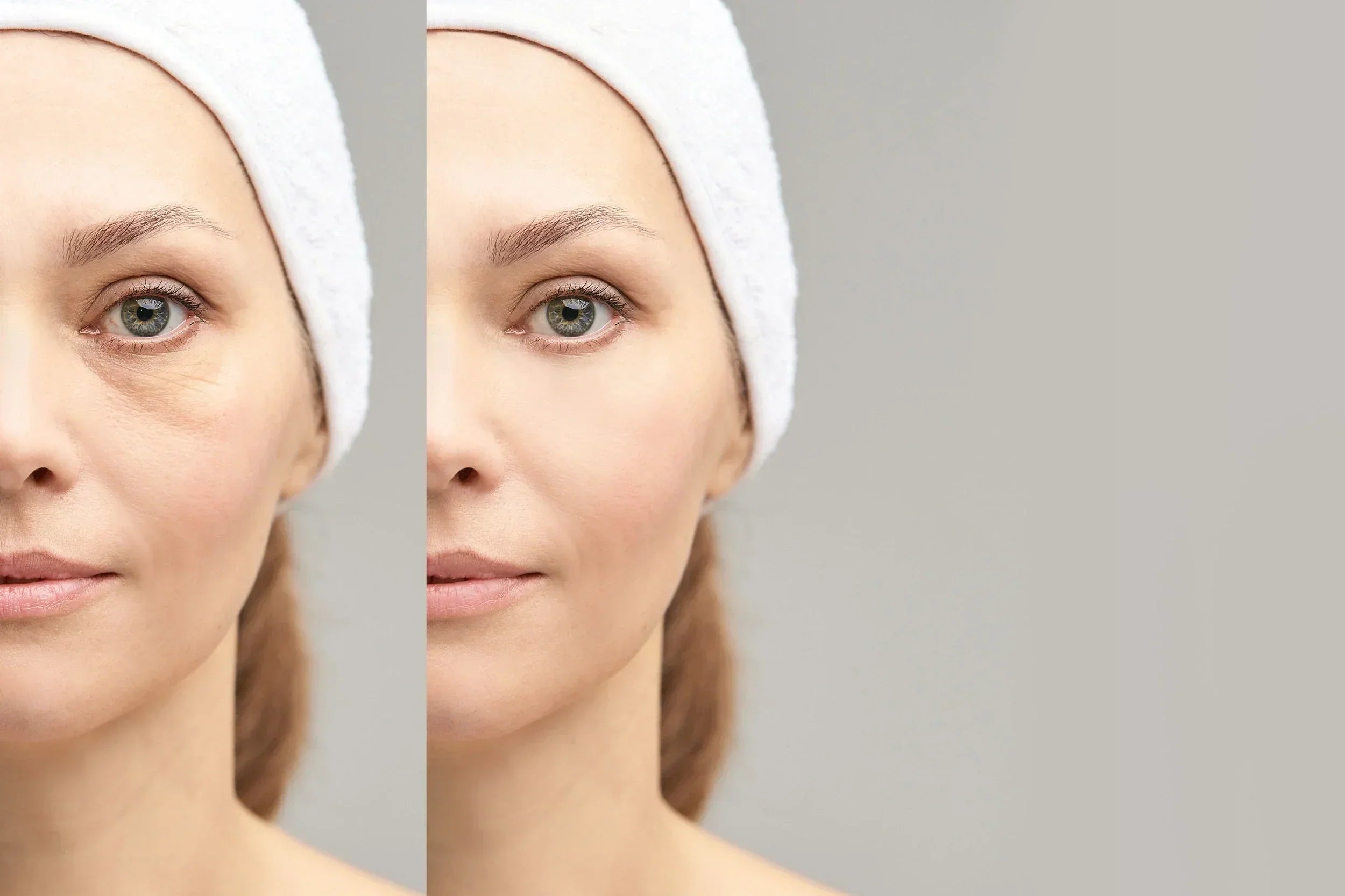
[IMAGE: OVME to provide, HALO before and after. ALT: HALO laser before and after showing improvement in sun damage and skin tone]
Before-and-after outcomes reflect a specific treatment plan. Number of sessions, settings, and the concern being treated all vary by patient, and so do results.
MOXI Laser Before and After: What Builds Across the Series
MOXI® treatment builds its results across a series of sessions, so it is best understood by session rather than by day.
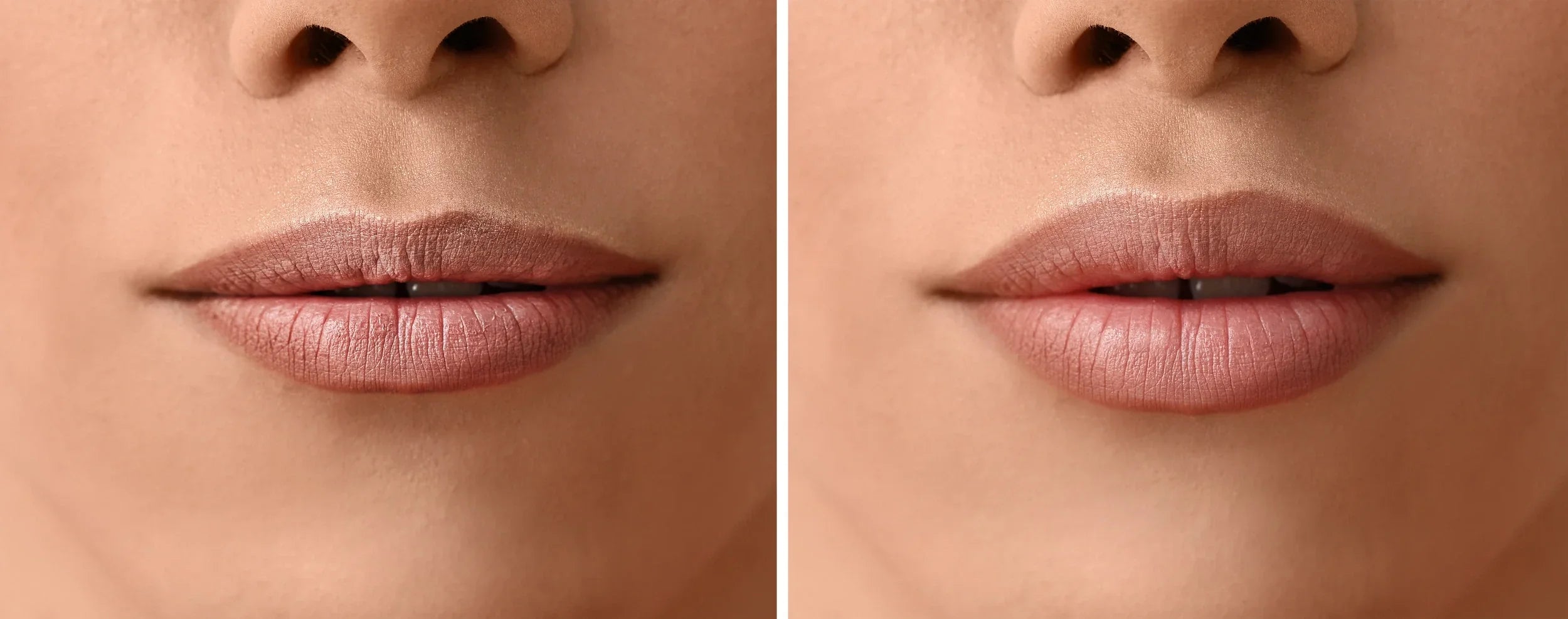
After one session, the visible phase is brief. Redness and mild swelling largely settle within 12 to 24 hours, a light pink cast lasts a day or two, and a fine sandpaper texture appears as MENDS work through. What you notice is clarity rather than transformation: skin that looks brighter and more even, and makeup that goes on more smoothly.
Across two to four sessions, spaced roughly four weeks apart, the effect compounds. Tone evens, surface irregularity smooths, and the cumulative change is the one people recognize in photographs. That’s the benchmark for MOXI®, rather than a single appointment.
MOXI® is designed for refinement and maintenance. Pigment that has been deepening for a decade is a different job, and HALO® is built for that one. Matching the treatment to the concern from the outset is what makes either worth booking.
[IMAGE: OVME to provide, MOXI before and after. ALT: MOXI laser before and after showing refinement in skin tone and texture]
Images reflect a specific plan. Session count, settings, and the concern treated differ from patient to patient, and so do results.
Sun Damage: The Concern That Usually Decides It
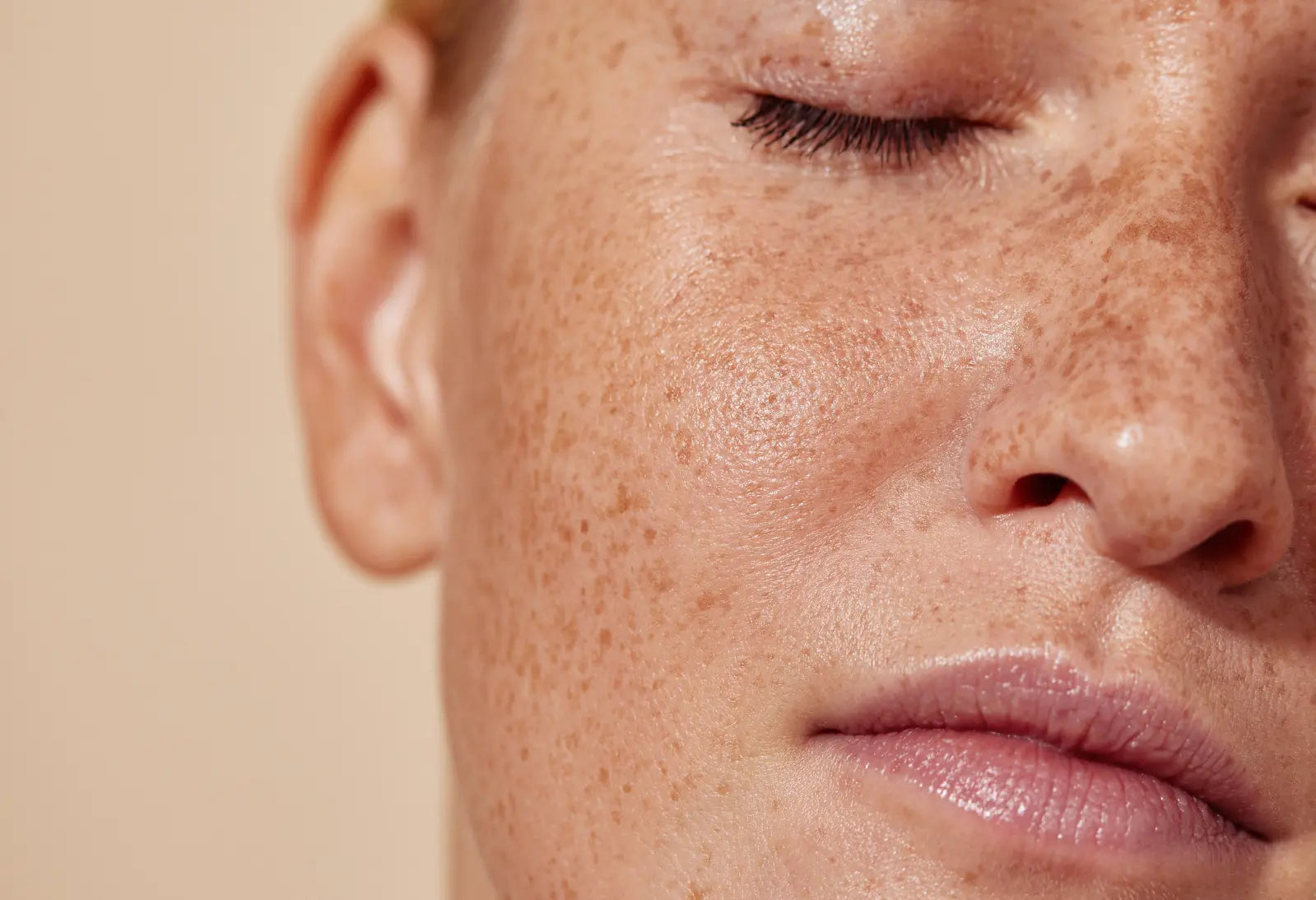
Most people comparing these two lasers are treating the same thing: years of accumulated sun exposure that has become visible enough to act on.
Sun damage doesn’t sit at a single depth. Surface-level irregularity, the faint unevenness that reads as dullness, responds well to lighter, more frequent treatment. Established discoloration sits deeper, bound up with textural change and fine lines that developed alongside it. Those two presentations can look similar in a mirror and need different approaches.
Depth is what separates them, and it’s difficult to judge by eye. Every in-studio OVME skin consultation begins with VISIA® imaging, which captures texture, pigmentation, sun damage, and pore quality as measured data. It often finds pigment sitting deeper than it appears, which changes the recommendation.
Recovery, Realistically
For most people, this is the deciding factor.
MOXI®: redness and mild swelling largely resolving within 12 to 24 hours, a pink cast for a day or two, and fine MENDS for several days. Most people carry on with normal routines and manage it with makeup if they choose.
HALO®: roughly three to seven days depending on treatment intensity. Bronzing appears around day two, then flakes away by about day five. Providers commonly suggest planning it around a quieter week rather than the day before something that matters.
That range exists because intensity is adjustable. A lighter HALO® pass and a deeper one are different commitments, so the intensity is worth agreeing on at consultation. MOXI® care instructions and laser resurfacing pre and post care cover what each recovery asks of you.
How Providers Choose Between HALO and MOXI
HALO® and MOXI® are alternatives. Which one you are offered depends on the depth of your concern and on the devices available at your studio.
Your provider recommends based on what your skin needs and what the studio offers. If your pigment sits deeper and has settled into texture and fine lines, HALO® is the treatment built for it. If you are refining tone and staying ahead of early photodamage, MOXI® is designed for that.
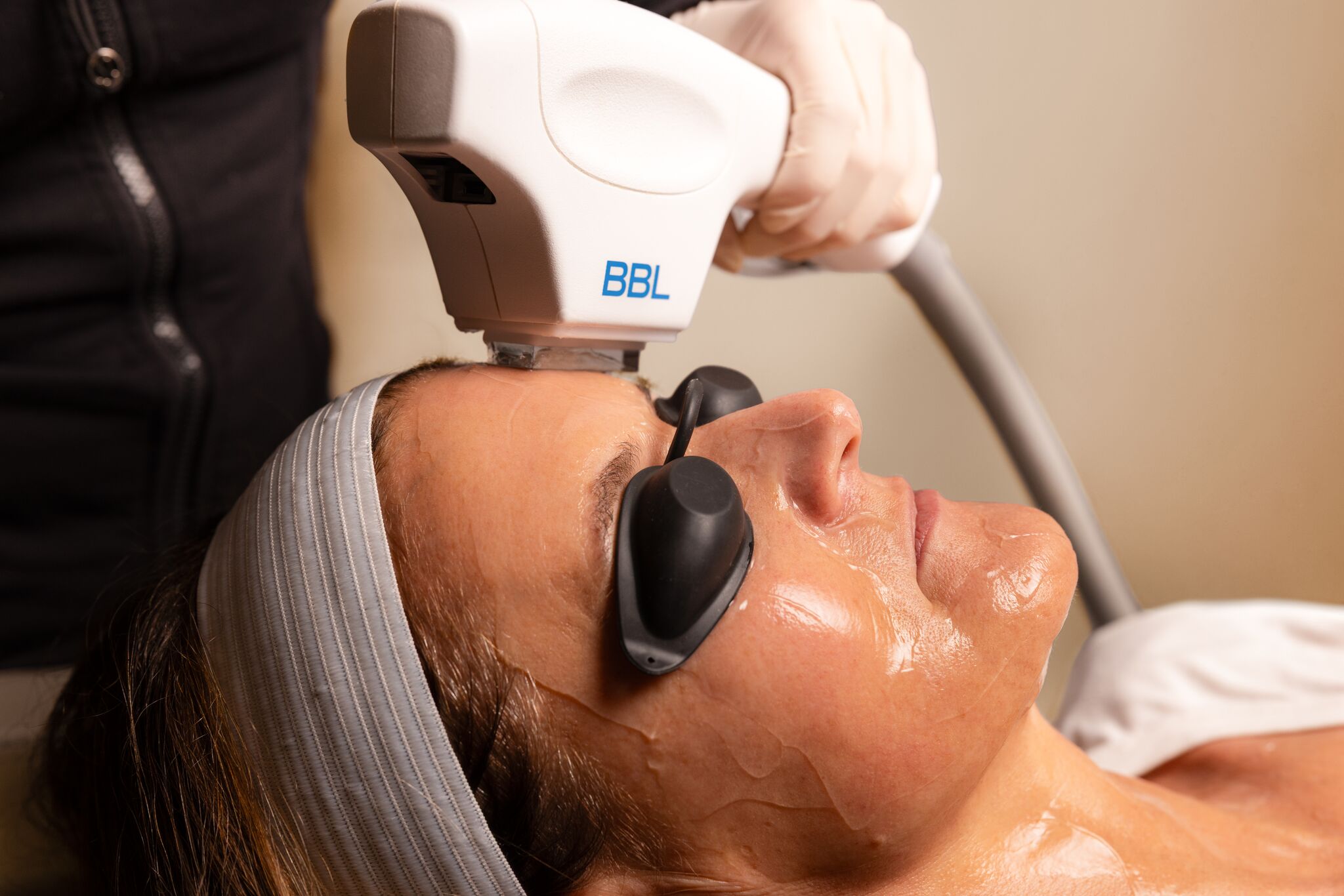
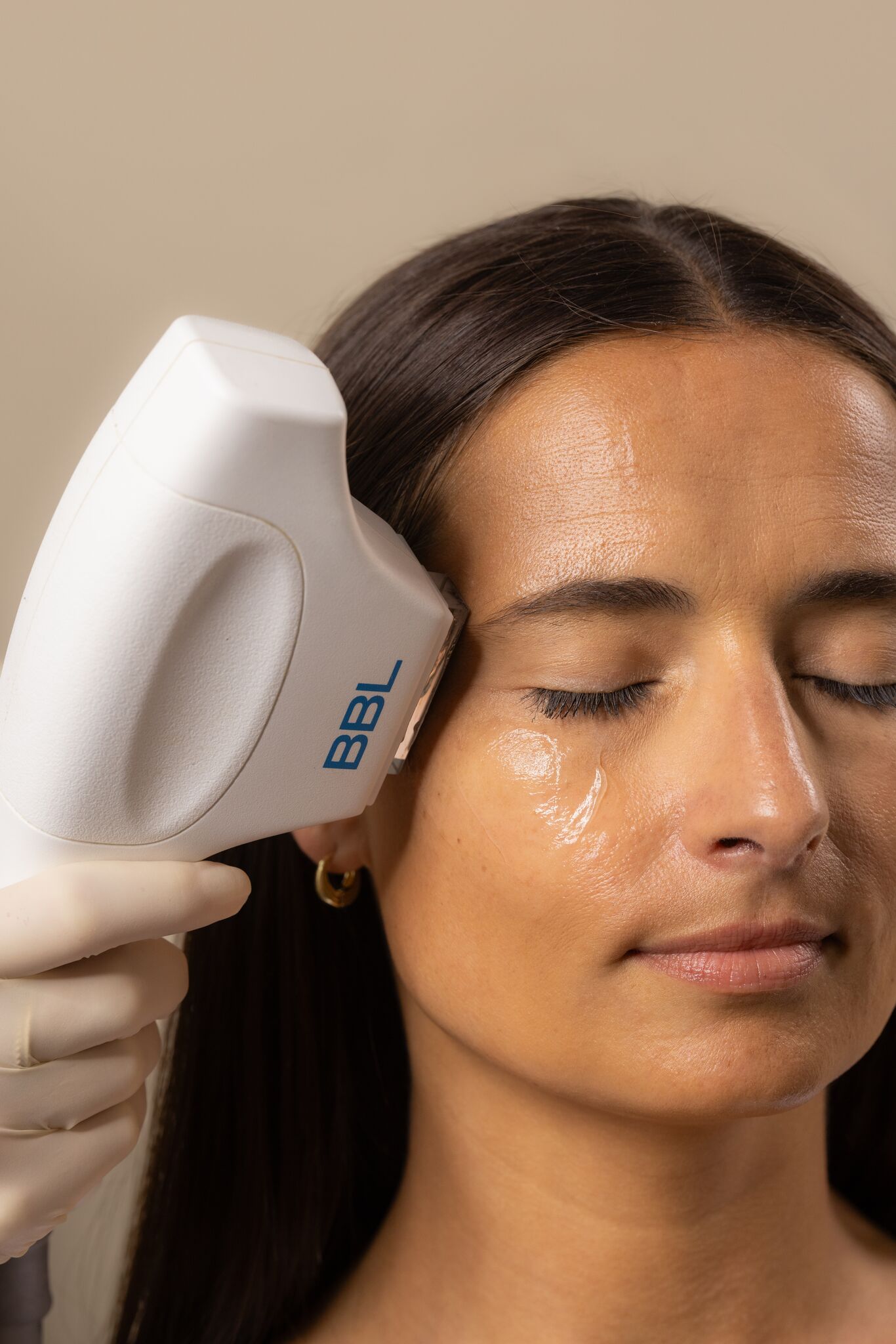
Where OVME does combine treatments in a single visit, it is HALO® with a BBL® photofacial, for patients evaluated as candidates. HALO® resurfaces at depth while BBL® targets pigment and redness at the surface, so one appointment addresses both the structure and the pigment of sun damage.
What to Ask at Your Consultation
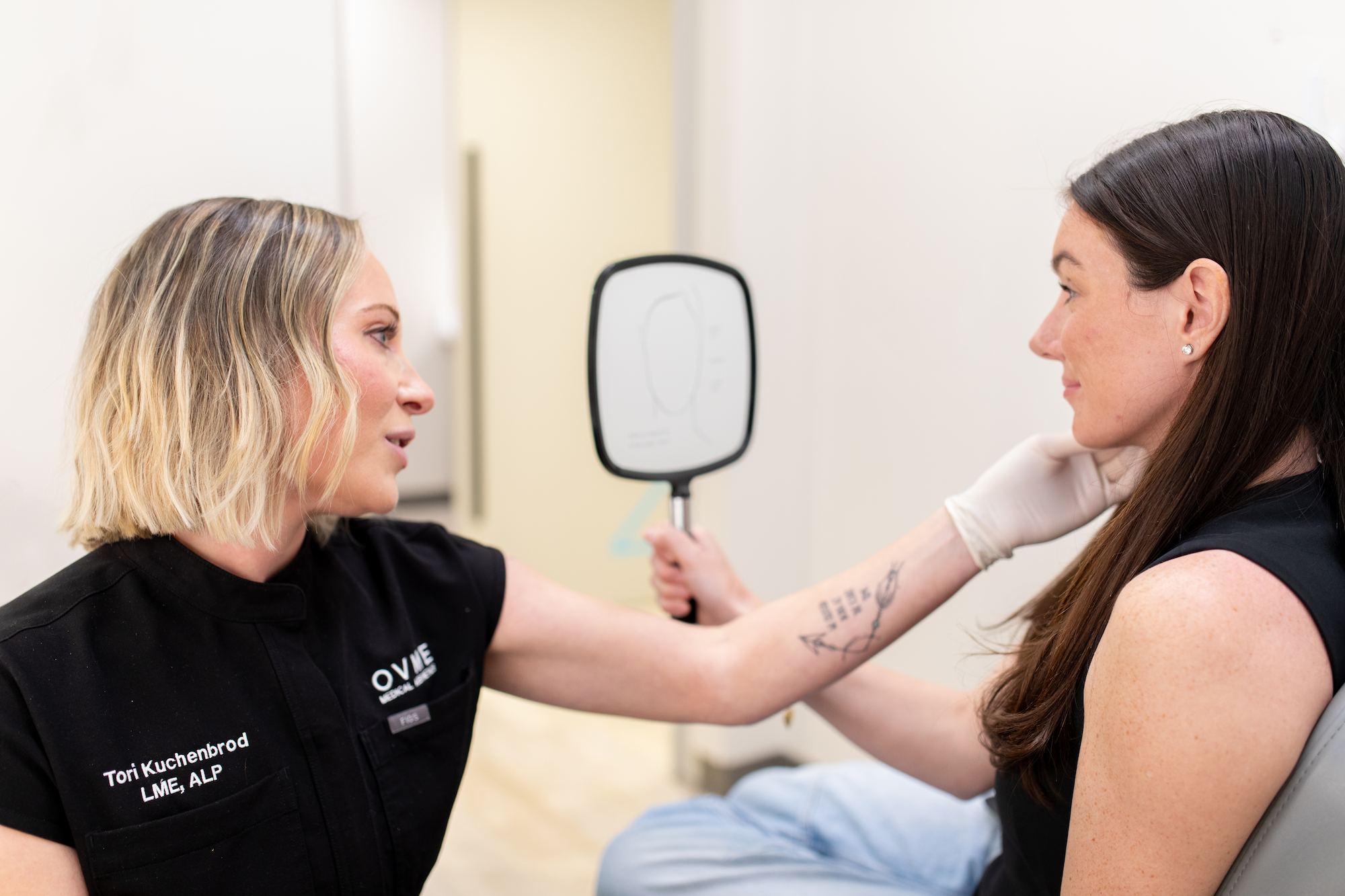
Since the right choice depends on how deep your pigment sits, your consultation should end with an actual measurement rather than a guess.
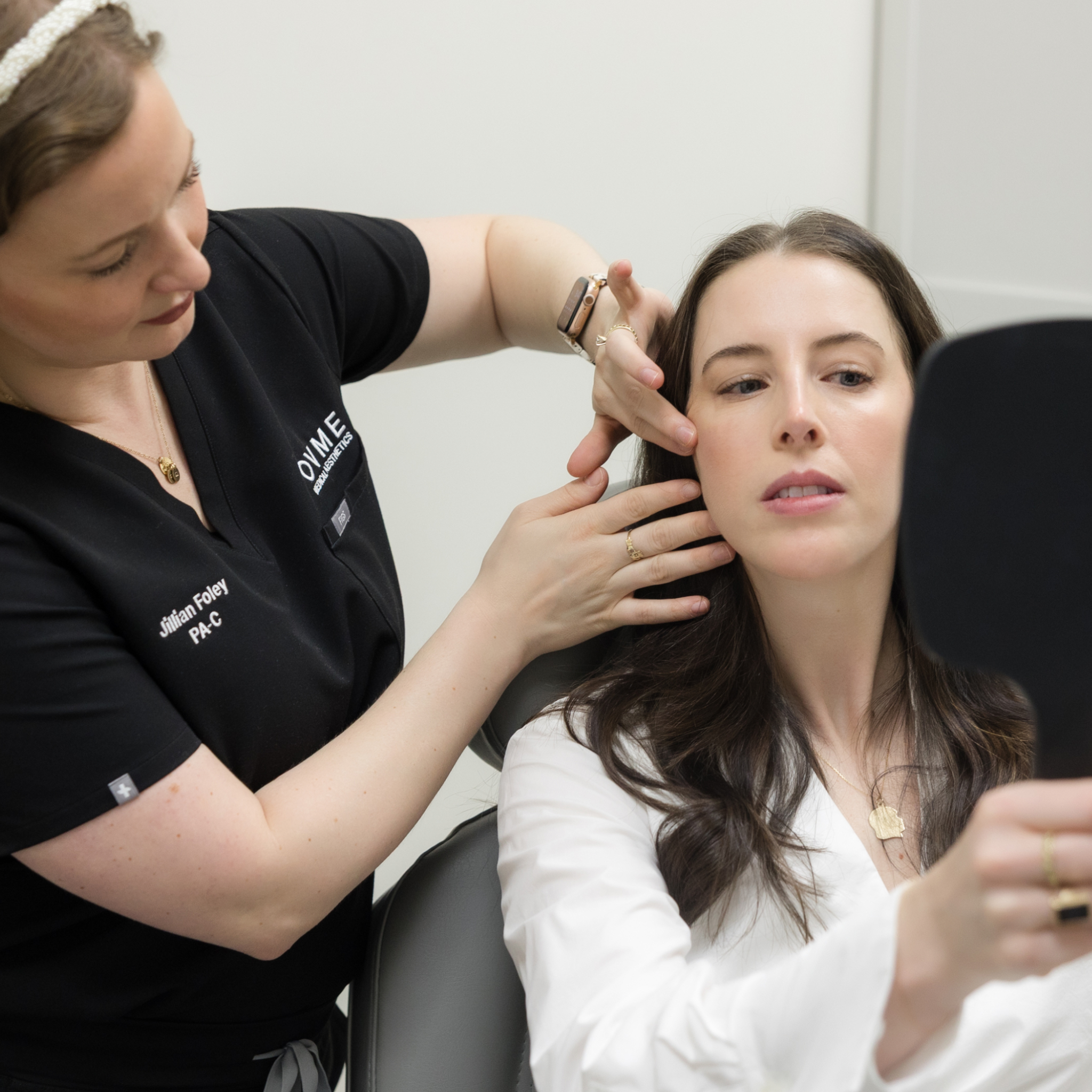
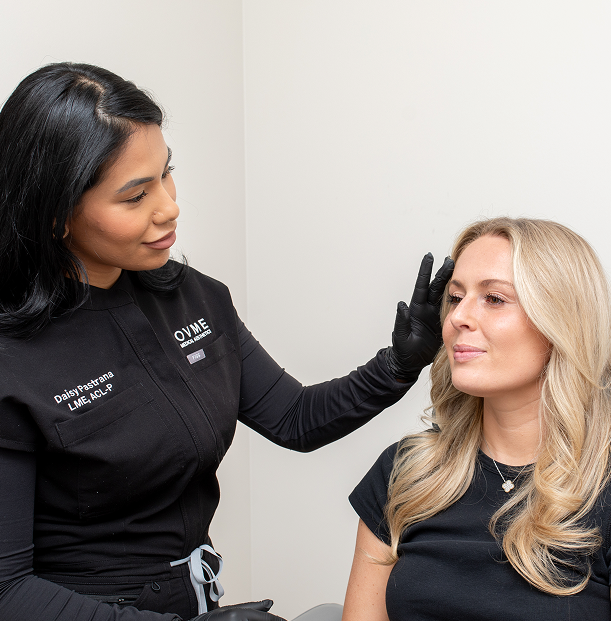
At OVME, a complimentary consultation is available in-studio or virtually, and it starts with a licensed provider listening to your goals. In-studio consultations include VISIA® imaging, which establishes the baseline. How deep your pigment sits is what separates a MOXI® plan from a HALO® one, and it is difficult to judge by eye.
Three questions worth asking directly: at what depth is my pigment sitting; how many sessions does this specific plan involve; and what does my recovery look like given the intensity you are recommending.
Timing is worth raising too. Both treatments are more commonly booked once summer is behind you. HALO® in particular asks for no direct sun exposure in the week afterward, which is easier to follow in October than in July. Your provider will tell you whether your skin and your calendar point toward starting now or waiting.
Treatments are performed by registered nurses, nurse practitioners, physician assistants, and licensed aestheticians, all supervised by medical directors who are board-certified plastic surgeons.
Ready to Treat Sun Damage on Your Terms
Whether your skin needs correction or maintenance, the starting point is the same: an accurate read of what is happening in your skin.
If correction is what you are after, HALO® laser resurfacing is the treatment built for it. That means established sun damage, fine lines, and textural change you can see in daylight. If you are protecting skin you are largely happy with, or staying ahead of early photodamage, MOXI® is the lighter, more frequent option designed for that.
If you’re not sure which describes you, that’s what the consultation is for. Book a complimentary consultation, in-studio or virtually, at your nearest OVME location or through the OVME app.
Frequently Asked Questions
Which is right for sun damage, HALO or MOXI?
Both treat sun damage at different depths, so the right one follows the depth of your pigment. MOXI® works just beneath the surface and refines tone and texture, which suits early or diffuse photodamage. HALO® works at two levels at once, beneath the surface and on it, which suits more established discoloration and the textural change alongside it. A skin assessment that measures pigment depth is what matches you to the right one.
How many sessions of HALO or MOXI will I need?
MOXI® is typically a series of two to four treatments spaced about four weeks apart, with results building across the series. HALO® is more often a course of one to two corrective treatments, also spaced around four weeks apart. Both continue to develop over three to six months as collagen remodels. Your provider sets the number your skin needs at a complimentary consultation.
Can you get HALO and MOXI together?
No. They are alternatives, and which one you are offered depends on the depth of your concern and the devices available at your studio. When you book, it is worth asking which of the two your studio offers, so the consultation starts from what is actually available to you. The established same-session pairing at OVME is HALO® with a BBL® photofacial, for patients evaluated as candidates.
Is HALO a CO2 laser?
No. A CO2 laser is fully ablative, meaning it removes the surface layer of skin across the whole treatment area. HALO® combines two wavelengths in the same tiny treatment zone: one works beneath the surface without removing skin, the other resurfaces just the top layer, and it treats only a fraction of the skin at a time. That combination is what lets it work at depth with less downtime than fully ablative resurfacing.
What goes into the cost of HALO or MOXI?
Both are quoted by the area being treated and by how many sessions your plan includes, so neither has a single fixed price. HALO® is typically a shorter course of one to two sessions, while MOXI® is designed as a series of two to four. OVME provides transparent pricing at a complimentary consultation before treatment, once a provider has built a plan for you.
Where can I get HALO or MOXI in the US?
Laser resurfacing is offered across OVME’s 28 boutique studio locations, including studios in Georgia, Texas, Tennessee, North Carolina, Illinois, Colorado, Minnesota, Virginia, Washington, D.C., South Carolina, and Florida. Because HALO® and MOXI® availability varies by studio, your nearest location can confirm which it offers when you book a complimentary consultation through the OVME locations page or the OVME app.
Keep on reading